

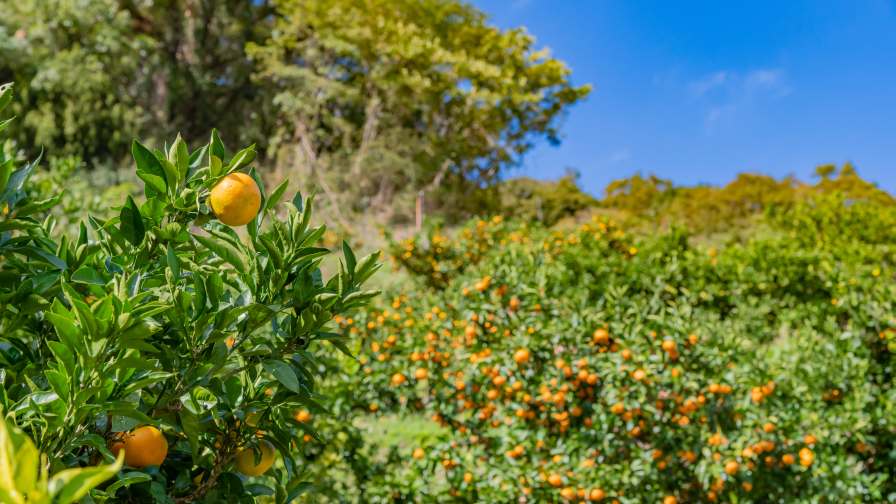
Citrus crops face strict European Union MRL restrictions, forcing African exporters to adopt proactive IPM strategies. Photo: Envato
Synthetic crop protection companies diversifying their portfolios to serve African growers are up against challenges in creating an effective integrated pest management (IPM) program.
AgriBusiness Global® magazine talked with Tom Murray, Technical Manager, Fruit and Horticulture for Woolworths Foods South Africa, and Kobus Pienaar, Technical Manager, Regenerative Agriculture for Woolworths Foods South Africa and Executive Board Member of theSouth African Bioproduct Organization (SABO), about integrated management practices in Africa.
Here are five points that Murray and Pienaar believe crop input companies should consider when offering biological and synthetic products in Africa.
1. Export‑driven and local food retail compliance is shaping on‑farm decisions
“For the agri‑input sector, the implications are clear,” says Murray. “Demand patterns are changing, portfolios are shifting, and the rules of access to premium export and local markets are being rewritten.”
While African growers are using synthetic crop protection products according to the regulatory guidance of their country — a shift is happening as the European Union (EU) continues to ban active ingredients. If growers want to export their crops to the EU, they can’t use the active ingredients on the EU banned list.
For those products approved by the EU, there is also the lowering of maximum residue levels (MRLs) on the food imported, with strict auditing, testing, and shipment inspections at the EU borders.
“For African exporters, this means regulatory compliance is no longer limited to national registration. Products legal for local use may still disqualify produce from high‑value EU markets,” says Murray. “As a result, growers supplying Europe, especially in citrus, grapes, pome fruit, vegetables, and herbs, are voluntarily eliminating certain synthetic products from their spray programs years ahead of local regulatory change.”
When building your portfolio of products, make sure your products reflect the EU’s current list of approved products.
2. Biologicals are moving into the mainstream, but must perform
For reducing MRLs and improving soil and crop yields, biological plant health products are becoming important parts of an integrated program for African growers.
“Biopesticides (microbial fungicides, bio‑insecticides, pheromones) are increasingly deployed to manage resistance and reduce chemical load, while biostimulants and biofertilizers are gaining ground as tools to improve nutrient efficiency, plant resilience, and yield stability under heat and water stress,” says Pienaar.
“For input suppliers, the opportunity is significant but not without complexity,” Pienaar continues. “Farmers expect biologicals to deliver consistent, measurable performance, and poorly positioned products risk eroding confidence in the entire category.”
3. IPM is changing how products are positioned and sold
As EU’s Green Deal progresses and African growers depend economically on exports to the region, IPM programs are no longer optional. They are the commercial requirement.
“This shift is changing the way plant health products are sold and used. Rather than single‑product solutions, growers are looking for systems, supported by agronomic advice, resistance management strategies, and compliance support,” says Murray.
As growers aim to reduce MRLs, the goal of the integrated program is to not abandon active ingredients that work, but reduce dependence.
“Sudden withdrawal of effective synthetic tools, without proven alternatives at scale risks yield losses, increased production costs, and pressure on food supply,” says Pienaar. “The prevailing trend is therefore transition, not elimination. The goal is to combine the smarter use of conventional products with biologicals, precision application, and improved agronomy. For the plant health industry, this creates space for hybrid portfolios that support both productivity and compliance, rather than framing the future as conventional versus biological.”
4. Stewardship, traceability, and advice are now commercial differentiators
As companies offer hybrid portfolios, they need to also provide education and recommendations for the use of their products as well as ag tech for traceability.
“Growers need documented pest monitoring and threshold‑based interventions, and traceable spray records and pre‑harvest interval discipline,” says Murray.
As the biological market grows, companies that can help African growers “adapt early, invest in credible alternatives, and help farmers navigate regulatory pressure will be best positioned to grow alongside this transformation,” says Murray.
5. Regulatory Change Is Coming
With a fragmented regulatory system across the continent, registration can be costly and slow. Many countries are still assessing biologicals using conventional chemistry frameworks. However, organizations, like CropLife Africa Middle East and SABO, are striving to make changes.
“Regional discussions around regulatory harmonization and risk‑based evaluation of biologicals are gaining traction,” says Murray. “Industry, regulators, and development partners are increasingly aligned on the need to accelerate approval timelines for low‑risk products, enable mutual recognition between countries, and support stewardship standards for effective biological use. If successful, these reforms could unlock faster growth and wider adoption across the continent.”
