November 26, 2026• By
Yared Araya Amiha
electoral processes
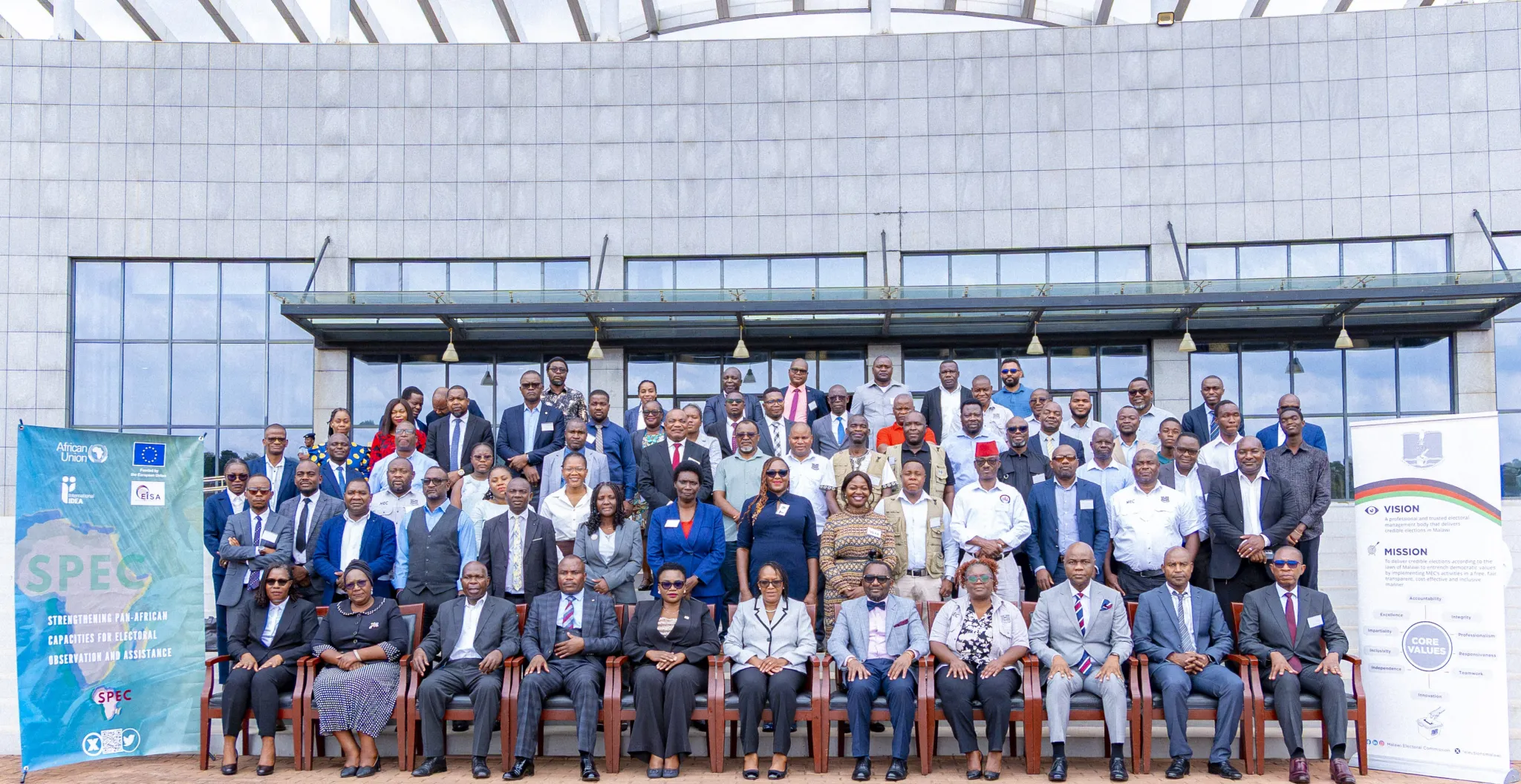
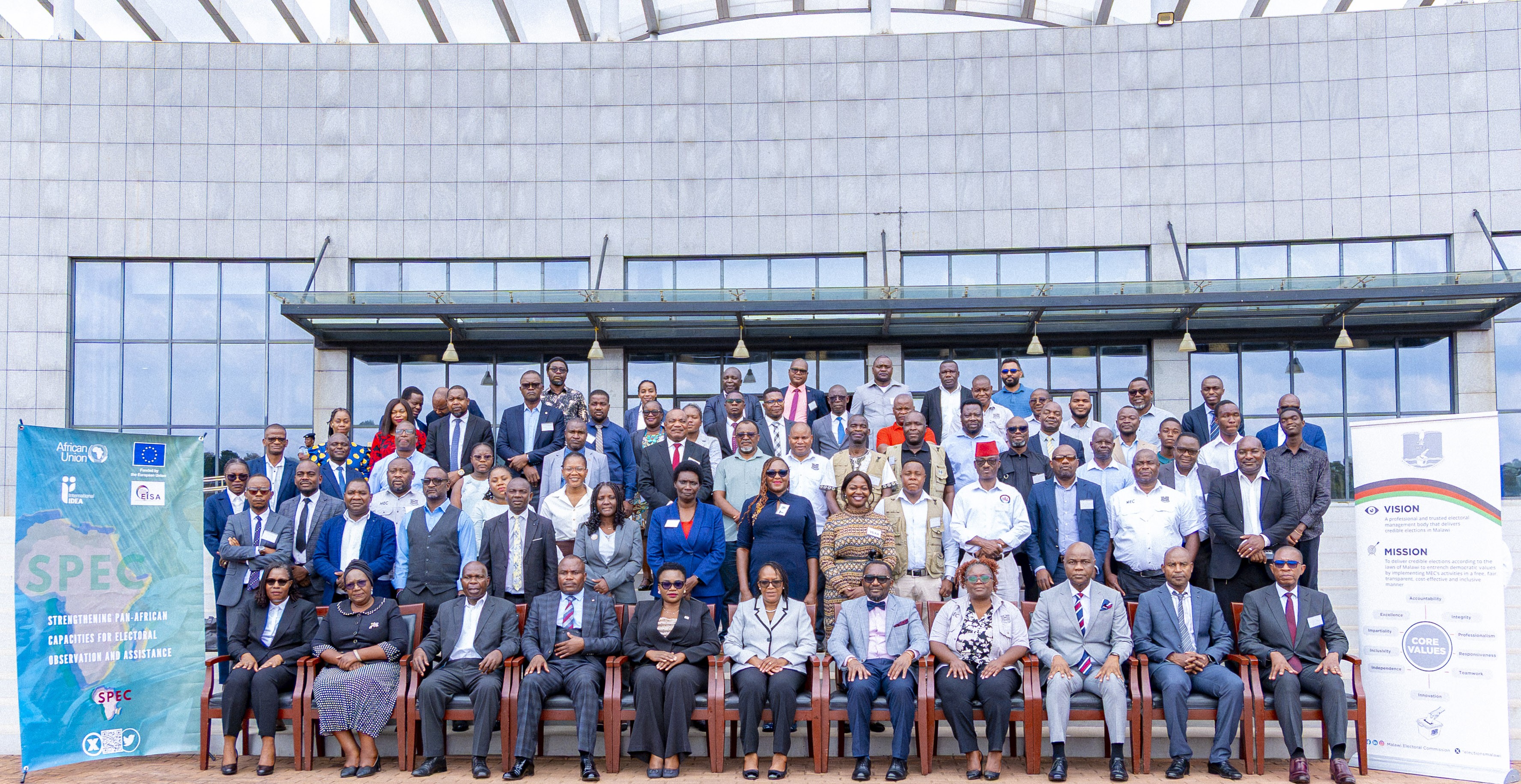
Participants of the validation of the MEC electoral risk management policy and framework.
Credible elections depend not only on effective preparations on polling day but also on the ability of the Electoral Management Body proactively identify, assess and mitigate risks throughout the electoral cycle.
Building on its continued engagement with the Malawi Electoral Commission (MEC), International IDEA, in partnership with the African Union (AU) supported the validation of the Commission’s Electoral Risk Management (ERM) Policy and Framework and conducted a Training of Trainers (ToT) to support its implementation. The European Union (EU) funded Strengthening Pan-African Capacities for Electoral Observation and Assistance (SPEC) project supported these activities to institutionalize electoral risk management within the Commission’s operations and strengthen its preparedness for future elections. The activities took place from 16–20 November 2026 in Lilongwe, Malawi.
International IDEA’s support to MEC builds on earlier interventions aimed at strengthening electoral preparedness and institutional capacity. In 2024, MEC representatives participated in a regional electoral risk management workshop organised by International IDEA in Addis Ababa. The workshop provided opportunities to exchange experiences, explore risk identification methodologies and learn from other electoral management bodies across Africa.
This engagement continued in 2025 through a series of capacity-building activities organised by International IDEA, in partnership with the AU and the Common Market for Eastern and Southern Africa (COMESA). These included training on electoral risk management and gender-based discrimination and violence, internal audit training to strengthen financial oversight, and training of trainers on nomination procedures ahead of Malawi’s 2025 general elections.
The November 2026 activities build on these efforts by supporting MEC in strengthening its institutional approach to electoral risk management. This support also contributes to the AU’s broader mandate to promote democratic governance, constitutionalism and credible elections across its Member States. Through its mandate to support Member States in strengthening democratic institutions and electoral processes, the AU works with regional and international partners, including International IDEA, to enhance electoral capacity, promote knowledge-sharing and strengthen institutional preparedness.
The validation process brought together relevant stakeholders to review the ERM Policy and Framework, provide technical input and ensure that the documents reflect Malawi’s electoral context and institutional needs. Discussions focused on approaches to identifying, assessing, monitoring and mitigating risks that could affect electoral processes.
Highlighting the wider challenges facing electoral institutions, the findings of International IDEA’s Global State of Democracy 2026 report stated: “Elections are taking place in an increasingly risky world. The review highlights that 62% of national elections in 2025 faced disinformation, while 38 % experienced election-related violence. These figures underscore why Electoral Risk Management is essential to anticipating threats and safeguarding credible, peaceful elections.”
MEC Chairperson, Justice Annabel Mtalimanja, highlighted the importance of a proactive approach to electoral risk management in her opening remarks at the ERM validation workshop in Lilongwe, stating:”Credible elections are not achieved on polling day alone. They are built through careful planning, effective coordination and the ability to identify and address potential threats before they escalate into crises”.
The validation was followed by a ToT designed to equip participants with practical knowledge and skills to apply the policy and framework. Through technical sessions, practical exercises and simulations, participants explored risk assessment, institutional readiness and appropriate responses to potential electoral challenges.
The cascading training approach also aims to develop a pool of trainers within MEC who can extend ERM knowledge and skills to other electoral officials, supporting institutional learning and continuity.
Highlighting the importance of building sustainable institutional capacity within MEC, Vera Muring of International IDEA stated: “Our vision is not to create a Commission that depends on external support to manage electoral risks, but one with the internal capacity, systems and confidence to anticipate and address challenges independently.”
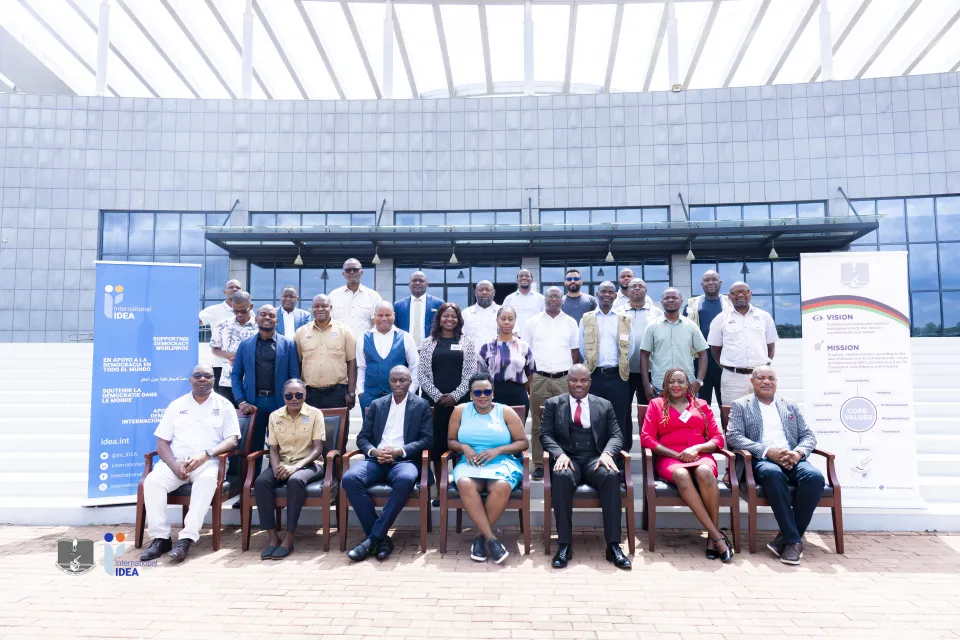
Trainers and participants of the ToT for MEC on ERM policy and framework.
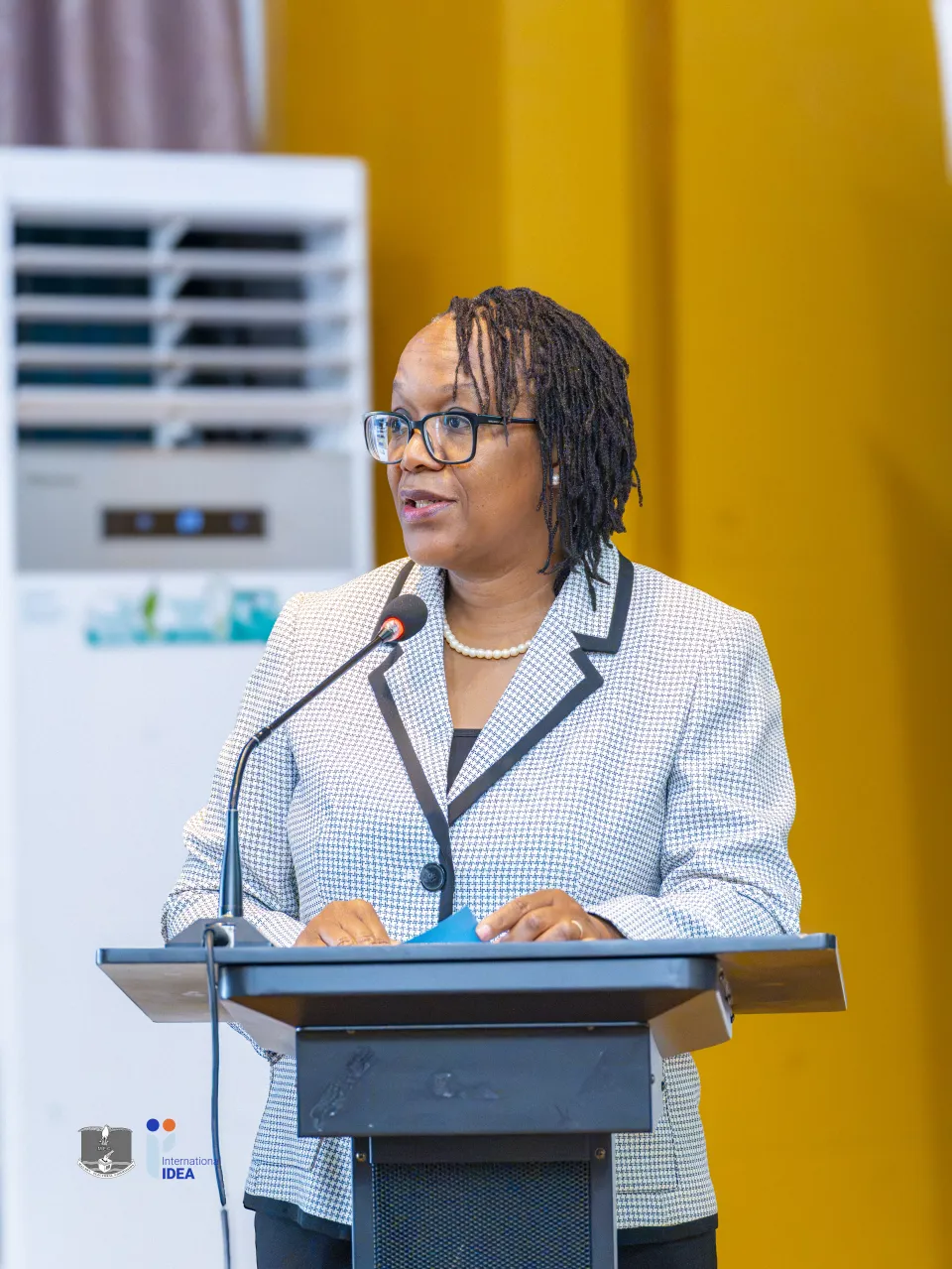
MEC Chairperson, Justice Annabel Mtalimanja who participated in the activities that took place from 16–20 November 2026 in Lilongwe, Malawi.
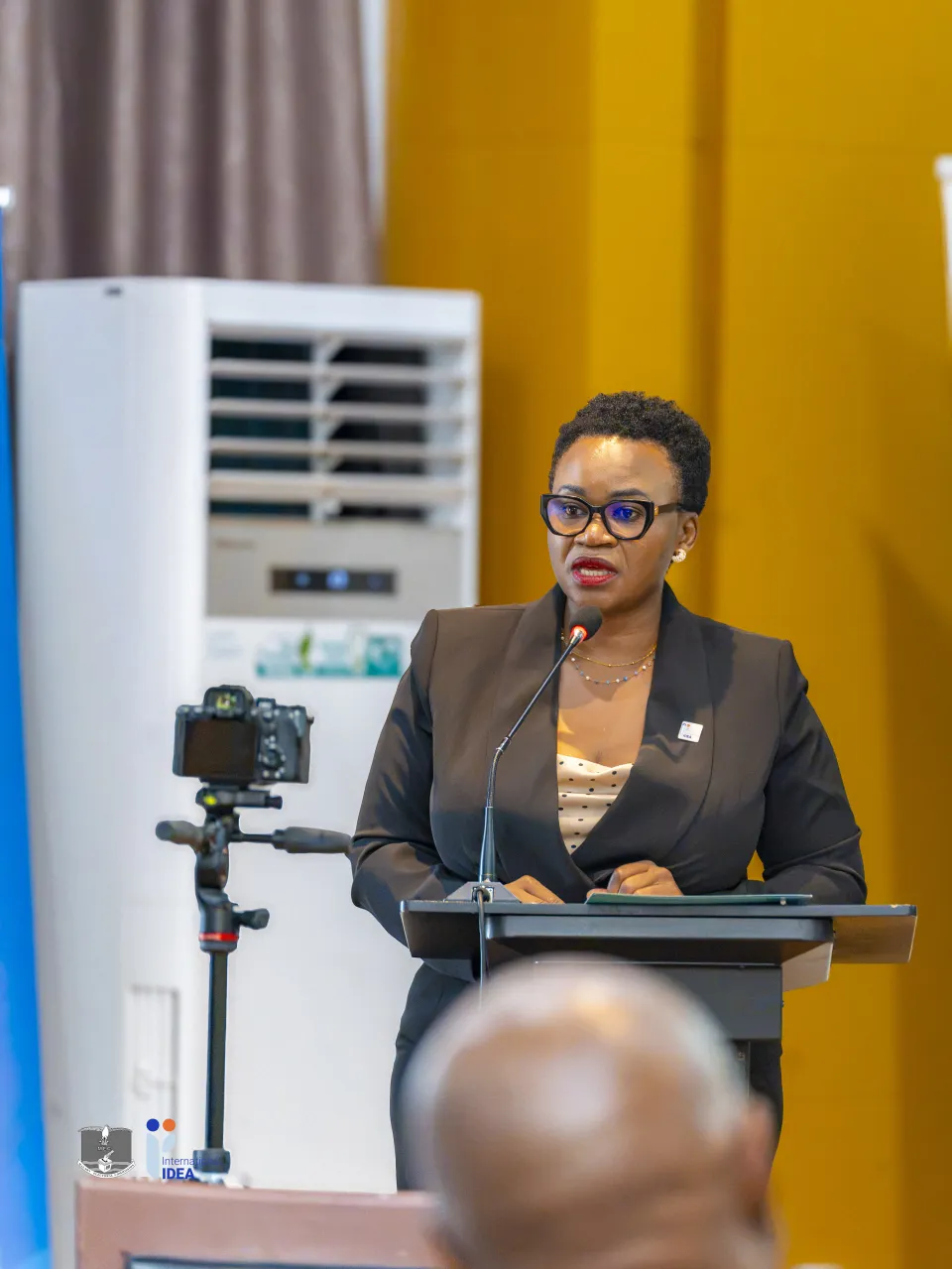
Vera Muring delivering opening remarks.
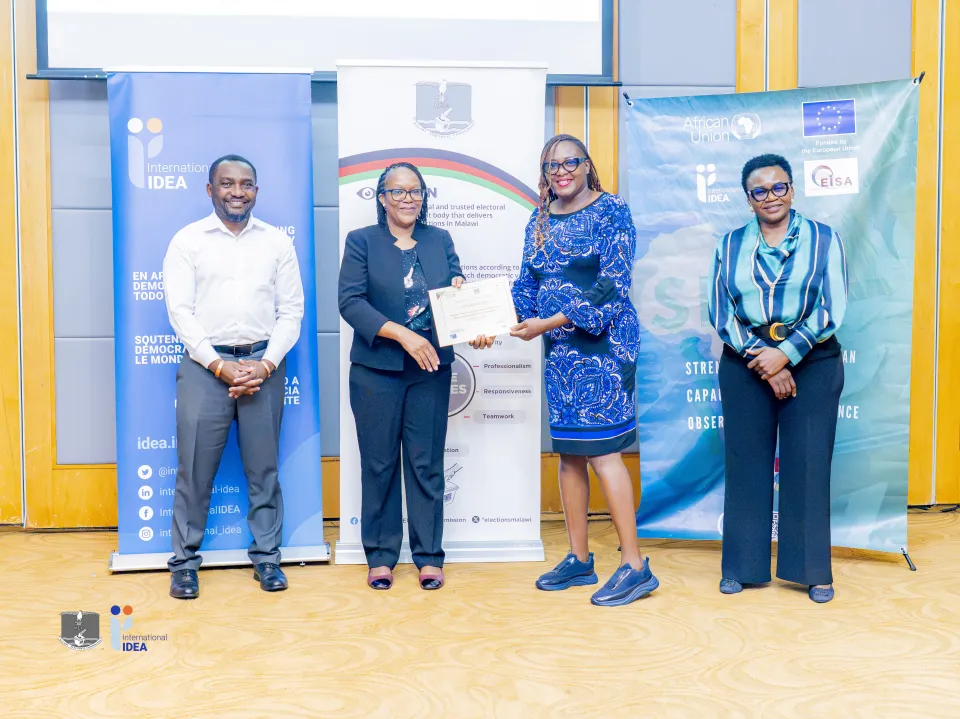
ToT certificate ceremony at the end of the workshops.
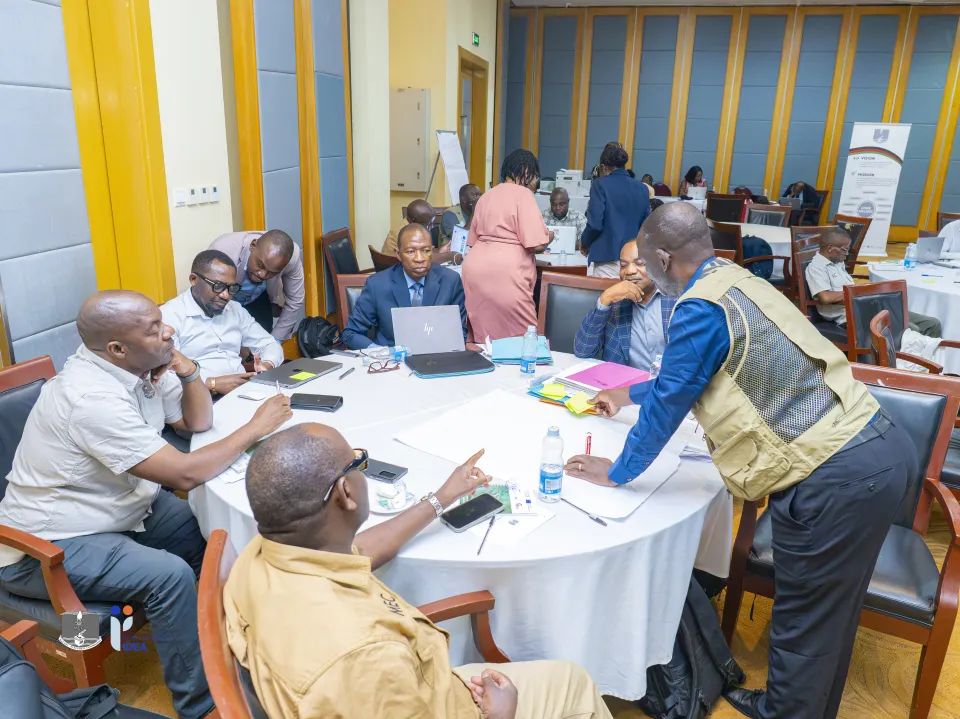
Group Discussion at the ToT. The activities took place from 16–20 November 2026 in Lilongwe, Malawi.
View our themes
Electoral Processes
About the authors
Read on
Bosnia and Herzegovina: Lessons form the 2026 general elections
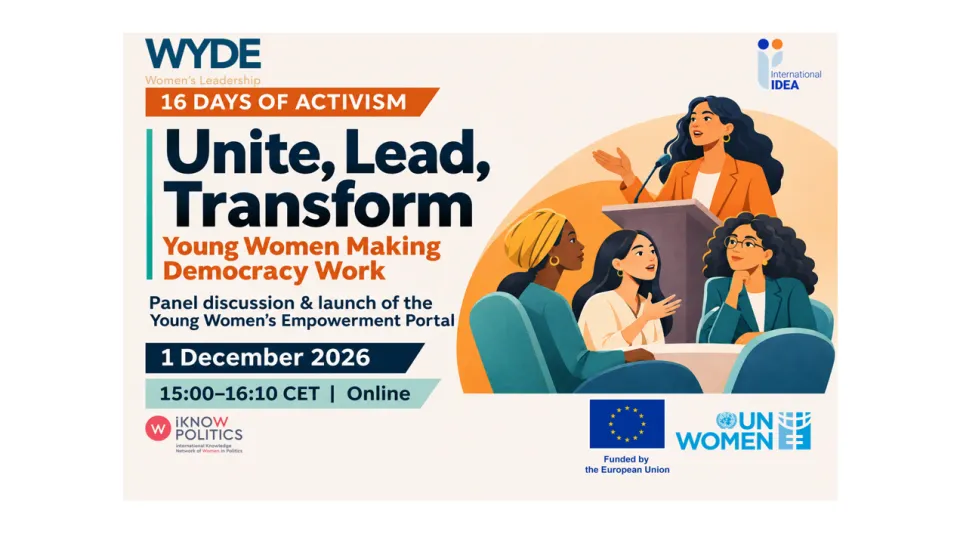
Webinar: Unite, Lead, Transform: Young Women Making Democracy Work
women in politicswomen participation and representation#16DayofActivism
The cost of doing politics – impunity as a gatekeeper for young women’s political participation and representation
women participation and representationinclusion#16DayofActivism