

LiveLast updated 2 minutes ago
Latest war news. Tehran ready to strike pro-US energy facilities
US Secretary of State: ‘Allowing control of the Strait of Hormuz sets a dangerous precedent’
Summary by points
Trump: ‘Let’s hit Iran hard; they’re not ready for a deal yet’
“We’re hitting Iran hard; they want to strike a deal but aren’t ready yet.” Donald Trump said this during a rally in Georgia.
Oil closes lower in New York at $86.83
Oil prices closed higher in New York, where they rose by 2.95 per cent to $86.83 a barrel.
Iran: Trump pays tribute to the four US soldiers killed in the Middle East
US President Donald Trump paid tribute to the four American servicemen who had been killed in the Middle East in recent days, returning their remains to their families at a US Air Force base in Delaware.
According to the Associated Press, the president saluted as the four coffins containing the soldiers’ remains were carried off a plane during a ceremony at Dover Air Force Base. This is the third such ceremony Trump has attended since he launched the war in Iran in February. Seventeen American soldiers have died since the start of the conflict with Iran.
Kuwait sells bonds: $14.8 billion raised
Kuwait has sold bonds in three tranches denominated in US dollars, highlighting the resilient demand for debt issued by OPEC members, despite Iran’s daily missile and drone attacks.
According to a person familiar with the matter, investor orders to sell the Gulf Arab country’s three-tranche dollar-denominated bonds totalled around $14.8 billion at the final terms,
Three-, five- and ten-year bonds are on offer at a spread of between 70 and 85 basis points over Treasury bonds. Prices are expected later.
Most popular stories
Axios: New Mossad chief was in the US to meet the CIA director
The new director of the Mossad, Roman Gofman, travelled to Washington two weeks ago for talks on the war in Iran and Iran’s nuclear programme. Axios reports this, citing two well-informediffe and White House officials.
One of the aims of Gofman’s visit was to coordinate with the White House on negotiations with Iran for a nuclear deal, an Israeli
New UK Defence Secretary refuses to retract accusations against Israel over war crimes
The new British Defence Secretary, Wes Streeting, has said he does not intend to retract his previous statements accusing Israel of committing war crimes during the bloody military retaliation in Gaza.
“The messages were contained in private WhatsApp exchanges with the former British ambassador to the United States, Peter Mandelson, which Streeting himself made public in February as part of the scandal – devastating for Keir Starmer’s premiership – concerning the political appointment as diplomatic envoy of the former New Labour ‘grey eminence’, who was closely linked to the late paedophile financier Jeffrey Epstein.”
Iran: Houthis send radio warnings to ships
After announcing on Monday a naval blockade against Saudi Arabia with immediate effect, Yemen’s Iran-backed Houthis were recorded sending radio warnings to ships. This was reported to AFP on Wednesday by the International Chamber of Shipping, the London-based international trade association founded in 1921, which represents around 80 per cent of the world’s merchant fleet and has members in some 40 countries, including Italia.
“We can confirm that the Houthis were recorded broadcasting a warning message to ships in the region,” said the ICS.
Iran, media: Tehran ready to strike pro-US energy facilities
An Iranian militaryp, stating that “if the Americans attack a bridge or a power station in Iran, we will respond by striking infrastructure and bridges in the region, including energy facilities in which the United States has interests”. This was reported by the Iranian news agency Tasnim
Iran: ‘Any gamble Trump takes will end in his downfall’
Iran would target regional infrastructure, including bridges and energy facilities in which the United States has interests, should Washington strike Iranian bridges or power stations. This was reported by Al-Jazeera, citing the Revolutionary Guards’ Tasnim news agency. “Iran is determined to exercise sovereignty over the Strait of Hormuz and will under no circumstances allow it to become a threat to our country again,” said a military source. The source also stated that the United States “should have become fully convinced” over the last 10 days that “Iran strikes wherever it wants”, adding that “any potential gamble on Trump’s part will once again end in his downfall”. The statements come in response to US President Donald Trump’s threat to strike an Iranian bridge or power station for every ship attacked in the Strait of Hormuz.
Iran, Trump: ‘Tehran will pay a heavy price’
US President Donald Trump, speaking whilst on his way to Dover Air Force Base for the solemn repatriation of the remains of soldiers killed in the war with Iran, refused to comment on the precise circumstances that led to their deaths, stating that Iran “will pay a heavy price”.
“They will be wiped out,” Trump said, noting that an investigation into the incident in Jordan is currently underway.
Lebanon-Israel: talks to continue in Rome on 4 August
Rome, 22 July (askanews) – An Israeli official has confirmed to The Times of Israel that thenext round of talks between Israel and Lebanon will take place on 4 August in Rome.Foreign Minister Antonio Tajani announced this morning that the talks would continue.
Oil: following disruptions in the Strait of Hormuz and the Red Sea, supplies from Kazakhstan have also been halted

Another crucial chokepoint for oil supplies is closing, removing a further 2 per cent or so of global crude oil supply from a market already under strain due to the renewed halt to shipments through the Strait of Hormuz and threats from the Houthis in the Red Sea, which have begun to deter shipping even in the Bab el-Mandeb Strait.
The new crisis centres on the CPC pipeline, a line stretching over 1,500 kilometres that links the major Caspian oil fields to the port of Novorossiysk on the Black Sea: far from the Middle East, but nonetheless a theatre of war, with mutual attacks between Ukraine and Russia that have been intensifying for weeks, impacting fuel and grain exports – which have helped to drive up prices on European markets for diesel – once again close to March’s peak levels – and wheat, which rose to a two-year high in Paris.
Jet fuel prices are rising again: this is how the Strait of Hormuz is weighing on airlines’ finances
Anyone who thought the crisis surrounding the possible closure of the Strait of Hormuz had been resolved following the signing of an initial truce is now forced to reassess the situation. At the start of July, the a: the risk of a prolonged blockade of the world’s main energy hub had eased, jet fuel prices had fallen back below $1,000 per tonne, and airline share prices had recovered some ground
Over the past week, however, the situation has changed. The resumption of hostilities, with new attacks against Iran, has reignited fears of a closure of the Strait of Hormuz, putting the fuel market under pressure once again. The price of jet fuel has once again exceeded $1,200 per tonne, whilst European stocks have almost halved compared with January levels. This trend is bringing the sustainability of the sector’s margins back into the spotlight.
It’s not just Hormuz: following Saudi Arabia’s attack on the Houthis, there are also risks for Bab el-Mandeb
The risk is that, ultimately, international trade will have to contend not only with the closure of the Strait of Hormuz, a strategic chokepoint for around a fifth of the world’s oil flows, but also with that of Bab el-Mandeb. Should this scenario come to pass, Europe – and therefore Italia as well – would find itself deprived of two strategic supply routes.
The Strait of Bab el-Mandeb is situated in a strategic geographical position between north-eastern Africa and the Arabian Peninsula. It is one of the world’s most important commercial waterways (and an oil route), as it is the only passage for all vessels travelling between the Indian Ocean and the Mediterranean Sea
Saudi Arabia and Yemen: the future and the issues to be resolved
If only Yemen were stable, Saudi Arabia would already have a reliable alternative to the Strait of Hormuz for exporting 80 per cent of its crude oil to Asia. Perhaps even two. But that is not the case. Yemen’s instability is increasingly shaping Riyadh’s infrastructure strategies: a paradox for a country – the only republic on the Arabian Peninsula – which, since 2022, has been forced to halt its (limited) oil exports under threat from the Houthis. Now, after four years of a national truce, the ‘Saudi pax’ in Yemen is showing increasing signs of crumbling, from north to south. Yet the country has never been so strategically important to the Saudis.
Whilst Israel and the United States were bombing Iran, Saudi Arabia continued to export oil via the Red Sea East-West Pipeline (Yanbu) because the Yemeni Houthis, backed by Tehran, had not resumed attacking ships between the southern Red Sea and the Strait of Bab el-Mandeb. Had they done so, or were they to do so now that the Strait of Hormuz is still operating ‘in fits and starts’, the impact on exports – and therefore on Riyadh’s finances – would be significant. For Saudi Arabia, the East-West Pipeline remains the primary alternative to the Strait of Hormuz. Riyadh is reportedly considering boosting the pipeline’s capacity, in a move similar to that of the United Arab Emirates regarding the Habshan–Fujairah pipeline – the ‘beyond Hormuz’ pipeline that will double export capacity by 2027. The Saudi pipeline to the Red Sea can handle up to 7 million barrels of crude oil per day (it currently transports less than 5 million for export and around 2 million for domestic consumption): Riyadh’s aim is to add up to 2 million barrels of additional daily capacity, in order to also transport some of the crude oil from neighbouring Kuwait, which has no maritime alternatives and is therefore dependent on Hormuz.
The Hormuz Effect: a new energy route from Iraq to the Mediterranean
The effects of the turmoil in the Strait of Hormuz are beginning to be felt and are driving new agreements and efforts to establish alternative routes. At the weekend, the first Iraqi minister Ali al Zaidi flew to Washington and returned home with a package of agreements worth 60 billion. Cooperation in the energy and electricity sectors. The main objective is to build an oil pipeline through Iraq and Syria that runs straight to the Mediterranean. This is, of course, made possible by the launch of the joint project between the Basra Oil Company and the Syrian Petroleum Company, which will work together on the pipeline – severely damaged in 2003 during the Gulf War – that runs from Kirkuk towards the port of Baniyas, some 50 kilometres from Latakia. The US State Department has in turn confirmed that it will provide technical support for the works, whilst Tom Barrack, US Ambassador to Turkey and Special Envoy for the region, added: ‘This is a project designed to bypass Hormuz and render it a secondary route.’ A statement that may be an exaggeration from a technical point of view, but not from a political one.
EU advises airlines against flying over Jordanian airspace
The European Union A has advised airlines against flying over Jordan, a country that has been targeted by Iranian attacks
Trump at Dover Air Base to receive the fallen soldiers from Iran: they are heroes
“I’m heading to Dover Air Force Base in Delaware (USA) to pay tribute to our heroes.” Donald Trump wrote this on his social media platform, Truth. The president, alongside Pentagon chief Pete Hegseth, will receive the remains of the American soldiers killed in Iran.
Trump: ‘Every time Iran fires on the Strait of Hormuz, we will strike a bridge or a power station’
Donald Trump is once again threatening Iran. “From this moment onwards, every time Iran fires upon a ship in the Strait of Hormuz – be it with missiles, rockets, drones or any other device or weapon – the United States will bomb and destroy a bridge or a power station, including those located near or within the capital, Tehran,” he wrote on his social media platform Truth.
Bahrain: new air strikes by Tehran intercepted
The Bahraini army has announced that its defence systems have “intercepted and destroyed several Iranian air attacks”.
Is the Houthi embargo in the Red Sea working?
Tracking data shows that two ships bound for Asia appear to be heading north towards the Suez Canal — a detour that in some cases could add 30 days to their journey — whilst others have suspended their voyages.
No oil tankers have been seen passing through Bab el-Mandeb since the Houthis sent an email to shipowners earlier this week warning them not to cross, although it is possible that some may have done so with their transponders switched off.
Tehran: false reports of mistreatment of French diplomats
The Iranian Foreign Ministry has dismissed as false France’s claims regarding the alleged mistreatment of two of its diplomats in the country. This was reported by the Tasnim news agency.
“The head of the Second Department for Western Europe at the Iranian Foreign Ministry, Mohammad Tanhaei, has rejected the false claims made by the French Foreign Minister, Jean-Noël Barrot, that the two officials had been mistreated,” the agency reported.
According to the French government, the two diplomats were detained in Iran on 19 July. The French Foreign Minister stated that the officials were monitoring alleged programmes supporting civil society.
The French Foreign Ministry stated that the two diplomats were detained for several hours and questioned by the Iranian security forces.
Tanhaei emphasised that on 19 Julythe two French officials had attended a meeting with several individuals who were under suspicion and the subject of an investigation.
According to the Iranian official, as soon as the security forces learnt that the two were connected to the French embassy, they were transferred to a special police unit and, following consultation with the Iranian Ministry of Foreign Affairs and contact with the French ambassador, they were returned to the embassy.
Yesterday, the Iranian Foreign Minister Abbas Araghchi stated in a conversation with Barrot that the two French officials had been detained for behaviour that violated diplomatic norms.
Oil and gas prices surge, with Brent hitting $95
Oil and gas prices have risen sharply, as the conflict between the US and Iran escalates and with no solution in sight to the issue of the Strait of Hormuz. Brent reached $95 a barrel, a six-week high, before falling back.
On the crude oil front, WTI rose by 3.2% to $87.06 per barrel. Brent, after an initial surge, continued to rise by 3.7% to $94.32.
Gas prices are also soaring, breaking the 60-euro mark. In Amsterdam, the TTF index rose by 4.8 per cent to 62.54 euros per megawatt-hour.
Alert issued over possible attack in Saudi Arabia
Saudi Arabia’s Civil Defence issued an early warning for the city of Dammam, on the border with Bahrain, regarding a possible Iranian attack. Shortly afterwards, it announced that the danger had passed. The alert was triggered almost simultaneously with the sounding of sirens in Bahrain and reports of explosions in the city of Manama.
Iran: US attack on Larak Island in the Strait of Hormuz
The Iranian news agency Tasnim has reported a US attack on the island of Larak, located in the Strait of Hormuz – the epicentre of tensions between Tehran and Washington, whose confrontation reignited two weeks ago. “The island of Larak (in the south) was struck by a US missile. According to local residents, a loud explosion was heard near the island,” Tasnim reported, adding that the authorities were trying to determine “the scale of the attack” and “the extent of the potential damage”.
Iran: Now only 37 per cent of MAGA voters support Trump’s war
Whilst in May a solid 50 per cent of MAGA voters still supported the war against Iran, now, two months on, only 37 per cent of Donald Trump’s core electoral base believe it is worth bearing the heavy economic costs of the conflict, which has resumed following the breakdown of the ceasefire. This is according to a Politico poll, which shows that even the president’s most ardent supporters have begun to align themselves with the majority of Americans who have long opposed US involvement in the war. Furthermore, the poll highlights that a further 37 per cent of MAGA voters say the US can only continue the war if the costs do not increase, whereas in May, 29 per cent held this view. And overall, nearly one in five MAGA voters believes the US should end the conflict with Iran, regardless of the costs. These figures show that Americans’ patience is running out – even amongst the tycoon’s most loyal supporters – due to the economic problems caused by the conflict, starting with petrol prices. For his part, Trump shows no sign of a possible swift end to the war, and yesterday he reiterated that the Iranians “desperately want to meet with us”, adding that “until they are prepared to do so in a meaningful way, we have no interest even in talking”. In private, however, sources close to the White House are quick to admit that “frustration is now at its peak” and that “the President is aware that the only path to the victory he wants is completely impossible at the moment, with the American people unwilling to support any kind of escalation”.
Israel reclassifies crocodiles: Ben Gvir wants to place them around a prison
The Israeli Minister for Environmental Protection, Idit Silman, on 18 July 2026 reclassified crocodiles from wild animals to ‘wildlife bred in captivity’, a move that paves the way for the use of the reptiles for security purposes, including deterring prison escapes. The decision was welcomed by National Security Minister Itamar Ben Gvir, who in December had proposed surrounding a prison for Palestinian detainees with crocodiles, along the lines of the Trump-style immigration detention centre ‘Alligator Alcatraz’ in Florida.
“Are you thinking of trying to escape? Think again,” Ben Gvir had written in a Facebook post on Thursday, alongside an AI-generated image showing him with a crocodile on a lead.
Ynet: Excavation work for the crocodiles has begun at Ketziot Prison
The Israeli authorities today began excavations to construct moats around a maximum-security wing of Ketziot prison, in southern Israel, where Palestinians are being held. This was reported by Ynet, which emphasised that the work has begun despite legal concerns and objections from environmentalists.A local official explained that the moat currently being dug inside the prison, around one of its special wings, will stretch for around 170 metres: “It is not visible from outside the prison. No one knows whether crocodiles will actually be brought in, but preparations are underway.” The Ministry of Public Security has confirmed the start of work on the construction of the channels intended for the crocodiles, following last week’s decision by the Minister for Environmental Protection, Idit Silman, to classify the Nile crocodile as a ‘farmed wild animal’, despite opposition from some officials within her own ministry. This decision has paved the way for the project, according to a statement from the office of the Minister for National Security, Itamar Ben-Gvir: “Anyone who thought this was just a publicity stunt was mistaken.”
Iran, Lavrov: “Russia and China do not supply weapons to Tehran”
Russian Foreign Minister Sergey Lavrov today denied that Russia and China are supplying weapons to Iran to carry out attacks against US targets.“Now, for some reason, in the West – and in Washington in particular – there is a lot of exaggeration surrounding the claim that Russia and China are directly supplying Iran with the weapons it uses to attack US targets. You know, it’s even becoming a bit embarrassing to hear these claims. I leave the responsibility for such statements to the conscience of those who have fabricated this information,” Lavrov said during a press conference at the end of the Russia–ASEAN ministerial meeting in Manila.
Lavrov added that these allegations come from the United States, which, “through the supply of EU-funded weapons, the provision of intelligence data and the Starlink system”, not only assist Ukraine but “are directly involved in designating targets for Ukrainian weapons, including civilian targets on Russian territory”.
Tehran: an attack on our nuclear sites will escalate the war in the region
Iran will attack the interests of the United States and its allies if Washington launches attacks against its nuclear facilities. This was announced by the Khatam al-Anbiya Central Command and reported by Mehr. Tehran would regard such action as “an escalation of the conflict”. In the event of such an attack, all US and allied interests would become targets of “a powerful response by the armed forces of the Islamic Republic of Iran”. The warning comes after US President Donald Trump threatened to attack nuclear infrastructure such as that at Pickaxe Mountain.
Iran: Iraqi Prime Minister to visit Tehran tomorrow following his visit to the US
Iraqi Prime Minister Ali Falih Al-Zaidi is due to travel to Tehran tomorrow, where he will propose hosting a meeting in Baghdad between Iranian and American officials “to bridge differences and pave the way for direct or indirect talks”. This is reported by the Iraqi website Shafaq News.
A businessman with no previous experience in government, Al-Zaidi returned last weekend from a visit to the United States, where he was received by President Donald Trump and secured 48 agreements with American companies and institutions worth a total of around 60 billion dollars. According to reports in recent days by the Kuwait-based Arabic-language newspaper Al-Jarida, the Prime Minister is said to be carrying a message from Trump for the Iranian leadership, prompting him to stop off in Qatar before returning to Baghdad to coordinate with Doha on the content of this message.
US media: ‘Trump wants Infantino as UN Secretary-General’
Donald Trump wants FIFA President Gianni Infantino to be the next UN Secretary-General. This is reported by the New York Post, citingryone around the world and has a special ability to bring people together’. The next UN Secretary-General will be elected this year to replace António Guterres, who is due to step down at the end of December
To secure the role of Secretary-General, Infantino would need to obtain the endorsement of the 15 members of the Security Council, followed by the approval of the General Assembly. It is unclear whether Infantino wants the post and whether, or to what extent, Trump has discussed it with him. The tycoon’s proposal is one of a series of nominations that an insider described to the New York Post as ‘weak’. Among the candidates are the former President of Chile, Michelle Bachelet, who could face opposition from the United States, and the Argentine Director General of the International Atomic Energy Agency, Rafael Grossi, who, on the other hand, could find himself having to contend with British scepticism over the Falkland Islands. With Infantino, Trump’s relations with the UN could improve. The president has never held back in criticising the United Nations for its inaction in mediating major conflicts.
Jordan: 4 of the 6 missiles launched from Tehran have been intercepted
The Jordanian army has stated that its air defence systems intercepted and shot down four of the six missiles launched from Iranian territory, whilst the remaining two fell in remote, uninhabited areas without causing any casualties or material damage. A military source stated that the air defence systems detected the six missiles after they entered Jordanian airspace and immediately neutralised them. This was reported by Iran International. Teams from the Royal Engineering Corps were dispatched to the sites where the two missiles and the debris from the interceptions had fallen to secure the areas and dispose of the remains in accordance with technical and safety procedures. The army clarified that Jordanian airspace remains under constant operational surveillance and that the armed forces will respond to any aerial threat directed against the kingdom, in accordance with the rules of engagement, in order to protect its sovereignty and the safety of its citizens.
Red Sea shipping alert: cargo ships change course following Houthi blockade
The first impact on maritime traffic following the announcement by Yemen’s Houthis, allies of Iran, of a naval blockade against ships bound for Saudi Arabia. At least six vessels have changed course in the Red Sea and neighbouring areas, according to ship-tracking data analysed by the maritime intelligence firm Lloyd’s List, as reported by the Washington Post. One of the most notable cases involved the Liu Jiang Kou, a Chinese car carrier bound for the Saudi port of Jeddah, which turned back whilst crossing the Gulf of Aden towards the Strait of Bab el-Mandeb. According to Lloyd’s List, the operator reportedly received a communication from the Houthi authorities warning of the risk of being ‘targeted’ if it continued its journey. Two Hong Kong-linked oil tankers, the Xin Tong Yang and the New Prime, bound for the Saudi port of Yanbu, also changed course, as did the Indian oil tanker Desh Viraat. Two further vessels, the Xin Long Yang, owned by the Chinese company Cosco, and the Greek oil tanker Rodos, altered their course whilst heading towards the Bab el-Mandeb Strait.
Liberman: US-Saudi Arabia agreement on nuclear programme is completely unacceptable
Former Israeli Defence and Foreign Minister Avigdor Liberman has stated that Israel must oppose the US agreement providing for the establishment of a civilian nuclear programme in Saudi Arabia, warning that, if approved, it would trigger a nuclear arms race in the region. Liberman, the hawkish leader of the Yisrael Beytenu party, who hopes to replace Prime Minister Benjamin Netanyahu in the forthcoming elections, told the public broadcaster Kan that such an agreement would be “completely unacceptable”. “Every military nuclear programme begins as a civilian programme,” he said, referring to Iran’s efforts to enrich uranium. “The agreement authorising uranium enrichment on Saudi soil crosses a red line,” Liberman added. “It drags the whole of the Middle East into a mad nuclear arms race.” Furthermore, he added, a Saudi nuclear facility could become a target for Iranian attacks. Stressing that the interests of the United States and Israel do not always coincide, Liberman urged Israel and pro-Israeli groups such as AIPAC and others to oppose the agreement and to persuade the US Congress to vote against it, even at the cost of severing ties with US President Donald Trump.
Iran: eleventh wave of US attacks on military sites
The US Central Command (Centcom) has announced that it has successfully carried out its eleventh consecutive night of strikes against Iran. “Centcom forces have targeted Iranian military operational centres, naval assets, aircraft hangars, drone storage facilities and military logistics infrastructure, with the aim of further weakening Iran’s ability to threaten commercial shipping in the Strait of Hormuz,” a statement read. “Over the past three months, Iran has attacked more than 30 merchant ships transiting this international waterway, which is vital for regional and global trade,” Centcom added, “these unjustified attacks have endangered hundreds of innocent seafarers and compromised freedom of navigation”. “Despite Iranian aggression, the Strait of Hormuz remains open to the passage of merchant ships”, the statement concludes, “since the beginning of May, Centcom forces have helped facilitate the passage of around 900 merchant ships and 450 million barrels of crude oil”.
Tehran: US military bases in Jordan and Bahrain have been hit
According to a statement from the Iranian army, the Muwaffaq Salti airbase in Azraq, Jordan, and the Isa airbase in Bahrain were struck by drones. “This morning, the army targeted the ‘residential and support buildings’ and ‘equipment depots’ of the US terrorist army at the Azraq base in Jordan with drones,” reads the statement, quoted by the Mehr news agency. “The drones,” the statement added, “also struck the ‘large warehouses and equipment hangars’ and the ‘hangars for the maintenance and repair of heavy aircraft’ belonging to the US military, which is responsible for the murder of children and other crimes, at Sheikh Isa Air Base in Bahrain.”
Iran: We will escalate the war in the region if the US attacks nuclear sites
Iran’s highest military command has stated that Iran regards any attack on the country’s nuclear facilities as “an escalation of the war in the region”, announcing that it is prepared to strike “all US interests, as well as those of its allies and supporters”.“The United States has threatened to attack the Islamic Republic’s nuclear facilities and other sensitive sites – stated Khatam al-Anbiya in a statement reported by the Iranian media – it is therefore declared that, should that country’s aggressive and terrorist army reach such a point, we shall regard it as an escalation of the war in the region. Consequently, all US interests, as well as those of its allies and supporters of that rogue and evil state, will become targets of powerful attacks by the Armed Forces of the Islamic Republic”.Yesterday, US President Donald Trump announced the US intention to attack the Iranian mountain known as Pickaxe, where, according to the Wall Street Journal, Tehran has reportedly moved thousands of nuclear centrifuges.
Hegseth: the war in Iran has so far cost $37.5 billion
The US Secretary of Defence has estimated that the war in Iran has so far cost the United States $37.5 billion, an increase of almost 30 per cent on the previous figure of $29 billion. “The current estimate is $37.5 billion,” Pete Hegseth told a US Senate committee, adding that this figure includes certain expenditure forecast up to the end of September.
The secretary also defended the Trump administration’s request for a further $67 billion in funding for the Pentagon. Hegseth and the Army Chief of Staff, General Dan Caine, argued that these additional funds were both ‘urgent’ and ‘necessary’.
Iran: shipping company reports that only three cargo ships passed through the Strait of Hormuz yesterday
Only three merchant ships passed through the Strait of Hormuz yesterday, compared with four on Monday. This was reported by the maritime analytics firm Kpler, which stated that no visible passages by large oil tankers or LNG carriers through the strait had been detected.
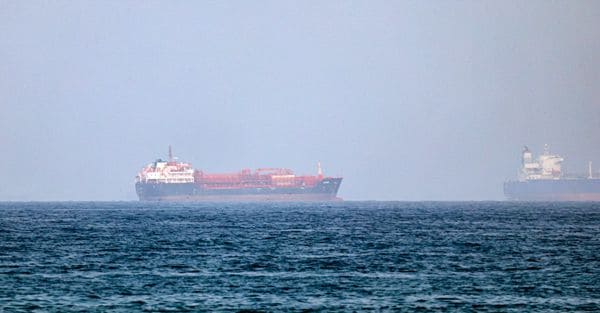
Navi da carico avvistate a un’estremità dello Stretto di Ormuz, vicino alla costa di Dibba Al Fujairah, negli Emirati Arabi Uniti, il 21 luglio 2026. EPA/STRINGER
Rubio: Tehran “is not taking the negotiations seriously”
The US Secretary of State, Marco Rubio, has stated that Iran “is not taking the negotiations seriously” to bring an end to the conflict. “The United States remains committed to diplomacy. We are open to dialogue and always willing to engage, negotiate and resolve differences”, said Rubio in his address at the meeting in Manila of the foreign ministers of the Association of Southeast Asian Nations (ASEAN), as reported by CNN.“The problem we are facing now,” he added, “is that they are not taking the negotiations seriously. If they do, so will we. If they don’t, we will do whatever is necessary to protect our interests and those of our allies.”
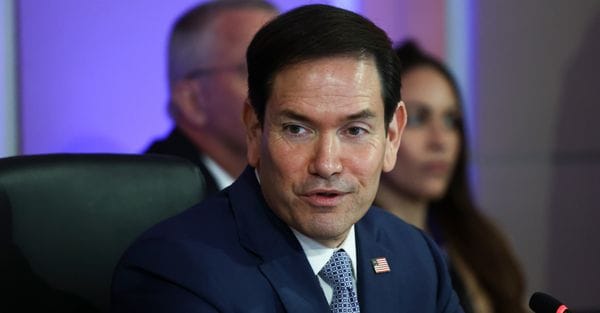
Il Segretario di Stato americano Marco Rubio partecipa alla Conferenza post-ministeriale dell’ASEAN con gli Stati Uniti, a margine della riunione dei ministri degli Esteri dell’Associazione delle Nazioni del Sud-Est Asiatico (ASEAN) tenutasi a Pasay, nell’area metropolitana di Manila, nelle Filippine, mercoledì 22 luglio 2026. (Eloisa Lopez/Foto Pool Associated Press / LaPresse Solo Italia e Spagna
Iranian Army: drones launched at US base in Kuwait
The Iranian army has stated that it attacked a US military base in Kuwait in response to “repeated aggression” by the United States.
In a statement reported by the Tasnim news agency, the army said it had launched “a large number of drones” against “ammunition depots and logistical facilities” belonging to the US army at Camp Doha, in western Kuwait.
Media: Trump gives the go-ahead to a deal allowing Saudi Arabia to enrich uranium
US President Donald Trump has approved an agreement with Saudi Arabia that could potentially provide the kingdom with the capacity to enrich uranium for its civilian nuclear programme. This was reported by two people familiar with the matter, who said the agreement is expected to be made public as early as today. The agreement is expected to run for 30 years and is also expected to involve US companies in the development of the programme. The agreement could allow for the construction of a uranium enrichment plant in Saudi Arabia following a joint study between the US and Saudi Arabia. However, according to one of the sources, it is not expected to include the IAEA Additional Protocol, which would allow for greater monitoring, inspections and verification.
Rubio: ‘Allowing control of the Strait of Hormuz sets a dangerous precedent’
“If we set a precedent in the Middle East whereby a state decides to control an international waterway, impose a toll and sink the ships of those who do not pay, we will have set a very dangerous precedent that could be repeated in other parts of the world, including this region.” US Secretary of State Marco Rubio made this statement in Manila, on the sidelines of a meeting of the Association of Southeast Asian Nations (ASEAN), referring to the possibility of Iranian control of the Strait of Hormuz. Rubio’s remarks coincided with an announcement by the US Central Command (CENTCOM), which reported that it had struck military targets in Iran for the eleventh consecutive night, as part of operations aimed at reducing Tehran’s ability to threaten commercial traffic in the strait. “Iran,” Rubio added, “claims the right – which is not recognised by any existing legal framework – to control the passage of ships through the Strait of Hormuz. A fundamental principle is at stake: freedom of navigation. And this cannot be allowed.” The US Secretary of State’s remarks come as the region grapples with conflicting territorial claims between China and several ASEAN member states in the South China Sea, another crucial maritime route for global trade. Rubio finally reiterated that the United States “remains open to engaging in positive and constructive negotiations and discussions, provided that the commitments made are honoured. The problem we are facing is that they are not taking the negotiations seriously. If they are serious, so will we be. Otherwise,’ he concluded, ‘we will do whatever is necessary to protect our interests and those of our allies’.
US Command: 11th wave of attacks, ‘Hormuz remains open’
The US Central Command (Centcom) has announced that it has successfully carried out its eleventh consecutive night of strikes against Iran. “Centcom forces have targeted Iranian military operational centres, naval assets, aircraft hangars, drone storage facilities and military logistics infrastructure, with the aim of further weakening Iran’s ability to threaten commercial shipping in the Strait of Hormuz,” a statement read. “Over the past three months, Iran has attacked more than 30 merchant ships transiting this international waterway, which is vital for regional and global trade,” Centcom added, “these unjustified attacks have endangered hundreds of innocent seafarers and compromised freedom of navigation”. “Despite Iranian aggression, the Strait of Hormuz remains open to the passage of merchant ships”, the statement concludes, “since the beginning of May, Centcom forces have helped facilitate the passage of around 900 merchant ships and 450 million barrels of crude oil”.
Iranian media: air defences activated in Tehran
“een heard to the west, east and north-east of Tehran.” This is how Iranian state television reported on Telegram, at around half past three in the morning, that air defence systems had been activated across the capital. State media also reported attacks in north-western and southern Iran, as well as explosions in the city of Bushehr, home to a nuclear power station
