

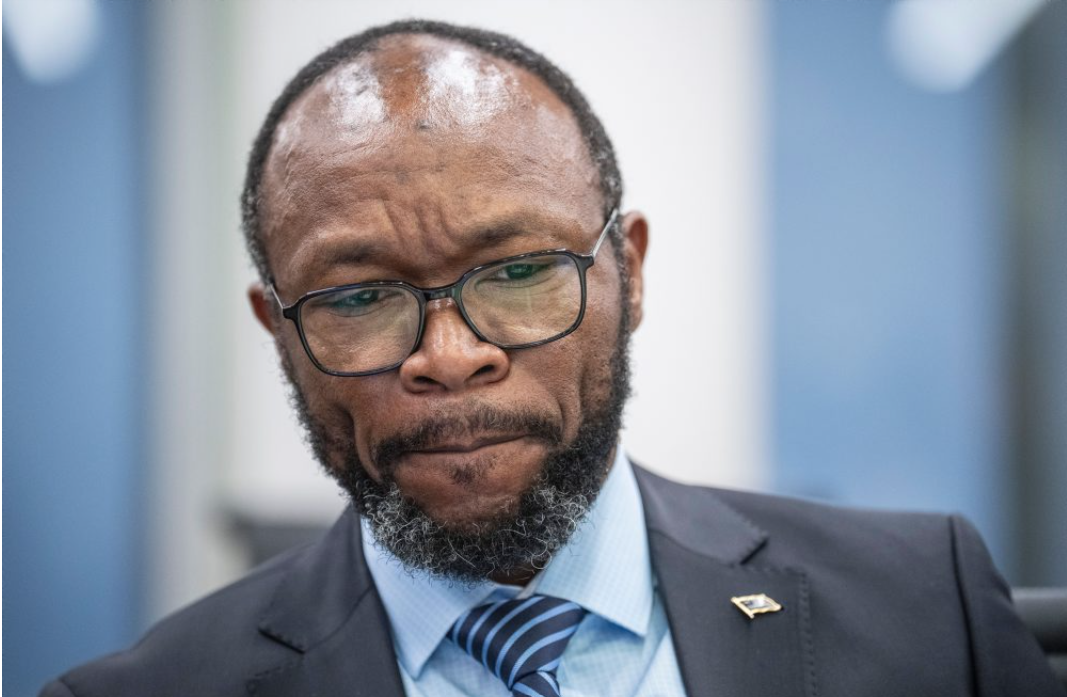
Explosive WhatsApp Evidence Emerges as Lucas Cho Ayaba Pleads Not Guilty on Opening Day of Norway War Crimes Trial
OSLO, NORWAY – (ABS NEWS) A chilling message allegedly recovered from the electronic communications of detained Ambazonian AGovC leader Lucas Cho Ayaba has emerged as one of the most disturbing revelations surrounding his war crimes trial, which opened Tuesday at the Oslo District Court in Norway.
“Wrap a rope around his neck and send him to hell.”
Those words, according to Norwegian prosecutors, were contained in an October 2023 WhatsApp audio message allegedly sent by Ayaba after he received videos showing a prisoner being mistreated.
The captive was believed to be a Cameroonian soldier. His ultimate fate remains unknown.
The alleged communication forms part of an extensive collection of digital evidence Norwegian investigators intend to use in establishing whether Ayaba directed, encouraged, financed or otherwise facilitated serious crimes committed in Cameroon’s war-torn English-speaking regions.
But the 54-year-old Ayaba, who has been detained since September 2024, firmly rejected the allegations as his long-awaited trial began.
Appearing before the Oslo District Court on Tuesday, Ayaba pleaded not guilty to nine charges involving alleged complicity in war crimes and aggravated terrorist acts.
Ayaba appeared wearing dark-framed glasses and sporting a graying beard.
He smiled as proceedings began. One of the opening exchanges provided a revealing indication of how the defendant views his political identity.
When asked to state his name, Ayaba complied. But when questioned about his nationality, he gave an answer that underscored his commitment to the Ambazonia cause.
“Ambazonian,” he replied.
Following the reading of the indictment, Ayaba denied criminal responsibility for the alleged offenses.
The opening proceedings marked the beginning of a trial expected to examine years of communications, alleged operational instructions and financial connections between Ayaba in Norway and armed fighters operating in Ambazonia.
CONFISCATED ELECTRONICS AT THE CENTER OF THE CASE
Perhaps the most consequential aspect of the prosecution’s case concerns evidence allegedly recovered from Ayaba’s mobile phones and other electronic devices.
Norwegian prosecutor Carl Fredrik Fari has identified WhatsApp communications as central to the investigation.
Investigators believe the electronic exchanges may help establish whether Ayaba exercised operational control over the Ambazonia Defence Forces, the armed wing associated with his Ambazonia Governing Council.
Prosecutors allege that between 2017 and September 2024, Ayaba directed armed activities in Cameroon while residing thousands of miles away in Norway.
The October 2023 audio message concerning the captive is among the communications cited in reporting about the indictment.
According to prosecutors, the message followed the transmission of videos depicting the mistreatment of a prisoner suspected of belonging to Cameroon’s military.
The prosecution alleges that Ayaba’s response encouraged the prisoner’s killing. However, whether the instruction was carried out remains unconfirmed.
The court must ultimately determine whether the recordings are authentic, how they should be interpreted, and whether they establish criminal responsibility.
Beyond the WhatsApp messages, prosecutors accuse Ayaba of involvement in planning and financing attacks against civilian gatherings.
One allegation concerns the February 25, 2023, bombing during the Mount Cameroon Race of Hope near Buea.
Three improvised explosive devices detonated during the sporting event, killing a 38-year-old woman and injuring at least 19 civilians.
Another concerns the February 2024 Youth Day bombing in Nkambe, where an explosive device killed a 15-year-old girl and injured 92 people.
Prosecutors allege that Ayaba participated in selecting targets and financing explosives.
The indictment also addresses allegations involving the killing of at least five prisoners accused of spying or betrayal.
Other accusations concern hostage-taking, including the abduction of Cameroonian Senator Regina Mundi, and the mistreatment of four women accused of maintaining intimate relationships with government soldiers.
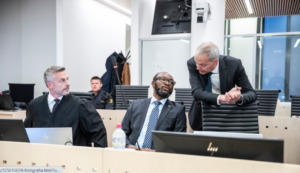
CAMEROON GOVERNMENT LAWYERS AND AMBAZONIAN ATTORNEY ATTEND PROCEEDINGS
The opening session also attracted legal representatives from both sides of the long-running Southern Cameroons conflict.
According to information obtained by ABS News from sources familiar with the proceedings, lawyers observing and representing the Cameroon government were present inside the Oslo courtroom during Tuesday’s hearing.
Their attendance highlights the significance of a trial involving alleged crimes committed during the armed conflict between Cameroon’s security forces and Ambazonian fighters.
However, the identities of the government lawyers, their precise legal capacity, and whether they intend to participate formally in the proceedings have not yet been independently established.
Also reportedly present was Ambazonian lawyer Joseph Fru Awah, who traveled from Cameroon to attend the opening session.
Awah is known for his legal representation of the Nera 10, the group of ten Ambazonian leaders arrested in Nigeria in January 2018 and subsequently transferred to Cameroon.
The Nera 10, including Sisiku Julius Ayuk Tabe, have remained in detention for nearly nine years as of November 2026, following their arrest during the early years of the Southern Cameroons conflict.
Awah’s reported presence in Oslo brings another dimension to the proceedings, given his longstanding involvement in legal cases arising from the conflict.
His attendance does not, however, establish that he is a member of Ayaba’s defense team or has any formal role in the Norwegian trial.
DEFENSE LAWYERS REJECT CRIMINAL RESPONSIBILITY
Ayaba’s lawyer, Morten Engesbak, has defended his client’s political position while rejecting the criminal accusations.
Speaking to AFP, Engesbak explained that Ayaba considers himself the leader of a movement seeking to liberate people who have experienced years of discrimination and repression under the Cameroonian government.
The defense maintains that the Ambazonian independence struggle must be understood within the historical and political circumstances that produced the conflict.
Ayaba regards the armed confrontation as a liberation struggle rather than a terrorist campaign. His lawyers are seeking an acquittal.
The distinction between political leadership and criminal responsibility is expected to become a central issue throughout the proceedings.
While political advocacy for independence is not itself a war crime, prosecutors argue that directing or facilitating unlawful attacks against civilians and prisoners can attract individual criminal liability.
The defense disputes Ayaba’s responsibility for the alleged offenses.
Outside the Oslo courthouse, a small group of Ayaba’s supporters gathered to demonstrate their support for the detained separatist leader.
The gathering reflected the continuing support Ayaba enjoys among some Ambazonian independence advocates despite the serious allegations against him.
WHAT HAPPENS NEXT?
The proceedings are expected to continue over several months, with published schedules placing the conclusion in March 2027.
The precise date of the next courtroom sitting was not established in the available opening-day reports.
Tuesday’s hearing included the reading of charges and Ayaba’s not-guilty plea.
Norwegian prosecutors are considering seeking a sentence of up to 30 years of preventive detention if Ayaba is convicted.
Such a sentence would represent an extraordinary outcome for a separatist leader accused of directing violence in Cameroon from European territory.
For now, Ayaba remains legally presumed innocent.
But as investigators prepare to present communications allegedly recovered from his electronic devices, the central question confronting the Oslo court is becoming increasingly clear:
Was Lucas Cho Ayaba merely a political leader advocating independence from abroad, or did he use his position in Norway to direct and facilitate crimes against civilians and captives in Cameroon?

