

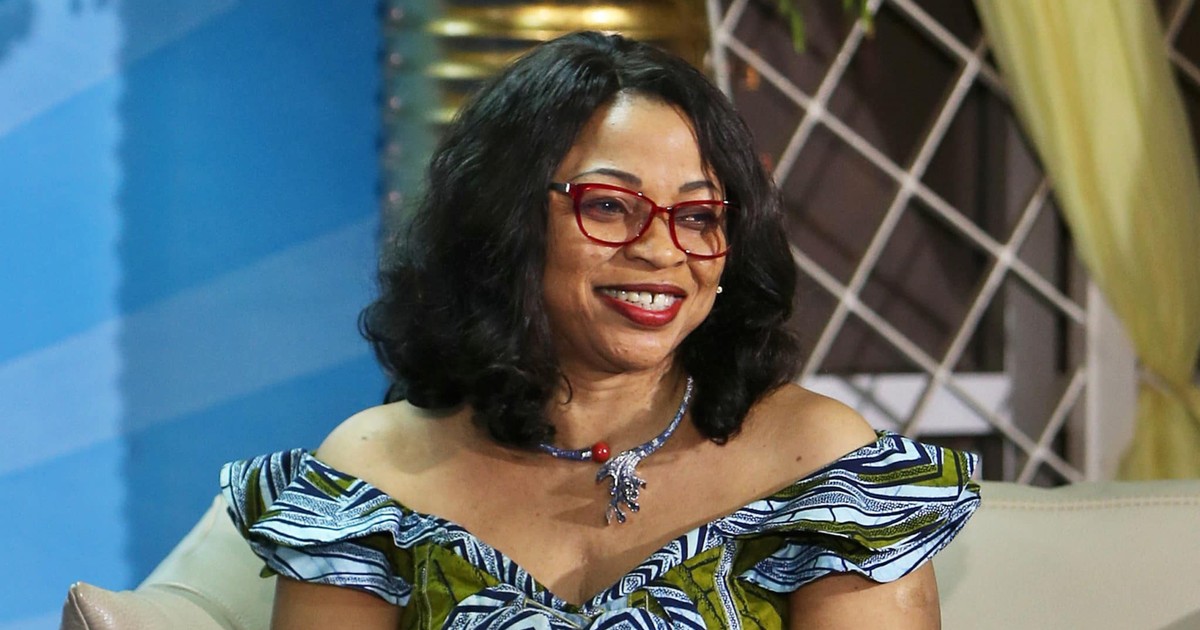
African women are finally claiming their place among the continent’s most powerful business leaders, but few have turned ambition, instinct and relentless hustle into a multibillion-dollar empire quite like Folorunso Alakija.
Meet Folorunso Alakija, West Africa’s first female billionaire who turned an unwanted Nigerian oil block into a billion-dollar fortune
- Folorunso Alakija is a Nigerian businesswoman who built a multibillion-dollar empire by succeeding across several industries, including banking, fashion, and oil.
- Her entrepreneurial journey began with secretarial work, transitioned to banking, then to fashion, and finally into Nigeria’s challenging oil industry.
- She fought a significant legal battle against the Nigerian government to retain her company’s stake in the oil block, which was key to her billionaire status.
- Alakija advocates for women in business, emphasizing resilience, continuous learning, and the mindset that ‘there’s no such word as can’t.’
Fourteen years after entering Forbes’ roll call of Africa’s richest people at 61, Folorunso Alakija marked her 75th birthday on July 15, 2026, as one of the continent’s most recognisable symbols of female business ambition.
Famfa Oil, the company behind much of her fortune, said: “Her journey reflects courage, faith, discipline and an enduring commitment to excellence.”
The tribute captured the rise of a woman who moved from secretarial work and banking into fashion before entering Nigeria’s capital-intensive oil industry.
At the height of her wealth, Forbes valued Alakija at about $2.5 billion and identified her as Nigeria’s first female billionaire.
Her journey, however, is about more than the size of her fortune; it shows what an African woman can achieve by crossing industries, securing the right expertise and drawing on the continent’s trademark resilience to reach the highest levels of business.
“There is no such word as can’t,” she has said while discussing the determination required to succeed in business.
Born on July 15, 1951, in Ikorodu, Lagos State, Alakija trained in secretarial administration in London, but her earliest lessons in dealmaking came from watching her mother trade.
“Negotiation, I learned from my mother. I come from a family of traders and I would watch her communicating and negotiating with her clients,” she said in a 2026 interview withNidacity.
Those teenage observations taught her to control her reactions, maintain a straight face and avoid revealing her position during negotiations.
She took those instincts into the corporate world, joining Sijuade Enterprises in Lagos as an executive secretary in 1974 before moving into banking at the former First National Bank of Chicago and International Merchant Bank.
Over the next 12 years, she developed experience in administration, customer relations and financial transactions.
Yet the security of formal employment could not contain her entrepreneurial ambitions, leading her to leave banking and take the first major gamble on business ownership.
After studying at the American College in London and the Central School of Fashion, she established Supreme Stitches in Lagos, then Nigeria’s capital, during the 1980s.
The label grew into a prominent fashion house serving members of Nigeria’s political and business elite.
Its founder also rose to become president and a lifelong trustee of the Fashion Designers Association of Nigeria, using the platform to promote Nigerian fabrics, clothing and design.
Supreme Stitches did more than move Alakija from earning a salary to owning a company.
It taught her how to manage employees, build a premium brand and cultivate relationships with influential clients; networks that would unexpectedly open the door to Nigeria’s oil industry.

Folorunso Alakija is a Nigerian businesswoman who built a multibillion-dollar empire by succeeding across several industries, including banking, fashion, and oil.Business Insider Africa
Alakija was already an established fashion entrepreneur when a family friend asked her to help secure permission to lift Nigerian crude oil.
The request exposed her to an industry she had never considered entering and showed how the right network could reveal an opportunity hidden from view.
In a 2021 interview with ARISE News, she recalled using her contacts to arrange a meeting with the petroleum minister.
However, the foreign clients behind the proposal wanted to lift crude without investing in Nigeria, while the government was seeking greater local participation in the industry.
Rather than allow the opportunity to disappear, Alakija began searching for a business she could build within the sector.
“I wanted a contract to boost my pocket,” she recalled, explaining that she initially planned to continue running her fashion company.
What began as an attempt to earn additional income became a three-year search for opportunities in oil.
According to the entrepreneur, she submitted several proposals to government officials before finally securing an exploration licence
“The rest was what God wanted to do. What He wanted to at first by giving me that opening through my friend because I would have never looked at the oil industry.”
In 1991, Folorunso and her husband, Modupe Alakija, established Famfa Oil, which received Oil Prospecting Licence 216 from the Nigerian government two years afterwards.
The licence offered access to a potentially valuable re
Famfa still needed capital, geological expertise, deepwater technology and an experienced operator.
The asset that would eventually transform the family’s wealth initially attracted little interest from established energy companies.
“Nobody in the industry wanted it. It was deep offshore, it was 5,000 feet and technology had not reached that water depth. It was too expensive to explore and nobody knew what was deep under” she recalled.
At the time, deepwater exploration involved high costs and considerable technical risk.
Potential partners could not be certain that commercially recoverable oil existed beneath the water, while drilling required substantial investment before any returns were possible.
Several companies rejected the block before Famfa secured the technical support it needed.
The experience showed the difference between receiving an African natural-re
Governments may allocate assets, but licence holders must still raise capital, understand the geology and find partners willing to assume the risk of failure.
In 1996, Famfa entered a partnership with Star Deep Water Petroleum, then associated with Texaco and now a Chevron affiliate. Petrobras also became involved in the development.
Rather than sell the entire licence for an immediate payment, Famfa exchanged part of its ownership for the capital, technology and operating experience required to explore the block.
Crucially, the company retained a substantial interest and remained exposed to the asset’s long-term value.
The deal became one of the most important decisions of her business career.
It showed that African ownership did not require rejecting foreign capital, but rather structuring partnerships that supplied missing expertise without surrendering the entire prize.
Exploration led to the discovery of the Agbami field in 1998 at a water depth of about 4,800 feet, while the offshore block became Oil Mining Lease 127.
Even so, finding oil did not create immediate wealth, as deepwater development still required further appraisal, complex engineering, negotiations and billions of dollars in investment.
Agbami began producing oil in 2008, about 15 years after Famfa received its exploration licence.
“There are no overnight success stories,” Alakija said during CNBC Africa’s My Worst Day programme.
Throughout that period, the company faced the risk that the project might fail or produce too little oil to justify the investment, with its retained stake becoming highly valuable only after Agbami entered production.
Forbes subsequently described the field as one of Nigeria’s most productive offshore assets, with output reaching about 200,000 barrels per day during strong production periods.

Her 10-year tenure as chancellor of Osun State University ended in March 2026.Business Insider Africa
Agbami’s discovery transformed OML 127 from a high-risk offshore licence into one of Nigeria’s most valuable oil assets.
As its commercial potential became clear, the federal government moved to acquire a 50% participating interest in the lease.
Under the proposed structure, the Nigerian National Petroleum Corporation would hold 50%, Star Deep would retain 32%, Petrobras would hold 8% and Famfa’s position would fall to 10%.
For the family-controlled company, the move threatened to strip away much of its ownership just as 15 years of risk, waiting and investment were beginning to pay off.
Famfa fought back.
The company challenged the acquisition, arguing that the government had failed to follow the Petroleum Act when exercising its right to participate in the lease.
The case progressed through Nigeria’s courts and became one of the most consequential battles of Alakija’s career.
This was no longer about entering a new industry or finding an experienced partner. It was about protecting an asset Famfa had helped carry from an uncertain licence to a producing oilfield.
In 2012, the Supreme Court ruled that although the government had a general right to participate in an oil-mining lease, it had not followed the legally required procedure in the Famfa transaction.
The court found that the government had failed to conduct the necessary negotiations before taking the interest and declared the acquisition illegal and unconstitutional.
The ruling restored Famfa’s position and protected the economic foundation of Alakija’s fortune.
Her billionaire status did not come from receiving an oil licence alone, but from a sequence of calculated decisions: securing the block, attracting Star Deep, discovering Agbami, bringing the field into production and successfully defending Famfa’s equity.
Without any one of those developments, the outcome could have been different.
The court victory changed how the market valued Famfa’s stake in Agbami—and, by extension, Alakija’s fortune.
Forbes estimated her wealth at about $600 million when she first appeared on its list of Africa’s richest people in December 2012.
After reassessing the value of Famfa’s interest, it raised the estimate to $2.5 billion in 2013.
She entered the global billionaire ranks in 2014 as Nigeria’s first female billionaire, one year after Angola’s Isabel dos Santos became Africa’s first.
More than a decade later, they remain the only two African women to have appeared on Forbes’ Africa billionaire list.
Alakija’s emergence carried wider significance on a continent where the largest private fortunes in oil, mining, banking, manufacturing and telecommunications had overwhelmingly been controlled by men.
Her rise offered a rare example of an African woman retaining a substantial interest in a capital-intensive energy asset through multinational negotiations, technical partnerships and a legal confrontation with the state.
However, her wealth remained closely tied to oil. Crude prices and production estimates shifted, while Famfa’s private ownership made its precise value difficult to establish.
Forbes valued her fortune at $1 billion in 2020 before estimating in 2021 that it had fallen below the billionaire threshold as oil prices weakened.
The decline did not diminish the achievement. Alakija had already entered a global wealth class reached by few African women, using an indigenous company to secure and defend ownership in one of the continent’s most demanding industries.
