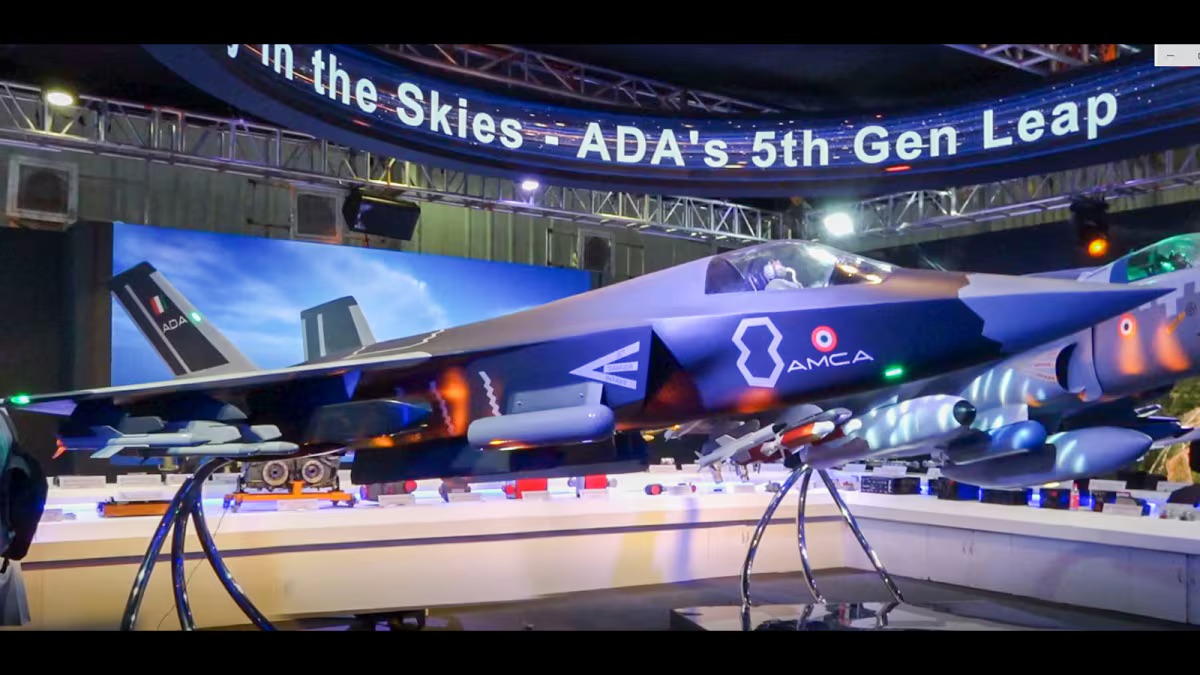
Reliance Industries and Rolls-Royce have joined forces to pursue development of an indigenous engine for India’s Advanced Medium Combat Aircraft (AMCA) stealth fighter, putting forward a new industrial proposition even as a rival Safran-DRDO engine plan moves through the government approval process.
The Indian conglomerate and the British engine manufacturer announced their strategic intent to work together on the design, development, manufacture and delivery of a sovereign Indian combat engine for the Advanced Medium Combat Aircraft programme.
They will also explore setting up an Aerospace Gas Turbine Complex in India, covering everything from engine design and testing to production and through-life support.
The announcement does not mean Rolls-Royce has been selected to power the AMCA. It does, however, bring another serious proposition into an area that has long been one of the hardest pieces of India’s fighter ambitions to solve.
The timing is particularly interesting. A separate proposal from France’s Safranand the Defence Research and Development Organisation’s Gas Turbine Research Establishment (GTRE) for a high-thrust fighter engine is already being processed by the government and awaits final Cabinet Committee on Security approval.
Reliance and Rolls-Royce want to build more than an AMCA engine
Reliance and Rolls-Royce are pitching their partnership as something considerably broader than assembling a foreign engine in India. The proposed gas turbine complex would seek to establish Indian capability across design, development, manufacturing, testing, production and support.
That would give the programme relevance beyond AMCA, with the companies also pointing to possible future work in civil aerospace and other propulsion systems.
“India’s strategic autonomy requires sovereign capability in critical technologies,” Reliance executive director Anant Ambani said, adding that the aim was to combine Rolls-Royce’s propulsion expertise with Reliance’s manufacturing and execution capabilities to build an indigenous aero-engine ecosystem.
Rolls-Royce chief executive Tufan Erginbilgic described the proposed partnership as a step towards building a self-reliant aerospace ecosystem in India.
“Together, with our existing partnerships and capabilities in India, this marks a major milestone towards building a robust, self-reliant aerospace ecosystem in the country,” Erginbilgic said.
Rolls-Royce had already submitted its final proposal for the AMCAengine early this year. That offer included full technology transfer and Indian ownership of the intellectual property. If a contract were signed by the end of 2026, the proposed schedule would see engine-core testing in 2030, a first flight in 2034 and production beginning in 2036.
Bringing Reliance into the picture now gives that proposal a major Indian industrial partner.
Safran is already further down the road with DRDO
Rolls-Royce is not alone in offering India something it has sought for decades: control over the heart of its own fighter aircraft.
As Aerospace Global News reported in November 2025, Safran agreed to work with DRDO on a clean-sheet engine rather than the India-specific derivative of its M88 that had previously been discussed.
DRDO officials told AGN that the proposed engine would be in the 120–140kN thrust class, with India owning the intellectual property. The arrangement envisaged access to sensitive technologies including the engine’s hot section and turbine architecture.
Safran chief executive Olivier Andries said at the time that the company had agreed to a “complete transfer of technologies”, including the critical hot section, and that Safran and DRDO would develop a new engine together in India.
The scale of that proposal is substantial. AGN reported that the programme could cost around INR610 billion ($7 billion) and run for more than a decade, with multiple prototypes planned for testing and certification targeted for the early 2030s.
For India, the value lies as much in learning how to build such an engine as in the finished powerplant. Indian engineers would work on turbine design, single-crystal blades, thermal management and composite materials, technologies that could feed future combat aircraft and unmanned programmes.
The Reliance-Rolls-Royce announcement therefore arrives with the Safran-GTRE proposal already well advanced. What it does not yet establish is whether New Delhi intends to treat the Rolls-Royce offer as a rival path to the same requirement or sees room for a wider propulsion partnership.
AMCA Mk1 will not wait for an Indian engine
The engine question should not hold up the first AMCA aircraft.
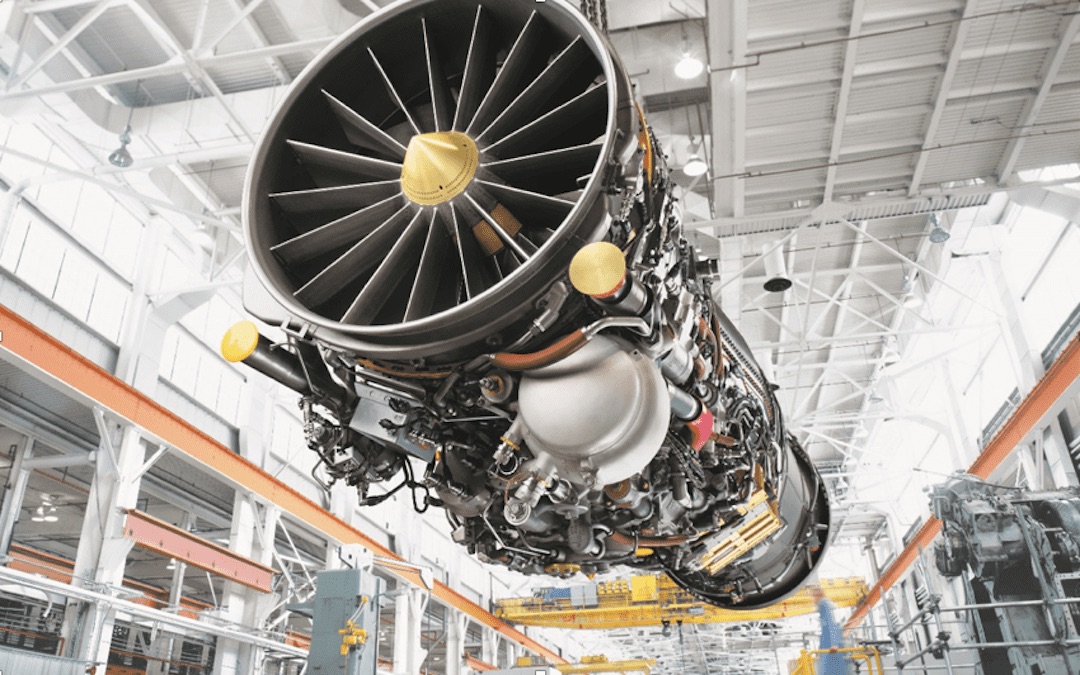
India plans to power the initial AMCA Mk1 with GE Aerospace F414 engines, while the more powerful indigenous engine is intended for the later Mk2.

That gives India time, but developing a modern fighter engine remains a formidable technical challenge.
The country has been here before. GTRE began developing the Kaveri engine in the 1980s with the intention of powering the indigenous Tejas fighter. It ultimately failed to meet the aircraft’s performance requirements, leaving Tejas dependent on US-built GE engines.
AMCA is meant to take India considerably further.
The twin-engine aircraft will incorporate low-observable shaping, an internal weapons bay, a diverterless supersonic inlet and serpentine ducts intended to shield the engine fan from radar. It is also planned with an integrated sensor suite and passive sensors.
The government approved the AMCA design and prototype-development phase in March 2024 with funding of INR150 billion ($1.6 billion). The programme has since moved towards greater private-sector participation, with three Indian-led teams shortlisted for prototype development.
India’s fighter-engine problem is bigger than AMCA
For all the attention surrounding India’s stealth fighter, the real prize may be what comes after it.
India has built fighters, missiles, radars and increasingly sophisticated mission systems, but it has yet to field a modern indigenous engine capable of powering a frontline combat aircraft.
That dependence becomes more consequential as India looks beyond Tejas towards AMCA, unmanned combat aircraft and eventually another generation of fighters. An engine developed in India, with control over its intellectual property and future upgrades, would remove one of the most persistent foreign dependencies in the country’s combat-aircraft industry.
Safran has already laid out one route to get there. Reliance and Rolls-Royce are now putting another proposition on the table.
Which path India ultimately takes remains a government decision. But the contest is no longer simply about finding an engine for AMCA. It is about who helps India learn how to build the next one itself.
Read the latest defence news on AGNRead the latest defence news on AGN
News
Air TransportArceReliance IndustriesRolls-RoyceSafran
Sign up for our newsletter and get our latest content in your
inbox.
1
US Air Force trials portable command centres for collaborative combat aircraftUS Air Force trials portable command centres for collaborative combat…
Collaborative Combat Ai…
2
When is the next solar eclipse, and where can I see it?When is the next solar eclipse, and where can I…
Eclipse
3
Somalia targets September return for Somali Airlines after 35 yearsSomalia targets September return for Somali Airlines after 35 years
Somali Airlines
4
ATSB investigation concludes on Qantas A380 that flew to the US and back with a work light left inside the wingATSB investigation concludes on Qantas A380 that flew to the…
Qantas