

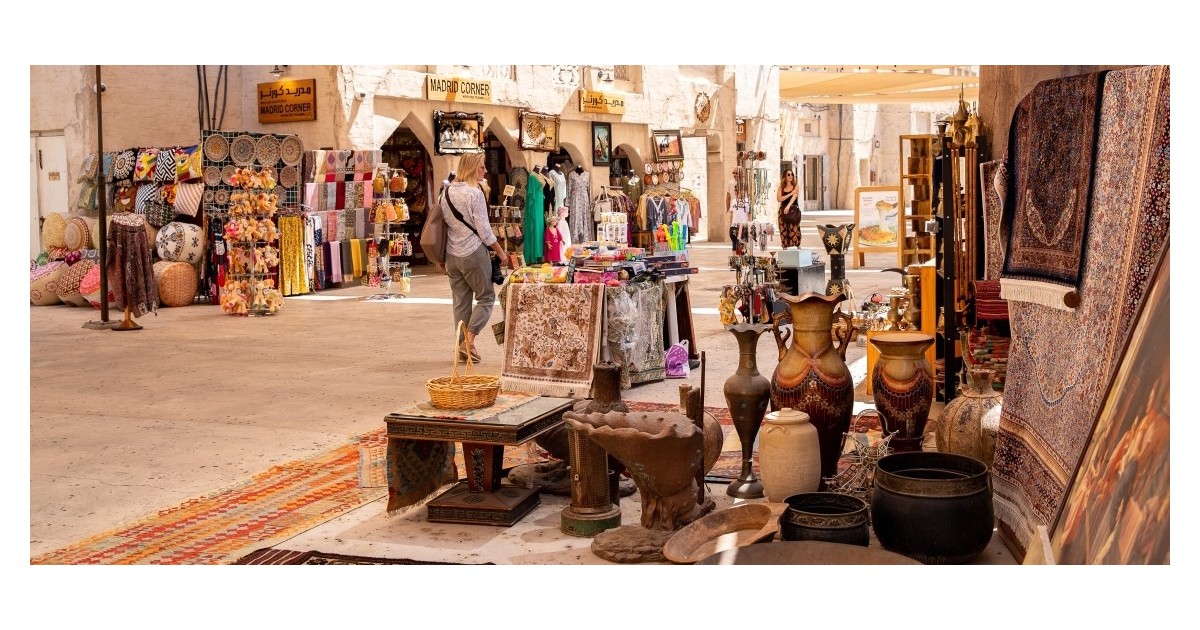
Al Seef Heritage Souq Arabic Market, Dubai, United Arab Emirates. (Shutterstock.com/Caroline Erickson)
Tourism is a key economic driver in the Middle East and North Africa (MENA) region and has long served as a mainstay of economic growth.In 2023, tourism contributed an estimated 6.7% to the Middle East’s total GDP and 8.1% to North Africa’s. Before 2020, destinations like Bahrain, Saudi Arabia, and Oman, experienced triple-digit percentage increases in travel receipts, underscoring the industry’s central role in job creation and foreign exchange earnings.
Despite severe disruptions from COVID-19—an event that devastated global travel markets—the Middle East was the only region to exceed its pre-pandemic tourist totals by 2023. Data from the first nine months of 2024 reveals that MENA still leads in global tourism growth, outpacing many other regions in both international arrivals and overall receipts. This recovery story shows how resilient the sector can be when governments and businesses mobilize quickly.
The escalation of conflict in the region since October 2023 has introduced fresh challenges and slowed what could have been an even stronger path to recovery for the tourism sector in MENA. Immediately after the onset of the conflict, the Travel Sentiment Score for the Middle East plunged to levels unseen since the early days of the pandemic. Airlines and cruise operators suspended certain routes, while multiple foreign governments issued travel advisories against journeys to conflict-affected areas.
Over the course of the year following the conflict’s onset, the data tells the story of an uneven impact (See Figure 1)

Egypt’s receipts, for example, still increased from US$14 billion to US$14.7 billion over this period—but the pace of growth has tapered. Meanwhile, Jordan’s receipts declined by roughly 3% year-on-year since the start of the conflict, reflecting the difficulty of sustaining pre-existing momentum amid heightened security concerns. In Lebanon, although data is limited, early indications suggest a negative impact on foreign exchange earnings, reflecting the escalation of hostilities in the second half of 2024.
A closer look at aviation passenger arrivals captures the re-emergence of “two MENAs,” (a divergence between the GCC and non-GCC), with the conflict’s effects disproportionately impacting the subregions closer to the conflict, particularly the non- Gulf Cooperation Council (GCC) Middle Eastern economies. Overall, MENA still posted an estimated 7% annual growth in passenger arrival figures.However, the non-GCC Middle Eastern countries have been more directly affected by negative monthly growth from October 2023 to October 2024. By contrast, the GCC countries and North African economies maintained positive growth, albeit at a slower pace.
During the first nine months of 2024, non-GCC Middle Eastern countries received 2.35 million fewer European visitors compared to the same period in 2023, while North Africa attracted 2.75 million more European visitors (See Figure 2). This may suggest a substitution effect, with travelers opting for destinations in North Africa that offer similar experiences but are further from the conflict
Tourism patterns within countries also appear to have shifted. In Jordan, while foreign visitor numbers to most tourist sites saw an overall decline from January to September 2024, sites like Petra and Mount Nebo experienced larger relative decreases. In contrast, locations such as Ajloun and the country’s four major museums near Amman gained relative popularity, reflecting evolving tourist preferences during this period.
Figure 2: Estimated a and North Africa (right), y-o-y, Q1-Q3 2024
Source: OAG Traffic Analyzer, 2025
Building greater resilience in the tourism sector has become a collective priority for governments in MENA. To get there, our key recommendations include:
-
Communicating risks more transparently: Clear and credible communication about security conditions can help restore traveler confidence.
-
Strengthening regional cooperation: Coordinated marketing and crisis management can transform MENA’s reputation, ensuring that conflicts do not deter visitors from otherwise stable areas.
-
Promoting domestic and regional tourism: As seen in Egypt following the Arab Spring, local markets can help cushion the blow when inbound tourism dips.
-
Investing in tourism infrastructure and diversification: Upgrades to airports, roads, and tourist sites can bolster long-term competitiveness, while expanding tourism offerings reduces vulnerability to single-market shocks.
Focus on rebranding, investing in regional cooperation, and enhancing crisis planning will be vital to reinforce the resilience of the tourism sector and maintain recent gains. Strengthening safety measures and addressing travel advisories can make a difference in rebuilding travelers’ confidence. In post-conflict environments, a proactive approach—especially in partnership with international partners and institutions—can help tourism rebound quickly after a shock. Additional insights are available in World Bank reports such as on Resilient Tourism and Tourism Sector Pandemic Recovery. For more information on the tourism sector’s performance and related policy considerations, see the Tourism Watch quarterly report.

