

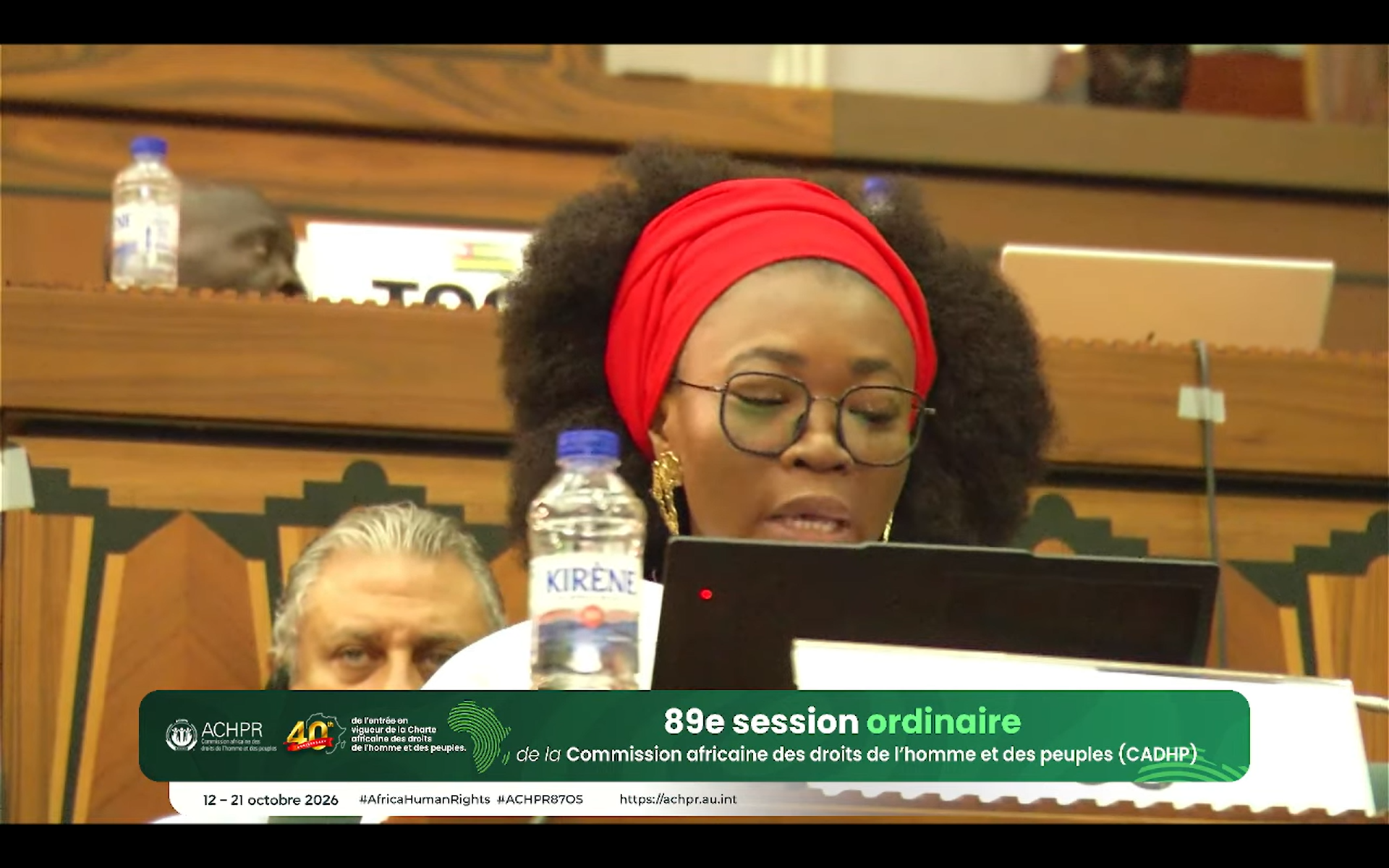
During the session, States and National Human Rights Institutions (NHRI) delivered statements on the situation of human rights in their respective countries. Indeed, the NHRI of Chad shared that the protection of the freedoms of association and assembly and of human rights defenders remain essential to civic participation, the prevention of tensions in the country and the consolidation of the rule of law. These issues deserve sustained attention from the government and the African Commission.
On 13 October 2026, ISHR delivered a statement on the situation of human rights in Africa.
The statement highlighted the resurgence of the violation of the freedoms of association and assembly in Cameroon, Zambia and Guinea. In Cameroon, human rights defenders have died at the hands of, or whilst in the custody of, the police; the renewal of registration certificates and licences for certain organisations is proving difficult; some organisations have had their activities suspended; and administrative measures have been adopted with the aim of restricting access to funding for targeted organisations. In Zambia, numerous laws severely restrict civic space such as the Public Order Act or the Cyber Security and Cyber Crimes Act.
In light of the seriousness and urgency of this situation in Guinea, ISHR calls on the African Commission to carry out a mission in the country in order to assess the situation on the ground and make urgent recommendations to the authorities.
said Lidawh-wè Fabienne Dontema, Africa Legal and Advocacy Officer at ISHR.
ISHR also encouraged the African Commission to ensure that the draft African Declaration on human rights defenders remains firmly rooted in the fundamental principles of universality, independence and non-discrimination. It is also essential to continue holding inclusive consultations with networks and coalitions of defenders, so that they can contribute to the process.
Finally, considering transnational repression has severe impacts on the right of defenders who advocate for human rights and fundamental freedoms and engage with regional mechanisms, ISHR called on the African Commission to adopt a resolution on this issue and to carry out a comprehensive continent-wide study on transnational repression in Africa, examining, amongst other things, its nature, scale, patterns, methods, perpetrators, the populations affected, and its impact on the enjoyment of human rights.
Author
Adélaïde has a Master in International Law and Relations from the University of Clermont-Ferrand. Adélaïde worked with indigenous people and minorities in Mauritania for better protection of their rights, especially victims of slavery. Previously, she advocated for the rights of women in Poland and Macedonia as well as the advancement of freedom of expression in Central Africa.
ISHR contact
Filed under
- Freedom of expression, association & assembly
- Reprisals
Region
- Africa
Country
Mechanism
- African Human Rights System
Programmes
- Systems strengthening
- Transparency and rule of law
- Land, climate and environment
- Nicaragua
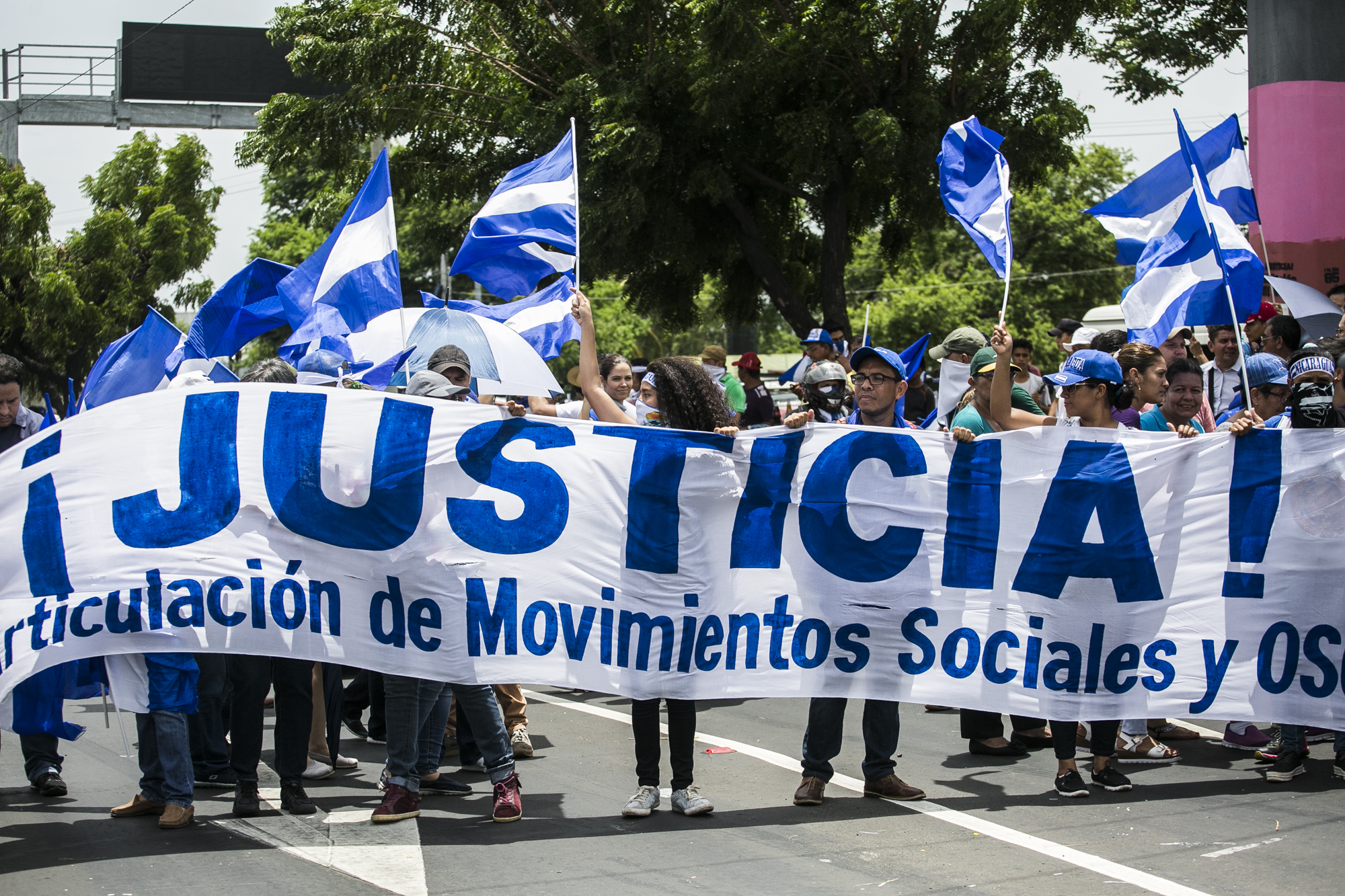
At the Human Rights Council’s session, 47 States jointly denounced the dismantling of democracy in Nicaragua, while UN experts presented new evidence of systematic repression, enforced disappearance and deaths in State custody.
- Women’s rights
- Afghanistan
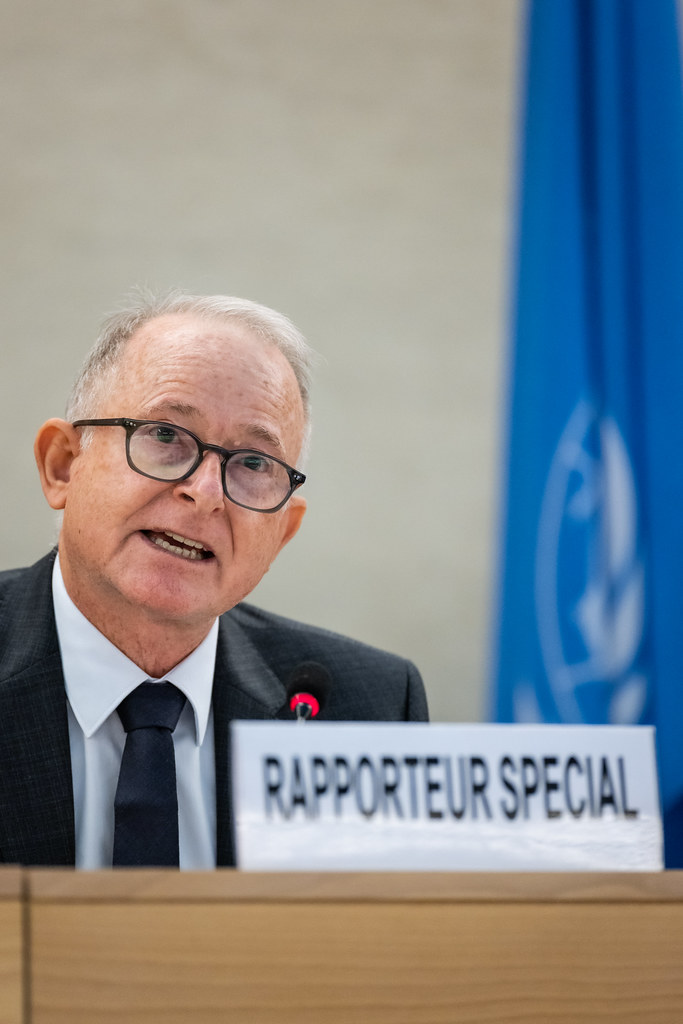
The Human Rights Council has renewed the mandate of the Special Rapporteur on Afghanistan for another year, maintaining dedicated scrutiny of the rights of women and girls. ISHR welcomes the renewal and calls on States to make sure the new Independent Investigative Mechanism for Afghanistan is up and running without delay.
- Freedom of expression, association & assembly
- Venezuela (Bolivarian Republic of)
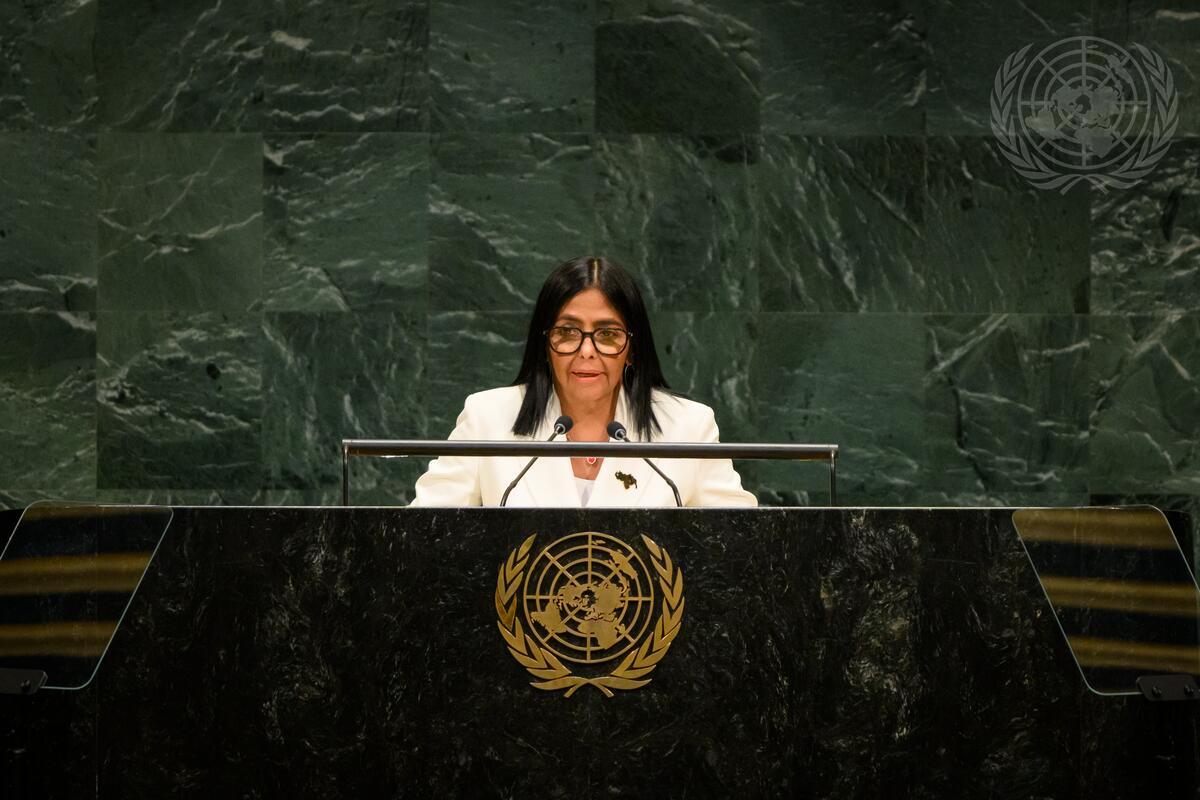
The Human Rights Council renewed the mandates of its Fact-Finding Mission on Venezuela and of the Office of the United Nations High Commissioner for Human Rights to monitor human rights in the country, at a time when global scrutiny is more needed than ever to ensure reforms respect and protect human rights.

