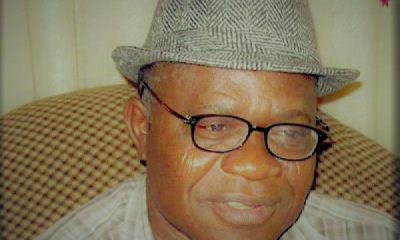
Prof. Tunji Olaopa making his presentation as guest speaker at Nigeria Public Service Lecture marking the United Nations Public Service Day organised by the Bureau of Public Service Reforms (BPSR) in Abuja on June 23, 2026.
- Share
- Tweet
In its many centuries of historical evolution, from the ancient Egyptian and Roman period all through the French and Prussian ramifications to the British iteration of its essence, we can say without any form of exaggeration that the public service has never known the same type of challenging reality that it is currently facing in the twenty-first century. While it is true that the public service has weathered all the possible challenges it has ever encountered, from wars to famines and droughts, as well as economic recessions of all kinds, it now confronts all across the world all these challenges in even more severe and complicated forms.
Today, the world is in a polycrisis. This simply means not only that the world is confronted with unimaginable conflicts, problems and all sorts of predicaments, or that these crises and challenges are manifesting at a degree never before seen in any century. A polycrisis implies that these conflicts, crises and challenges are connected in some terribly complicated and complex ways that spell serious headache for governments, public administrators and public managers. The challenge posed by climate change, for example, is not just a challenge about the inclemency of the climate alone, but how that problem aggravates agriculture, ethnic conflict, and geopolitical and geoeconomic crises everywhere across the world. Cybersecurity challenges instigate terrorism that cripples national government and throws the world into governance crises. And that is how every other conflict and crisis make other conflict and crisis more troubling.
At the heart of all these problems, challenges, crises and predicaments of the world lies the public service that every government must depend on to confront and engage with these challenges that policies must undermine on behalf of the citizens. In 2001—September 11—the United States experienced one of the largest terrorist attacks in modern human history, and according to a commentator, a government system that “had defeated the Nazis, the Japanese and the Soviet Union was no match for a handful of terrorists.” When the World Trade Centre came tumbling down in a shower of bricks, and steels and bones, it was the American public service that shouldered the burden of what it did not expect and on that horrible scale. When the coronavirus hit the globe from 2019 to 2021, it was the public services all over the world that were at the receiving end of its most brutal and traumatic charges—hospital workers, doctors, nurses, armed forces, law enforcement officers, etc. The public servants withstood the pandemic at its most cruel points, and often without the required equipment. It was worse for every state, especially those touted as the very embodiment of infrastructural development, whose sophisticated healthcare facilities failed woefully to contain the onslaught of the ravaging virus. No government or policies or public service was prepared for the pandemic or the other crises from the Internet bubble collapse of 2000 to the US-Iran conflict of 2026.
This is a very good way to commence a reflection about the state of the public service in what has been called a VUCA environment, a twenty-first century environment that is vulnerable, uncertain, complex and ambiguous. A world in polycrisis is therefore a world that generates uncertainty, ambiguity and vulnerability with our most cherished infrastructural advancements. The VUCA environment simply implies that the public service might not always be prepared for the worst that the human minds and actions have to offer in the human society. And the complexity of managing such human world concerns how the governments and their public service have been challenged to not only rethink their policy understanding of human progress and flourishing, but the idea and structure of the public service that would implement these policies.
Given these challenging realities of the VUCA environment the public service must operate in, what questions confront the political and bureaucratic leadership in all the states across the world? The questions are simple but significant. First, given that many of the world governments and public services were caught unawares and struggled with the administrative implications of the multiple crises that had befallen the world in the twenty-first century, how many more crises and upheavals are lurking in the crevices of global geopolitical relations and public governance that the public services of different states might be called up to manage in the years ahead?
Second, and given that the administrative lessons, skills and experiences of the twentieth century have become most inadequate for engaging with today’s challenges, how should the government and its public service commence the reflection and reinvention of government business in ways that fit it for today’s administration and governance? In other words, how ought the governments, especially in Africa, reengineer the traditional Weberian public service in ways that make it resilient, preemptive and agile sufficiently to enable public managers confront the VUCA environment and prepare for the decades ahead? In what ways, for example, can the Nigerian public service become effective and efficient in handling current polycrisis and the hard knocks that come with future crises while also learning from them?
Many countries in the world today, and especially the Commonwealth of Nations of which Nigeria is a part, inherited the Weberian bureaucracy. This is the largely hierarchical, rule-based and rational institution that determines the structural shape of the public service. This legal-rational institution promotes maximum efficiency through insistence on compliance with rules and procedures, and the respect for hierarchy and specialization. This makes the bureaucracy a stable, impersonal and officious entity designed to manage tasks in a predictable manner. The Weberian model of government business is therefore fashioned as a stabilizing rather than an innovative operating system. This stifles the administrative creativity and rapid adaptation that the system requires to confront and manage disruptive challenges and innovation in the VUCA environment.
When the coronavirus pandemic hit the world, the Nigerian public service was able to shake its rigid characteristics and managed to adopt digital tools that enabled a data-driven decision-making administrative speed and efficiency, especially in terms of the policies that led to school closure, social distancing and other significant measures. This made for a much efficient resource allocation and monitoring capacity that undergirded the data-rooted strategic communication which facilitated public trust and compliance with the measures. However, and on the downside, there was no way the system could shake its accustomed institutional inertia and poor coordination across the three tiers of government. This was compounded by under-investment, and hence insufficient, infrastructural development especially in healthcare. This led to shortages of supplies, low-technological deployment of resources and inefficient resource distribution across the country.
What has been the preferred framework and trend of change management for the Nigerian public service that has conditioned its administrative reforms and praxis over the years? How, in other words, has the system pursued the reform, restructuring and reengineering of the public service institution over the years and since independence? I will just highlight two cogent frames of change management strategies. The first is an acute reliance on global best practices, imported administrative models, external experts and consulting firms. These institutional and structural innovations and practices are usually driven by development agencies that project neoliberal paradigms, models and ideas that are developed within different contextual frameworks.
Unfortunately, they generate a conception-reality gap in which institutional reforms become essentially technicist because the paradigms and models are transplanted from their source into a different and often more complex context. This makes them radically decontextualized in ways that limit or even undermine their efficacy. This is wat happened with so many reform efforts, from some public-private partnership projects to the 6-3-3-4 educational model. External experts and consulting firms also often operate without deep insider knowledge or collaborations. And so, this fails to generate first-hand insider perspectives on the institutional challenges and the appropriate solutions for them. The flip side of the equation is that many of the MDAs also often lack the appropriate skills and competences to efficiently deploy these universal and expert-driven practices and models in ways that enable them to adapt and adopt them into the Nigerian administrative context.
The second frame that has conditioned the change management plan is the deepening of institutional reform implementation through a concerted investment in training and capacity building for reform managers. These are meant as operational attempts to instigate institutional reforms and innovation through encouraging public officers and servants to learn and test new ideas and models in the context of practice
This competency-based framework manifested, for example, in the emergence of the organization and method (O&M) unit that evolved eventually into the Management Services Office, and replicated in the MDAs through such units like the Organization, Operation Management Research unit of the Department of Planning, Research and Statistics. Or what we now call the Reform Coordination Department today
Unfortunately, this deepening of the reform impulses is rather episodic because it is not intentional, systematic and part of a more comprehensive reform blueprint. Rather, it is triggered by accidental circumstances like economic crises or public criticisms
All this raises for us a very important question, going forward: How can the Nigerian public service take full advantage of existing structures, systems and reform strategies in order to further stimulate and deepen the production of innovative reform solutions meant to engage and resolve both deep-seated and emerging problems? The answer, for me, lies in context-sensitive governance reforms that aim to reconfigure public governance through innovation-rooted reform strategy, especially through a more participatory and inclusive process that gestures towards drawing in citizens, public employees, private stakeholders and the larger society. This reform strategy demands creating national innovation systems that facilitate the collaborative relationship between public and private actors in reform networks and knowledge exchange, especially through the infusion of, say, entrepreneurial insights. This collaborative effort taps into local and private knowledge to generate “collective intelligence” that could prove to be more reliable and resourceful methodology than unbridled reliance on pre-packaged imported models and paradigms. This can be reinforced with a proactive research and development (R&D) backend that facilitates other methods like ethnography including participant-observation and design-based methods like prototyping.
If this analysis of the shape of the reform process is cogent, then we can multidimensionally enhance the scope of the civil service reforms by embracing public governance domains that allow innovative approaches contribute to more social inclusion of administrative praxis
I will highlight five such domains in conclusion. One, a more expansive focus on transparent and open government through the enhancement of digital and automated access that makes the public service citizen-friendly while reducing costs. Two, strengthening citizens participation in the policy process in ways that foster trust in government and its policy actions. Three, to achieve this citizen-centered public service, the skills and competency set of public servants must necessarily be enhanced also. This implies a paradigmatic shift that encompasses a new mindset conditioned by new concepts, culture and attitude. Four, effective reform implementation demands strategic communication tools which must be integrated into public policy instruments.
Fifth and lastly, there is a need to build critical and multi-pronged collaborations that have the capacity to orient reforms towards social inclusion—collaborations within the institutional level, between national and subnational levels, between the public service and the innovation ecosystems, between the government and the larger society, and through deepening public-private relationship
Olaopa, a Professor of Public Administration, and the Chairman, Federal Civil Service Commission, made this presentation as guest speaker at Nigeria Public Service Lecture marking the United Nations Public Service Day organised by the Bureau of Public Service Reforms (BPSR) in Abuja on June 23, 2026
Don’t Miss
Power, Politics, And The African Conditions

Opinion
Power, Politics, And The African Conditions
Published
17 hours ago
on
July 3, 2026
By
NewTimes

Prof. Toyin Falola delivering the Masterclass at the University of Lagos on July 2, 2026.
By Toyin Falola
This short piece is part of the Masterclass delivered at the University of Lagos on July 2nd, 2026. Public pressure insisted that I circulate part of its contents. Three hours after the event, the phone would not stop ringing, and both email and WhatsApp communications were overwhelmed with requests. I appreciate the public demand, which suggests a hunger for valuable knowledge
People provide two simple explanations for the problems of African countries. Blame everything on colonialism or blame it all on African leaders. Both tales give everyone a free pass. The truth, however, is messier: colonial control established the stage, but the leaders who followed independence decided how to utilize it, and many opted to keep the worst elements operating, only with new names on the door. Go to a government office in Lagos, Accra or Kinshasa and the architecture may be modern, but the manner decisions are taken inside has not altered since colonial times. Each file has to go up a ladder of approvals. Nothing happens without a signature from above. This is not bureaucratic caution: it is the old colonial system of control, maintained because it benefits whoever happens to be on top now.
Since independence, African leaders have generally stayed in the same chair as their colonial overlords rather than constructing something new. While Kwame Nkrumah fought for pan-African liberation in Ghana, he kept most of the colonial civil service. Mobutu did not develop the technology that allowed him to steal the nation; Belgium’s King Leopold had already established it in Congo. He grabbed it. In Nigeria, almost everyone has a classic story of a small trader, following all the rules, waiting eight months for a routine government certificate. One phone call to the correct person, and the papers are cleared in a week. The formal procedure is on paper. Who you know is the true process. Such behaviour is euphemistically referred to by researchers as “neopatrimonialism,” or politics by personal favors rather than norms. This is not to say that African government officials are any less competent than anybody else. They operate in a system that encourages loyalty above rules.

It needn’t be like this all over the place. Botswana has had genuine elections since 1966, maintained its judiciary fairly independent and utilized its diamond riches to create roads, schools and a national savings fund rather than letting politicians pocket it. The difference was not a more benign colonial background, but a ruling class that exercised restraint. This one example is important because it shows that the old system is a choice, not destiny
When government promises seldom translate into roads or hospitals, accepting five thousand naira now is not stupid; it is the only sure return many voters would ever see. Branded t-shirts, free food and little folded currency notes discreetly given at the perimeter lure a throng during political rallies in Nigeria, Kenya or Zimbabwe. This is corruption, outsiders say, and the people are to blame for buying it. That’s missing the point. Nigerians have a term for this: “stomach infrastructure,” the food and cash politicians dole out in lieu of the schools and hospitals they promise.
Behind many candidates is a “godfather,” a power broker who selects who runs and who doesn’t, ignoring party regulations. Politicians transfer parties all the time, not because of philosophy but survival, since parties were seldom established on ideas in the first place. And the jobless young guys engaged as campaign muscle for a few thousand naira a day are not profoundly dedicated to any cause; they are accepting the only paid jobs on offer
In 1884–85, Europeans who never set foot on the continent drew Africa’s boundaries in Berlin, lumping together more than 250 ethnic groups inside Nigeria alone, just because it suited colonial administration. The British also ruled different regions on different logics; in the north they ruled through existing emirs, but in the southeast, they invented ‘warrant chiefs’ who had no real authority, a mismatch that sparked the 1929 Aba Women’s War and still echoes in how regions relate to central government today.
The colonial economy was to take raw commodities- cocoa, cotton, oil, minerals and process them elsewhere, and that pattern has hardly altered. Nigeria still derives most of its export revenue from crude oil, although it imports refined petroleum at a markup. Fourteen West and Central African countries still use the CFA franc, a currency historically related to and partially controlled by France, which critics argue even today inhibits these countries’ authority over their own economy
But we strongly reject the notion of colonialism as a permanent justification. More than sixty years after independence, it is no longer honest to blame Britain or France for today’s robbed budget or an election commission that can’t count ballots. In Ghana, Nkrumah strove to escape the colonial patterns of the past with nationalisation and the hope of pan-African unification. But his own administration became authoritarian, banning opposition parties and imprisoning critics, mirroring the colonial practices he despised. Good intentions are not enough. Building really new institutions is hard, unglamorous labor that independence speeches alone cannot achieve.
Ask anybody in rural Benue State who they’d trust to handle a land issue properly, and most would say the traditional ruler or council of elders, not the courts. Not because courts are not capable, but because court proceedings take a long time, are expensive, and may easily be skewed in favour of whoever has money or connections. Local government, for all its inherent failings, at least seems proximate and answerable in a manner the state frequently doesn’t. In most of Africa, leaders are less assessed by the quality of the free and fair process and more by what they clearly provide. That’s why a governor with a poor human-rights record may remain popular by building roads and paying wages on time, while a president with a clear democratic mandate might be detested if life becomes more difficult under him.
Paul Biya of Cameroon, Yoweri Museveni of Uganda and Denis Sassou Nguesso of Congo-Brazzaville have all changed their constitutions to remain in power much beyond intended bounds. The message people learn is not subtle: constitutions give way for a determined leader, which corrodes confidence in all institutions below it, courts, electoral boards, anti-corruption organizations included
Nigeria’s anti-corruption agency, the EFCC, has recorded some actual convictions, but is also frequently perceived as going after the political opponents of those in power with more vigour than their supporters, feeding into the notion that corruption enforcement is a political weapon rather than an even-handed rule of law
Scandals have been exposed on social media; a corrupt official or a harsh police encounter might reach millions in hours, but the virality seldom leads to resignations or convictions. It may expose the problem of trust. It has not cured it. Into that vacuum enter pastors, imams and traditional rulers who frequently have more true trust than elected politicians simply because their presence in people’s lives is consistent and evident
A lot of the seeming historical ethnic distinction was really solidified by colonial officials, who turned fluid, overlapping local identities into fixed categories for census and control purposes. Later, the colonial-constructed Hutu/Tutsi division was exploited with devastating effects in the 1994 genocide in Rwanda
The ‘federal character’ system of Nigeria aims to ensure ethnic balance in government employment and university seats. The intention is understandable, but the consequence has frequently been to solidify the same ethnic divides it was supposed to blur, making a people’s ancestral “state of origin” count more than where they really reside and pay taxes. If your family has lived and paid taxes in a location for a certain number of years, then you and your children should enjoy full rights there regardless of where your grandpa was born.
In Lagos, Nairobi and Accra, young people are spending an increasing part of their upbringing in mixed neighbourhoods, attending mixed schools and marrying across ethnic lines their grandparents would never have thought of. Even if many politicians keep doing it, old-style ethnic political mobilization is a tougher sell to this age. Young Nigerians went to the streets in October 2020 to protest police brutality in the #EndSARS rallies, which were mostly organised via social media and mutual help rather than established party or civil-society organizations. The state’s harsh response, which included gunshots at the Lekki tollgate, is still unsolved and contested. On the other hand, the protests were a reflection of something far larger: a generation that is becoming less and less willing to tolerate dysfunction just because it was inheritable. In recent years, Sudan, South Africa, and Senegal have all been shaken by uprisings headed by young people like these.
Regional commerce might be a quieter but more lasting transformation. The African Continental Free Trade Area, in operation since 2021, wants to increase intra-Africa trade over trade with Europe or Asia, directly challenging the colonial pattern of exporting raw cocoa and buying chocolate, exporting crude oil and importing gasoline. Progress has been sluggish, but the rationale is fundamental
A truly different African future would involve digital government systems that remove room for officials to demand favours; political parties with real internal democracy not godfathers; courts and election bodies that are independent enough to make rulings stick against a sitting government; citizenship rights based on where people live and contribute, not on ancestry; and economies that process their own oil, cocoa and cotton, rather than exporting them raw
We can’t continue solely on the assumption that younger leaders would necessarily make things better, with many politicians in their thirties and forties proving they can operate the same patronage networks as their elders, just with slicker social media. What counts is not age but how ready they are to construct institutions that can restrain their power, courts that can rule against them, anti-corruption organizations that can probe their own friends and election systems that can really remove them from office. The system was constructed by particular people and is perpetuated by specific individuals, meaning it may also be unbuilt by the people who refuse to accept it as permanent: the ones demonstrating, organizing, voting and demanding something better.
Continue Reading
Opinion
Birth Of Nigerian Bandit Literature
Published
2 days ago
on
July 3, 2026
By
NewTimes
Prof. Tony Afejuku
By Tony Afejuku
On Friday, June 26, 2026, this composer travelled from a distant and not distant land to his city of Warri, his Waffi, land of lands and city of cities whose twin is Sapele, Safi, another fabulous land of lands (another) city of cities. In our boyish imaginations in the nineteen fifties and nineteen sixties these two significantly significant coastal lands were the only two “Papa’s lands” in our dear, dear country. Simply stated, they constituted our paradise. There were fantastic tales about Lagos – Lasgidi, Eko; Lokoja; Port Harcourt – Pitakwa; Ibadan; Jos; K.C. – Kano City; Osha – Onitsha; Calabar; and nearby Benin City, but none compared with our twin cities of cities!
After a pretty long time that was not a pretty long time I was going home, to the homeland of new turmoil – by road – despite my promise to my good self never ever to embark on any journey on our dreadful roads to any town or city in this country – their country your country my country our country. Of course, we all must understand why I poured water on my vow when I journeyed to and from Warri on the – afore-said Friday, June 26 and Monday, June 29, 2026: The fear of bandits is the beginning of the new wisdom in President Bola Tinubu’s Nigeria! To be abducted or kidnapped in the Nigeria of the PON, in the Nigeria of the current President of Nigeria, is to accept an un-willing and inevitable, and eternal farewell to our lovely country that bandits and kidnappers are absolutely turning into a place, into a haven, of monstrosities.
Sooner than later, those of us who have the gift of creative words and who are lucky to avoid the clutches of the dare-devils that our Abuja lords cannot tame and bring to book, will absolutely begin to speak of “Nigerian Bandit Literature”. They will soon begin to create what the glitterer is calling now “Nigerian Bandit Literature” – that is, “Banditry, kidnap-for-ransom Literature”. As the glitterer is composing this composition the subject of mass abductions is deeply penetrating his creative consciousness, guiding his thoughts relating to how he should speak about and document with nacreous, beautiful words and sentences, akin to Wole Soyinka’s or Romanus Egudu’s or Olu Obafemi’s, trauma, geography, and state capitulation in the country now.
When the vehicle taking the glitterer to Warri got to areas projected as actual geographical flashpoints on the Benin-Warri Highway where bandits or kidnappers allegedly operate, his heart knew no fear. Instead his imagination was aglow with the desire to create and design, at the same time, a poetic and realistic cartography of banditry. The glitterer gave sincere thought to this up to the time he entered Warri. And in Warri the pace of his thought created further room for reflection when he remembered a friend of his in Zaria. He is a Professor of Fine Arts at the Ahmadu Bello University. In three years’ time the system will speak to him to retire voluntarily. He is ready to welcome the speech. But how is he ready to visit the years ahead?
In a telephone conversation with him, Professor Jerry Buhari intimidated the composer as follows: “My village is called Akwaya, Kachia LGA, Kaduna State. The village has been sacked by kidnappers and bandits – along with other neighbouring villages. I have no village to return to in three years’ time. I built my retirement home there. A very artistic house in my serene village which I cannot settle in at the behest of my people who don’t want me to be captured like a chicken. They don’t have the money to pay for a professor’s freedom. Where will a Professor’s ransom come from?”
Professor Jerry Buhari’s pathetic case was a pathetic case indeed. The last time he visited Akwaya, he meant to have a well deserved rest of at least three weeks. But barely after two days he heard a disquieting middle-of-the-night knock on his door – which was disquieting indeed to this mind. When he opened the door despite his severe worry and anxious thoughts, he beheld two physically well-endowed youths. He knew them handsomely. They pleaded with him to return to Zaria at the break of day. Bandits had taken over the land. They did not enter his house. They disappeared into the disquieting night after making their short plea. Jerry disappeared from Akwaya before the first drops of dew fell. He has never returned there since that time – two long years ago. And his retirement years are hurrying near!
When Jerry spoke to the narrator and authorised him to tell the story, what we perceived – both palpably and impalpably – was/is nothing short of a new wave of bandit literature now berthing in Nigeria’s cultural landscape. What the glitterer is saying, in other words, is that Jerry’s testimony is a perfect illustration of an emerging, new genre in Nigeria called “Bandit Literature”. There are other more than numerous examples to cite. But a simple but huge question that must be asked is this: Are the acts of banditry witnessed in several parts of the land not inspired and systematically programmed by corporate bandits? Are they not syndicated acts of banditry? Our poets, novelists, playwrights, essayists, literary journalists and columnists must pay heed to these questions – as they investigate and investigate and write and write and create and create what they present to the audience – investigating, writing and creating to reveal their truths to the audience – with this rider in their creative consciousness: “When villagers see scholars begging and thieves riding horses, children begin to question the narrow path to wisdom”.
It’s time to create flowers earnestly, emitting pearls of wisdom about our current circumstances in the land
Afejuku can be reached
Continue Reading
Opinion
Akara, Corn, And Kuli-kuli: All Hail Remi Tinubu
Published
3 days ago
on
July 1, 2026
By
NewTimes

Dr Promise Adiele
My Promise Adiele
The recent nationwide outrage against Nigeria’s First Lady, Mrs Oluremi Tinubu, affirms that Nigerians are ungrateful people. Instead of them to grovel, prostrate, and kneel, despite their agonizing economic conditions, and thank the First Lady for her first-class microeconomic advice, they are busy hurling insults at her. What kind of impudence is that anyway? The Delta State-born former Senator recently advised Nigerians to embrace frying akara, roasting corn, and selling kuli-kuli as their ultimate road to profound economic prosperity. What is wrong with the advice? Kilode!!! In simple terms, the First Lady asked Nigerians to set aside all their aspirations to digital tech hubs, forget all about ICT-inspired start-ups, tear up their university degrees, and embrace roadside entrepreneurial collective salvation. Nigerians must be grateful that such a wonderful National Poverty Initiative (NPI) is coming from the First Lady at a time when the populace is frolicking in surplus and overflowing economic conditions.
We must adhere to this advice because Aso Rock tenants are beneficiaries of this magnificent business idea – they feed on akara, corn, and kuli-kuli every morning. In fact, President Tinubu and his aides carry corn in their pockets anywhere they go. It is their favourite snack. All the Senators and Honourable members of the House of Representatives are desperately searching for akara, corn and kuli-kuli. All political office holders in the country are not left out. They feed on these delicacies every day. We must appreciate the First Lady for finally diagnozing our excruciating fiscal malaise and prescribing the solution to the country’s unemployment disaster. She has provided the missing link in the suffering machinery of Nigerians by revealing the billions that abound in the flipping of greasy akara, rotating roasted corn, and vending brittle kuli-kuli by the roadside. At last, Nigerians can walk straight to economic prosperity.
The First Lady didn’t claim to have attended Harvard Business School. Still, her latest advice to Nigerians would make any Harvard Business School graduate turn green with envy. Although many people consider her latest entrepreneurial advice condescending, insensitive, wicked, and deeply insulting, I think she should lead Nigeria’s economic policy formulation team. Dr Okonjo Ngozi Iweala should also pay attention and learn from our First Lady. I heard that the World Trade Centre and the World Bank are sending delegates to learn this new economic policy advice from the First Lady. How lucky can Nigeria be? Finally, the country is negotiating the last bend away from poverty.
While underdeveloped countries like Singapore, India, Malaysia, Canada, and the United States are wasting their national budgets funding silicon fabrication plants, semiconductor research, advanced aerospace networks, and upgrading their electricity supply, Nigeria’s Renewed Hope Agenda has somersaulted backwards into the Stone Age. Many people have argued that frying akara, roasting corn, and selling kuli-kuli were profitable business enterprise in Nigeria in those days when the naira had value and our environment was secure, but now, the naira still has value and our environment is very secure. So, there is no difference between now and then and that is why I think we should celebrate our First Lady. Who needs an industrial master plan, a stable electrical grid, or a functioning currency when you have a rusty, blackened iron tripod, a steady supply of toxic charcoal smoke, and a basin of peeled beans? Did Aliko Dangote, Mike Adenuga, Tony Elumelu, Femi Otedola, Allen Onyema, Cosmas Maduka and other billionaires in Nigeria not rise to the top by frying akara, roasting corn, and mixing kuli-kuli? Indeed, Nigerians are ungrateful people. Haba!!!
The wonderful thing about the First Lady’s Hades-inspired akara, corn, and kuli-kuli start-up advice is that it is spectacularly cheap and simple. Since it is cheap to start, Nigeria does not need to worry about lowering staggering inflation, rescuing the drowning naira, tackling searing unemployment, or attracting foreign direct investment. The real solution is for starving Nigerians to pull themselves up, find a corner by the street where no rent is required, and make billions monthly. Under this glorious fiscal framework, we must immediately overhaul our national educational priorities. For too long, Nigerian youths have been distracted by dangerous, unproductive illusions like software engineering, biomedical research, acting, creativity, financial literacy, and other modern entrepreneurial endeavours. The First Lady’s timely, bizarrely intervention reminds us that true national growth looks like a smoke-filled, potholed street corner.
We must immediately restructure our academic institutions to begin to award Bachelor’s degrees in Akara Flipping (BAF), replacing obsolete degrees in Catering and Hotel Management. We must also award a PhD in Corn Roasting Analytics to complement a Master’s degree in Food Technology. We must replace International Trade with a degree in Advanced Kuli-Kuli Logistics. All university Vice-Chancellors in Nigeria should take note of these excellent educational ideas. Imagine the sheer efficiency of a country where every citizen is an independent roadside food vendor. Graduates of biochemistry will no longer look for nonexistent laboratory jobs. Instead, they will apply their knowledge of chemical heat transfer to master the exact frying point of akara soaked in cheap vegetable oil, roasted corn and heated kuli-kuli. A certified chartered accountant will find supreme fulfilment in calculating the precise profit margin of a single corncob, a cup of beans for akara, and a bucket of groundnut for kuli-kuli over a gruelling, twelve-hour shift in the exploitative, capitalist financial market.
Nigerians must appreciate this government for its wonderful economic masterpiece which has finally been revealed. We can also export these products because I hear world powers are increasingly demanding Akara, Corn, and Kuli-kuli (ACK). It will grow our GDP astronomically and revive the comatose Nigerian economy
As Nigerians wallow in the dirty corners of the street, frying akara, inhaling the poisonous smoke, roasting corn, and selling kuli-kuli, our amiable First Lady, family and cronies are ensconced in posh air-conditioned houses, dressed in gold and expensive clothes with the full complement of servants. That is what makes her economic and survival blueprint a flawless entrepreneurial ecosystem. In this new National Poverty Initiative business, you do not require stable electricity or clean pipe-borne water because you can fetch water from a borehole in plastic buckets. You do not need to worry about the soaring, prohibitive price of cooking gas, because the charcoal seller down the road is always available—assuming you can afford the newly inflated price of wood.
The brilliance of this model is its self-sustaining circularity. If Citizen A fries akara, Citizen B roasts corn, and Citizen C rolls kuli-kuli, they can simply spend the entire day trading these three delicacies among one another. The economy becomes completely insulated from global market shocks. The crashing value of the naira matters little when our primary currency is the transactional value of crunchy akara, corn, and kuli-kuli. The World Bank and other mega global financial institutions can keep their derivative markets. Nigeria will soon emerge as a leading economic superpower through flourishing roadside carbohydrates and protein enterprise. Of course, some ungrateful, cynical internet commentators have claimed that this advice feels somewhat insulting. They point out the glaring, nauseating irony of a leadership class that travels in multi-billion-naira presidential jet fleets and drives armored SUVs, telling the masses to find economic joy in a charcoal grill.
The galling contrast is beautifully personified in the dazzling, jet-setting lifestyle of the First Son himself, Seyi Tinubu. While the First Lady commands the sons and daughters of ordinary Nigerians to sit on dirt floors turning akara in boiling oil to survive, her darling son bravely navigates the crushing economic hardships in Nigeria from the plush leather seats of private jets, expensive BMW and Mercedes cars. While the average youth is told that ₦200,000 is an immense fortune to start a street-vending empire, the First Son’s wrist is frequently adorned with expensive timepieces worth thousands of dollars— watches that cost more than the entire capital required to set up an akara stand on every single street corner in West Africa. The First Lady visualizes a nation of smoky, low-income labourers, while her son sits atop a glittering, multi-billion-naira empire of premium billboard advertising, tech investments, and corporate monopolies. It is a flawless division of labour – the masses provide the smoke, and the first family provides the mirrors.
We must abandon the antiquated, hectic aspirations of structural industrialization, digital innovation, and infrastructural development. They require a functional government, transparent resource management, and visionary policies. These things are far too complex and cumbersome to orchestrate. Why bother building working refineries, fixing the national grid, or creating high-paying corporate jobs for the youths when the path to survival is as simple as lighting a match underneath a pan of oil? We must lift our voices in gratitude for this matchless policy direction. The next time you see the thick, black smoke rising from a roadside frying pan, do not see a tragic symbol of systemic poverty, mass unemployment, or the crushing failure of economic governance. See it for what it truly is – the glorious, charcoal-scented, grotesquely unequal realization of the Renewed Hope Agenda.
Continue Reading


Opinion3 days agoInsecurity On The Move: Politics As A Powering Fuel
Opinion2 days agoBirth Of Nigerian Bandit Literature
-
Latest News4 days agoOlaopa Tasks NIPR On Development Communication
Opinion3 days agoAkara, Corn, And Kuli-kuli: All Hail Remi Tinubu
- Latest News2 days ago
Court Affirms David Mark’s ADC Leadership