

Supreme Court Questions Migrant Regularization Legality, Considers Referral to Europe
The court has granted involved parties five days to present their views on the appropriateness of submitting a preliminary question to the CJEU.
The Supreme Court has voiced concerns regarding the lawfulness of the exceptional regularization process for migrants. Through two decisions made public recently by several news organizations, the high court has challenged whether the decree sanctioned by the Spanish government aligns with European legislation. It has also allotted five days for the parties engaged in the proceedings to offer their stance on the appropriateness of referring a preliminary ruling to the Court of Justice of the European Union (CJEU) in Luxembourg.
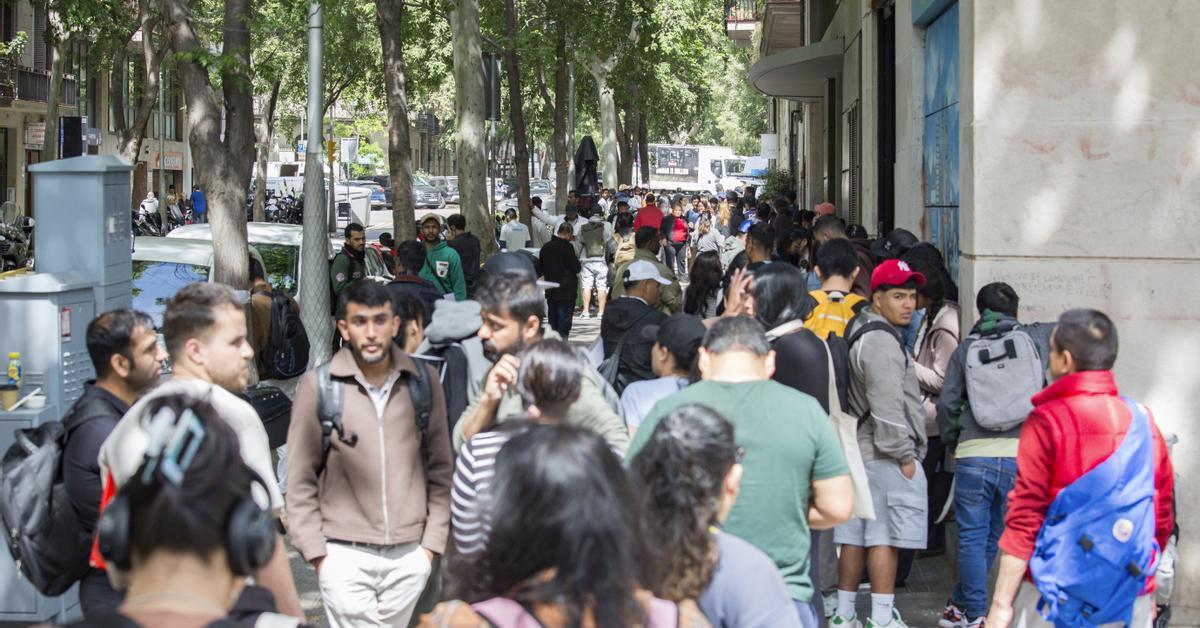
These documents from the Supreme Court, issued on June 24 in response to challenges from the Valencian and Aragonese administrations, emerged just hours before the regularization initiative concludes, with the application submission deadline set to expire at midnight tonight. Official data from approximately two weeks prior showed 900,000 applications had been filed; however, media accounts suggested the number had risen to 1.2 million cases, significantly exceeding the Spanish government’s initial projection of 500,000.
“The regularization regime established […] raises doubts as to whether it could clash with the rules implementing the EU’s Pact on Migration and Asylum,” the Supreme Court states in its orders. Consequently, the court is contemplating sending various provisions of the regularization decree to European judicial authorities for a definitive decision.
A request for a preliminary ruling typically results in the automatic suspension of primary national proceedings, though this action is not expected to automatically invalidate the regularization itself. It is worth noting that the Supreme Court’s Contentious-Administrative Chamber previously denied a request for the precautionary suspension of the Spanish government’s decree last month, a measure sought by both Vox and the Community of Madrid, led by Isabel Díaz Ayuso.

