

Whisper it gently, but intra-African trade may be experiencing something of a boom. In 2024, trade between African countries rose to $220bn, dipping slightly to $213bn in the following year, according to the Africa Export-Import Bank’s annual trade reports. Compared to the $170bn in trade recorded in 2021, this is a remarkable improvement that would gladden the hearts of policymakers and analysts who have long been frustrated by just how little African countries trade between themselves.
Even more remarkably, a growing percentage is in manufactured goods, rather than raw materials, an indication that the continent may be having something of an industrial renaissance. The uplift may have something to do with the AfCFTA, which most African countries signed onto in 2020 and which is now at the implementation stage.
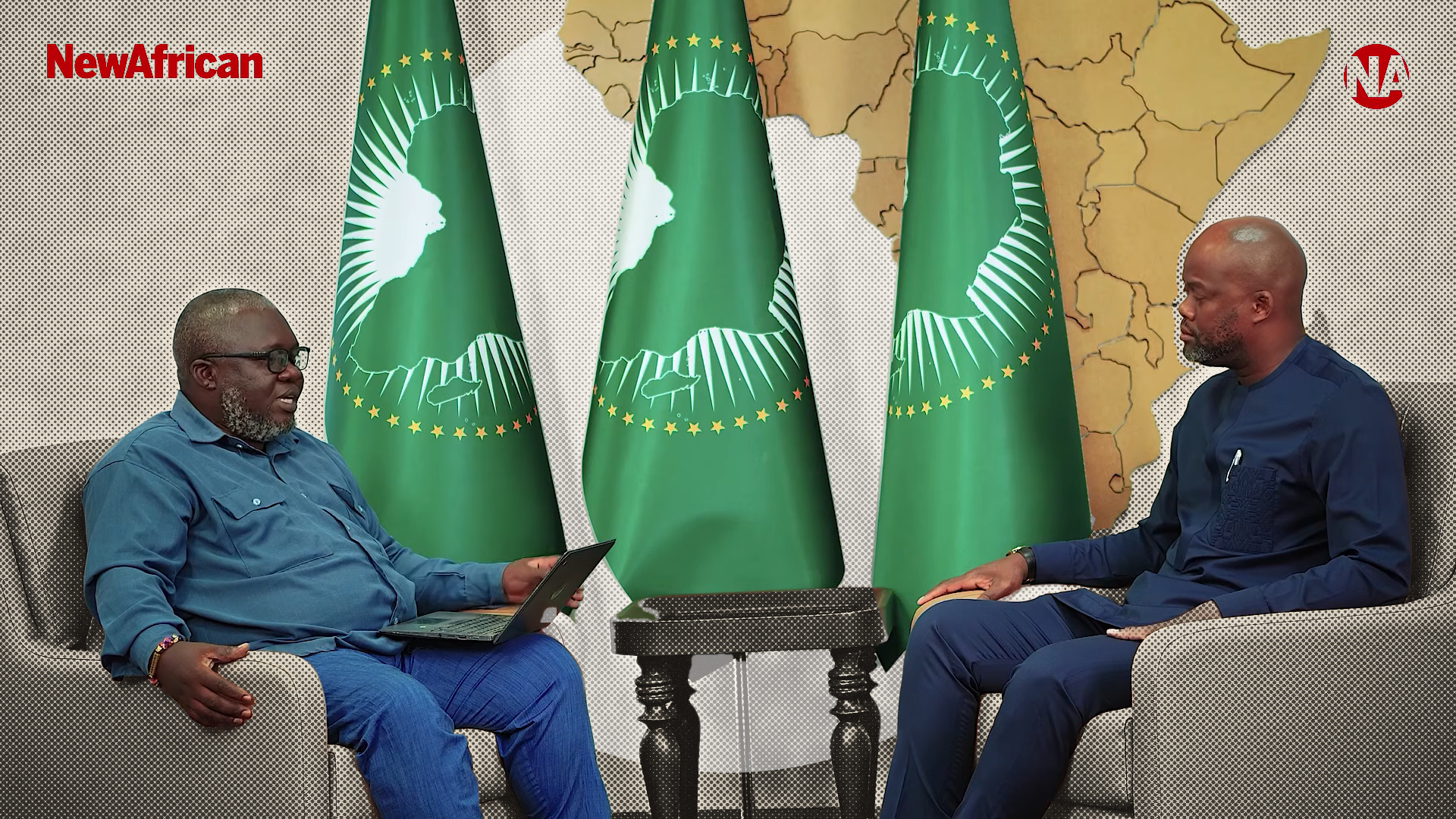
Wamkele Mene, the South African lawyer who runs the AfCFTA’s secretariat in Accra, Ghana, is not rushing to take credit, however.
“I’m always very careful not to try to put a measure on what the AFCFTA is responsible for in percentage terms, because that’s not our job. Our job is to make sure that the trade rules are applied, to work with governments, the trade rules are applied, the private sector then takes over from there,” he clarifies when New African puts the question to him.
Mene’s reticence is not unjustified. While the AfCFTA quickly procured the approval of African governments, implementation has not been as smooth as its promoters would have wished. The secretariat has completed its work drafting and getting the protocols of the agreement ratified, but full-scale trade under the agreement is yet to take off.
For one thing, not all countries are allowing it just yet. “Of the 50 countries that have ratified the agreement, 26 are actively trading. So we need 22 more to begin to trade also under the rules of the AfCFTA. That’s a big challenge that we have to overcome, so that we don’t have an agreement that is dominated mainly by a certain region or a certain country,” Mene points out.
Mene’s Seven Labours
That is one of several challenges that the AfCFTA must confront if it is to reach its goal of creating a single, $3 trillion market out of 50 very different African countries. Among these, Mene explains, are the cost and complexity of trade finance, transport and logistics, as well as infrastructure, in which Africa faces an annual deficit of $150bn. “These are the challenges that we have to contend with as we build a single market in our continent. But I believe we are certainly firmly in the right direction.”
Perhaps more critical are the people who have to apply the agreement, including the continent’s vast small- and medium-sized enterprises, upon whom the success of the free trade area may come to rest.
The latest Pan-African Private Sector Trade and Investment Committee annual survey shows that despite overwhelming optimism about the trade initiative, awareness of its implementation mechanisms, such as the protocols and the Pan-African Payments and Settlement Systems, remains disappointingly low among business leaders.
Similarly, customs officials at the borders are often out of sync with the lofty ambitions and the rhetoric of the policymakers. Mene concedes that this is an “ongoing challenge” that requires continuing action. “We must work together with the customs authorities at the national level to make sure that information is disseminated to the customs authorities.”
Mene says the secretariat is working to build the capacity of customs authorities so they can properly apply the rules under the new dispensation and are interoperable, especially between the continent’s various regions. The secretariat has established what Mene describes as a compact with customs authorities across the continent, bringing together heads of customs services so that implementation is addressed at the highest decision-making level.
During a recent visit to Nigeria, Mene reports, the Nigerian Customs Service demonstrated what this can look like in practice. “We were taken to a facility that is completely digitised and where every customs official in Nigeria, through the digital platform, is fully engaged in how the goods that are transiting.”
Officials on the platform, he explains, are able to identify and apply the AfCFTA rules more consistently. “These are some of the efforts that are underway,” Mene says. “But of course, we have a lot more work to do because the continent is vast.”
Five Fronts
All of this will mean little if it doesn’t result in increased investment into the continent’s productive sectors, which the secretariat, working with other stakeholders, is keen to facilitate. Mene says it has identified five areas with the potential to deliver rapid gains, particularly for young people and women-led businesses and SMEs.
The first is the digital economy, where the opportunity is already substantial. Mene cites an estimated $712bn value for Africa’s digital economy by 2035, a projection that he describes as positive but which will require commensurate actions to produce. “[It] will remain nothing but a projection if we don’t put in place the right conditions for investment in digital infrastructure,” he says.
The digital economy is already attracting similarly large commitments. Mene points to a transaction involving more than $5bn in investment in digital infrastructure, underwritten by the government of Seychelles, as an example of the type of investment the Secretariat wants to encourage.
Agriculture is another priority, extending beyond primary production to value addition and agricultural technology. The same applies to pharmaceuticals, where Africa’s dependence on imports is a stark vulnerability but could be an opportunity. In 2019, the continent imported more than $20bn worth of pharmaceutical products, Mene notes. The objective, he argues, should be to develop a clear import-substitution strategy that allows more of those products to be manufactured within Africa.
The automotive industry presents a similar opportunity. Rather than remaining predominantly an importer of vehicles, Africa can use the AfCFTA’s continental market to build manufacturing capacity and develop supply chains that operate across borders. “We are in active negotiations now with the third largest automobile producer in the world…about their expansion into the continent,” Mene reveals.
That, in sum, is the central appeal of the continental free trade area. By removing tariff and non-tariff barriers and harmonising rules, Africa will effectively become a single market of over 1.4 billion people.
The primary market for Africa is in Africa. I don’t think that the primary market for any African producers is outside of Africa.
The cotton gamble
One of the industries that could benefit from an integrated African market is cotton and textiles, where Africa underperforms despite having the raw materials and the market for it.
“The cotton industry actually is…an example of how Africa’s challenges are opportunities,” Mene reflects. Several African countries, including Benin and Chad, are among the world’s major cotton producers, yet their farmers and processors compete against producers in countries where the industry benefits from substantial government support.
The AfCFTA’s response has therefore been to focus first on what can be changed within Africa. “We may not be able to change the global trade rules, but we may be able to change the conditions in Africa and create a competitive environment in Africa,” Mene says.
First of these is the regulatory architecture. “You’ve got to fix the regulatory environment first before you can make an investment intervention,” Mene says. The AfCFTA’s rules of origin are designed to encourage local production and industrialisation, including high thresholds for local content to ensure that a substantial part of the processing for goods traded under the agreement is done in Africa.
The intention is to make the continental market work in favour of producers who invest in moving from raw cotton to finished garments, rather than simply exporting the fibre and importing finished products. The secretariat has also backed restrictions on the importation of used clothing.
Mene says the next challenge, capital, has been addressed in part by Afreximbank, which has committed $500mn to the vision through its Africa Renaissance Textiles and Clothing Programme. That is supporting an end-to-end production industrial estate in Benin, which now has customers not only in Africa but in countries beyond.
Nigeria is developing a similar model, with a $2.5 bn facility in Ogun State designed to process cotton through to finished garments.
The success of these initiatives could reverberate well beyond the cotton industry. Africa’s longstanding pattern of exporting commodities in their raw form while importing higher-value finished products is precisely what the AfCFTA is intended to disrupt.
Should the cotton gambles pay off, the continent could derive the confidence and capacity necessary to replicate the approach with gold, cocoa, hydrocarbons and any of its raw materials. “We want to reverse this scourge of exporting unprocessed cotton or any other commodity unprocessed in Africa,” Mene says.
Ambition meets pace
This is important, especially in an era where protectionism is returning, and Covid-19 has exposed the vulnerabilities of global supply chains. The United States’ application of tariffs across the board and targeting of particular countries has brought that further home, as have the uncertainties over the African Growth and Opportunity Act, a tariff-free scheme for some African countries which now faces an uncertain future.
The popular thinking on the continent now is that Africa must build its own industrial and supply chains. The AfCFTA, it is widely believed among policymakers, could be a response to that need and a means to that end.
Mene, unsurprisingly, concurs. “Let’s build the value chains here, whether it’s pharmaceuticals or agriculture, because the last two years have clearly shown we cannot rely on outside supply chains. When they become distorted, we suffer. Or when those commitments that were made to us, in the case of AGOA, are unilaterally withdrawn, we suffer,” he emphasises.
Sceptics, however, point to the remaining challenges, and the initial reluctance from some of the continent’s larger economies, as evidence that the grand ambitions of the AfCFTA may be hobbled by the lack of political will and the power of vested interests.
The AfCFTA aims to carve out a single African market after centuries of fragmentation.
Mene disagrees. “The AFCFTA is the fastest instrument to be ratified since the establishment of the African Union, and certainly since the establishment of the Organisation of African Unity in May 1963. So certainly the political will is there. The legal commitment is there,” he pushes back.
What Mene does not reject, however, is that the pace of implementation could have been faster. While countries have ratified the paperwork, some barriers remain in place and private sector players, in particular, are often frustrated by the hoops they still have to jump through to achieve the promise of the agreement.
That will require governments to move with greater speed to translate the commitments into action on the ground, and Mene’s appeal to governments is to do no less.
“This ambitious project requires that we match the pace with the level of ambition,” he urges.
Mene’s mission
It is no surprise, however, that the process has been so drawn out. As Mene himself admits, he has been surprised, more than anything since taking the job, by how deep the fragmentation in Africa runs. He traces this to the colonial era, which led Africans to see themselves as separate from each other, culminating in ugly incidents such as the recent xenophobic attacks in South Africa, which the secretariat strongly condemned.
But that is only so much cover, Mene asserts.
“We can no longer blame the colonialists anymore. They left a long time ago. It’s us who are restricting one another from moving around the continent,” he points out.
Concerns about security, which some countries posit in defence, are overblown, he argues. Crimes tend to be committed more by locals than foreigners, and terrorists are very unlikely to cross borders legally, anyway.
Mene’s frustrations are justified. The World Bank projects that the AfCFTA could boost the continent’s gross domestic product by $450bn (7%) by 2035, accelerate wage growth for women and lift 30 million people out of extreme poverty in that same time frame. With full implementation of its protocols, the African Development Bank estimates that the African economy could be worth $29 trillion by 2050.
Overcoming fragmentation, which will be critical to the success of the trade agreement, could thus be the most transformational achievement for a continent that desperately needs it. Mene is determined to wage the fight.
“If I can contribute to creating a single market, if I can contribute to building the confidence of the private sector, to expand from West Africa to East Africa and vice versa, that is a contribution that I will be very honoured to have made. Really, the integration of our continent is an absolute priority, and if I can contribute to that, I’ll be very, very happy.” Which, few will disagree, sounds like a mission worth accomplishing.
AfCFTAEconomyIndustrialisation

A journalist, business writer, and economic commentator specialising in African industrialisation, fintech and economic integration.
Africa on its own terms, in your inbox every week.

