

WHO Africa warns against blanket travel bans, border closures in Ebola response
WHO Africa warns against blanket travel bans, border closures in Ebola response
Read this story aloud
Listen to the clean text version of this article
Ready
4 min listen
Audio reading is not supported on this browser.
The warning comes as some countries in affected and neighbouring regions have introduced precautionary measures in response to recent Ebola outbreaks
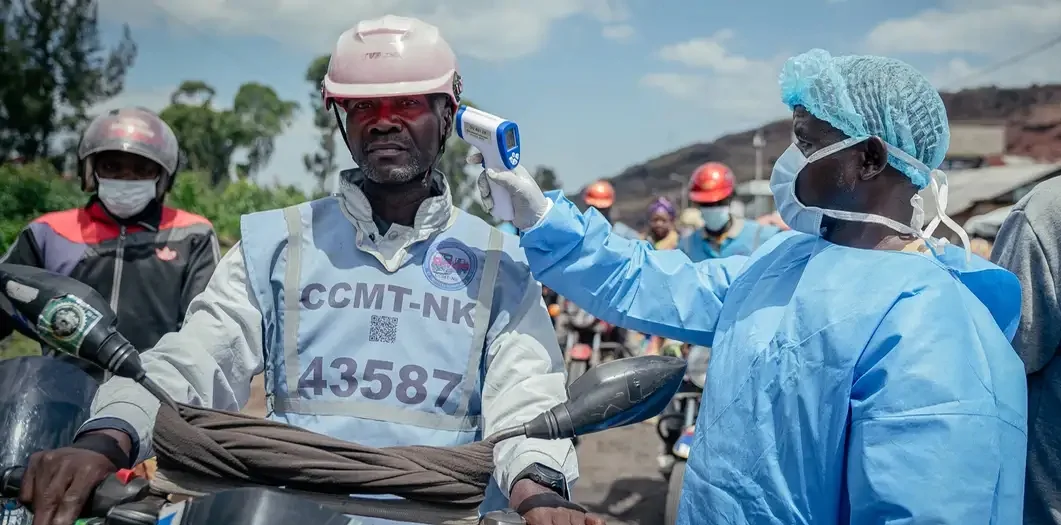
The World Health Organisation’s Regional Office for Africa has cautioned against the use of blanket travel bans and widespread border closures in response to Ebola outbreaks, warning that such measures may undermine rather than strengthen outbreak control efforts.
Speaking during a virtual meeting with regional health stakeholders, a WHO official said that indiscriminate movement restrictions could have unintended consequences by pushing cross-border travel into informal and unmonitored routes. This, the official noted, would make it harder to screen travellers, trace contacts, and detect new cases early, ultimately weakening disease surveillance systems.
The official emphasised that Ebola is not an airborne disease and therefore does not require extreme containment measures such as blanket travel bans or full border closures. Instead, the focus should remain on targeted and evidence-based public health interventions that directly address transmission risks.
More To Read
- South Sudan urges removal of Ebola-related travel restrictions
- DR Congo Ebola deaths top 300 as control measures tightened
- Kenya advises against non-essential travel to Ebola-affected areas in Uganda and DRC
- Kenya screens over 140,000 travellers for Ebola, all suspected cases test negative
- WHO to launch clinical trial for new Ebola treatments in DRC next week as cases top 1,000
- DRC Ebola cases rise to 896 with 232 deaths – health authorities
These measures, the WHO said, include strengthening surveillance at official points of entry, improving rapid detection and isolation of suspected cases, enhancing contact tracing capacity, and ensuring that health workers are well equipped to respond quickly to alerts. The agency also underscored the importance of community engagement and clear risk communication to counter misinformation and encourage early reporting of symptoms.
The warning comes as some countries in affected and neighbouring regions have introduced precautionary measures in response to recent Ebola outbreaks, including increased border screening, tighter monitoring of cross-border movement, and, in some cases, temporary restrictions on travel from high-risk areas. Health authorities have also heightened surveillance at airports and land crossings to detect possible imported cases.
The Democratic Republic of Congo has suspended all flights to and from Bunia in eastern DRC in an effort to contain the Ebola outbreak. The Bunia health zone is among 11 affected areas, though humanitarian, medical, and emergency flights may still operate under strict approval.
Latest Stories
- Judiciary to publish individual performance reports for judges in transparency push
- UNHCR warns escalating Lake Chad violence driving sharp rise in displacement
- Kenya expands Kaptagat Forest Restoration model to Mau and Cherangany
- UN to close Burkina Faso rights office in November after government suspension
Uganda has also introduced movement restrictions, including suspending direct flights to and from the DRC, halting bus and boat border crossings for four weeks, and pausing weekly cross-border markets in affected districts, while allowing essential freight and food supplies to continue.
Outside the region, several countries have imposed entry restrictions on travellers from Ebola-affected states. Canada and the Bahamas have announced temporary bans on nationals from the DRC, Uganda, and South Sudan, along with quarantine requirements for recent travellers from high-risk areas. The United States has tightened entry controls, including restrictions on recent travellers and designated airports for enhanced screening of returning citizens. Jordan and Bahrain have also temporarily restricted entry from affected countries, despite no reported Ebola cases.
Other countries, including India, Thailand, and Mexico, have focused on enhanced airport screening and travel advisories rather than full travel bans.
Health authorities continue to emphasise that targeted surveillance, early detection, and coordinated response remain more effective than blanket travel restrictions in controlling Ebola outbreaks.
However, the WHO cautioned that while vigilance is necessary, overly restrictive measures can disrupt the essential movement of people, goods, and health services and may discourage individuals from seeking care or reporting symptoms. The agency reiterated that coordinated regional cooperation and science-based strategies remain the most effective approach to controlling Ebola outbreaks, particularly in areas with porous borders and high levels of cross-border trade and mobility.
Officials further urged countries to align their response measures with international health regulations and to prioritise targeted interventions that strengthen preparedness without creating barriers that could worsen the spread of the disease.
Other Topics To Read
Top Stories Today
- Judiciary to publish individual performance reports for judges in transparency push
- Benchmark food prices down for second consecutive month in June
- UNHCR warns escalating Lake Chad violence driving sharp rise in displacement
- Kenya expands Kaptagat Forest Restoration model to Mau and Cherangany
- UN to close Burkina Faso rights office in November after government suspension
- Captain Riyad Mahrez announces retirement after Algeria World Cup exit
`;
}
return “;
}
function commentActionsMarkup(comment, canComment) {
const likeLabel = comment.liked_by_me ? ‘Liked’ : ‘Like’;
const likeCount = Number(comment.like_count || 0) > 0
? “
: ”;
const likeButton = canComment && comment.status === ‘approved’
? “
: “;
const replyButton = canComment && comment.status === ‘approved’
? “
: ”;
return `
`;
}
function commentMarkup(comment, canComment, isReply = false) {
const pendingBadge = comment.status && comment.status !== ‘approved’
? “
: ”;
const edited = comment.is_edited
? “
: ”;
const repliesHtml = Array.isArray(comment.replies) && comment.replies.length
? `
`
: “;
return `
`;
}
function replyFormMarkup(commentId) {
return `
`;
}
function setNotice(widget, message, type = ‘info’) {
const notice = widget.querySelector(‘[data-role=”notice”]’);
if (!notice) return;
if (!message) {
notice.hidden = true;
notice.textContent = ”;
notice.classList.remove(‘is-error’);
return;
}
notice.hidden = false;
notice.textContent = message;
notice.classList.toggle(‘is-error’, type === ‘error’);
}
function setCount(widget, total) {
const count = widget.querySelector(‘[data-role=”count”]’);
if (!count) return;
const num = Number(total || 0);
count.textContent = num === 1 ? ‘1 comment’ : `${num} comments`;
}
function openReplyBox(widget, commentId) {
widget.querySelectorAll(‘[data-role=”reply-box”]’).forEach(box => {
box.hidden = true;
box.innerHTML = ”;
});
const targetItem = widget.querySelector(`.ev-comments__item[data-comment-id=”${commentId}”]`);
if (!targetItem) return;
const replyBox = targetItem.querySelector(‘[data-role=”reply-box”]’);
if (!replyBox) return;
replyBox.hidden = false;
replyBox.innerHTML = replyFormMarkup(commentId);
const textarea = replyBox.querySelector(‘textarea’);
if (textarea) textarea.focus();
}
function closeReplyBox(container) {
if (!container) return;
container.hidden = true;
container.innerHTML = ”;
}
async function initCommentsWidget(widget) {
const state = {
articleId: Number(widget.dataset.articleId),
loadUrl: widget.dataset.loadUrl,
storeUrl: widget.dataset.storeUrl,
commentsBaseUrl: widget.dataset.commentsBaseUrl,
canComment: widget.dataset.canComment === ‘1’,
page: 1,
perPage: 10,
sort: ‘newest’,
total: 0,
hasMore: false,
busy: false
};
const list = widget.querySelector(‘[data-role=”list”]’);
const loading = widget.querySelector(‘[data-role=”loading”]’);
const empty = widget.querySelector(‘[data-role=”empty”]’);
const loadMoreBtn = widget.querySelector(‘[data-role=”load-more”]’);
const sortSelect = widget.querySelector(‘[data-role=”sort”]’);
const composerForm = widget.querySelector(‘[data-role=”composer-form”]’);
async function loadComments(reset = true) {
if (state.busy) return;
state.busy = true;
setNotice(widget, ”);
loading.hidden = false;
if (reset) {
state.page = 1;
list.innerHTML = ”;
empty.hidden = true;
}
try {
const url = new URL(state.loadUrl, window.location.origin);
url.searchParams.set(‘page’, state.page);
url.searchParams.set(‘per_page’, state.perPage);
url.searchParams.set(‘sort’, state.sort);
const response = await requestJson(url.toString(), {
method: ‘GET’,
headers: {
‘Accept’: ‘application/json’,
‘X-Requested-With’: ‘XMLHttpRequest’
}
});
const items = Array.isArray(response.data) ? response.data : [];
const meta = response.meta || {};
state.total = Number(meta.total || 0);
state.hasMore = !!meta.has_more;
setCount(widget, state.total);
if (reset) {
list.innerHTML = ”;
}
if (!items.length && reset) {
empty.hidden = false;
} else {
empty.hidden = true;
list.insertAdjacentHTML(
‘beforeend’,
items.map(item => commentMarkup(item, state.canComment, false)).join(”)
);
}
loadMoreBtn.hidden = !state.hasMore;
} catch (error) {
if (!list.children.length) {
empty.hidden = false;
empty.textContent = ‘Unable to load comments right now.’;
}
setNotice(widget, error.message || ‘Unable to load comments.’, ‘error’);
} finally {
loading.hidden = true;
state.busy = false;
}
}
async function submitTopLevelComment(form) {
const textarea = form.querySelector(‘textarea[name=”content”]’);
const button = form.querySelector(‘[data-role=”submit-comment”]’);
if (!textarea) return;
const content = textarea.value.trim();
if (!content) return;
const originalText = button ? button.textContent : ”;
try {
if (button) {
button.disabled = true;
button.textContent = ‘Posting…’;
}
const response = await requestJson(state.storeUrl, {
method: ‘POST’,
headers: buildJsonHeaders(),
body: JSON.stringify({
article_id: state.articleId,
content: content,
source_url: window.location.href
})
});
textarea.value = ”;
if (response?.data) {
list.insertAdjacentHTML(
‘afterbegin’,
commentMarkup(response.data, state.canComment, false)
);
empty.hidden = true;
if ((response.data.status || ”) === ‘approved’) {
state.total += 1;
setCount(widget, state.total);
}
}
setNotice(widget, response.message || ‘Comment posted successfully.’);
} catch (error) {
setNotice(widget, error.message || ‘Unable to post comment.’, ‘error’);
} finally {
if (button) {
button.disabled = false;
button.textContent = originalText || ‘Post comment’;
}
}
}
async function submitReply(form) {
const commentId = Number(form.dataset.commentId || 0);
const textarea = form.querySelector(‘textarea[name=”content”]’);
const button = form.querySelector(‘.ev-comments__reply-submit’);
if (!commentId || !textarea) return;
const content = textarea.value.trim();
if (!content) return;
const originalText = button ? button.textContent : ”;
try {
if (button) {
button.disabled = true;
button.textContent = ‘Posting…’;
}
const response = await requestJson(`${state.commentsBaseUrl}/${commentId}/reply`, {
method: ‘POST’,
headers: buildJsonHeaders(),
body: JSON.stringify({
article_id: state.articleId,
content: content,
source_url: window.location.href
})
});
if (response?.data) {
const parentItem = widget.querySelector(`.ev-comments__item[data-comment-id=”${commentId}”]`);
if (parentItem) {
const repliesWrap = parentItem.querySelector(‘.ev-comments__replies’);
if (repliesWrap) {
repliesWrap.insertAdjacentHTML(
‘beforeend’,
commentMarkup(response.data, state.canComment, true)
);
}
}
}
closeReplyBox(form.closest(‘[data-role=”reply-box”]’));
setNotice(widget, response.message || ‘Reply posted successfully.’);
} catch (error) {
setNotice(widget, error.message || ‘Unable to post reply.’, ‘error’);
} finally {
if (button) {
button.disabled = false;
button.textContent = originalText || ‘Post reply’;
}
}
}
async function toggleLike(button) {
const commentId = Number(button.dataset.commentId || 0);
if (!commentId) return;
const originalHtml = button.innerHTML;
try {
button.disabled = true;
button.innerHTML = ‘Working…’;
const response = await requestJson(`${state.commentsBaseUrl}/${commentId}/like`, {
method: ‘POST’,
headers: buildJsonHeaders(),
body: JSON.stringify({})
});
const liked = !!response?.data?.liked;
const likeCount = Number(response?.data?.like_count || 0);
button.classList.toggle(‘is-liked’, liked);
button.innerHTML = `${liked ? ‘Liked’ : ‘Like’} ${likeCount > 0 ? “ : ”}`;
} catch (error) {
button.innerHTML = originalHtml;
setNotice(widget, error.message || ‘Unable to update like.’, ‘error’);
} finally {
button.disabled = false;
}
}
if (composerForm) {
composerForm.addEventListener(‘submit’, function (e) {
e.preventDefault();
submitTopLevelComment(composerForm);
});
}
if (sortSelect) {
sortSelect.addEventListener(‘change’, function () {
state.sort = this.value || ‘newest’;
loadComments(true);
});
}
if (loadMoreBtn) {
loadMoreBtn.addEventListener(‘click’, function () {
if (state.busy || !state.hasMore) return;
state.page += 1;
loadComments(false);
});
}
widget.addEventListener(‘click’, function (e) {
const likeBtn = e.target.closest(‘[data-action=”toggle-like”]’);
if (likeBtn) {
e.preventDefault();
toggleLike(likeBtn);
return;
}
const replyBtn = e.target.closest(‘[data-action=”toggle-reply”]’);
if (replyBtn) {
e.preventDefault();
openReplyBox(widget, Number(replyBtn.dataset.commentId || 0));
return;
}
const cancelReplyBtn = e.target.closest(‘[data-action=”cancel-reply”]’);
if (cancelReplyBtn) {
e.preventDefault();
closeReplyBox(cancelReplyBtn.closest(‘[data-role=”reply-box”]’));
}
});
widget.addEventListener(‘submit’, function (e) {
const replyForm = e.target.closest(‘.ev-comments__reply-form’);
if (replyForm) {
e.preventDefault();
submitReply(replyForm);
}
});
loadComments(true);
}
document.addEventListener(‘DOMContentLoaded’, function () {
document.querySelectorAll(‘.ev-comments’).forEach(initCommentsWidget);
});
})();
Trending
Judiciary to publish individual performance reports for judges in transparency pushNational
|Carolyne Kubwa
|20 minutes ago
Kenya expands Kaptagat Forest Restoration model to Mau and CheranganySports
|Bashir Mbuthia
|7 hours ago
Kisumu unveils six-point plan to tackle goons, bans private security at political ralliesNews
|Rachael Mutabasi
|2 days ago
World Met Organisation warns strong El Niño could trigger extreme weather worldwideClimate Change
|Bashir Mbuthia
|13 hours ago

UN to close Burkina Faso rights office in November after government suspensionAfrica
|Bashir Mbuthia
|7 hours ago
Uganda welcomes first batch of evacuees from South AfricaNews
|Mary Wambui
|19 hours ago
Captain Riyad Mahrez announces retirement after Algeria World Cup exit2026 FIFA World Cup
|Bashir Mbuthia
|8 hours ago
UN Rights Chief Volker Türk issues ‘Red Alert’ over escalating violence in Sudan’s El ObeidNews
|Mary Wambui
|16 hours ago
MPs raise alarm over missing land records, vehicle logbooks at State Department for LabourNews
|Rachael Mutabasi
|15 hours ago
157 more victims of human rights violations receive over Sh225 million from StateNews
|Mary Wambui
|11 hours ago

