

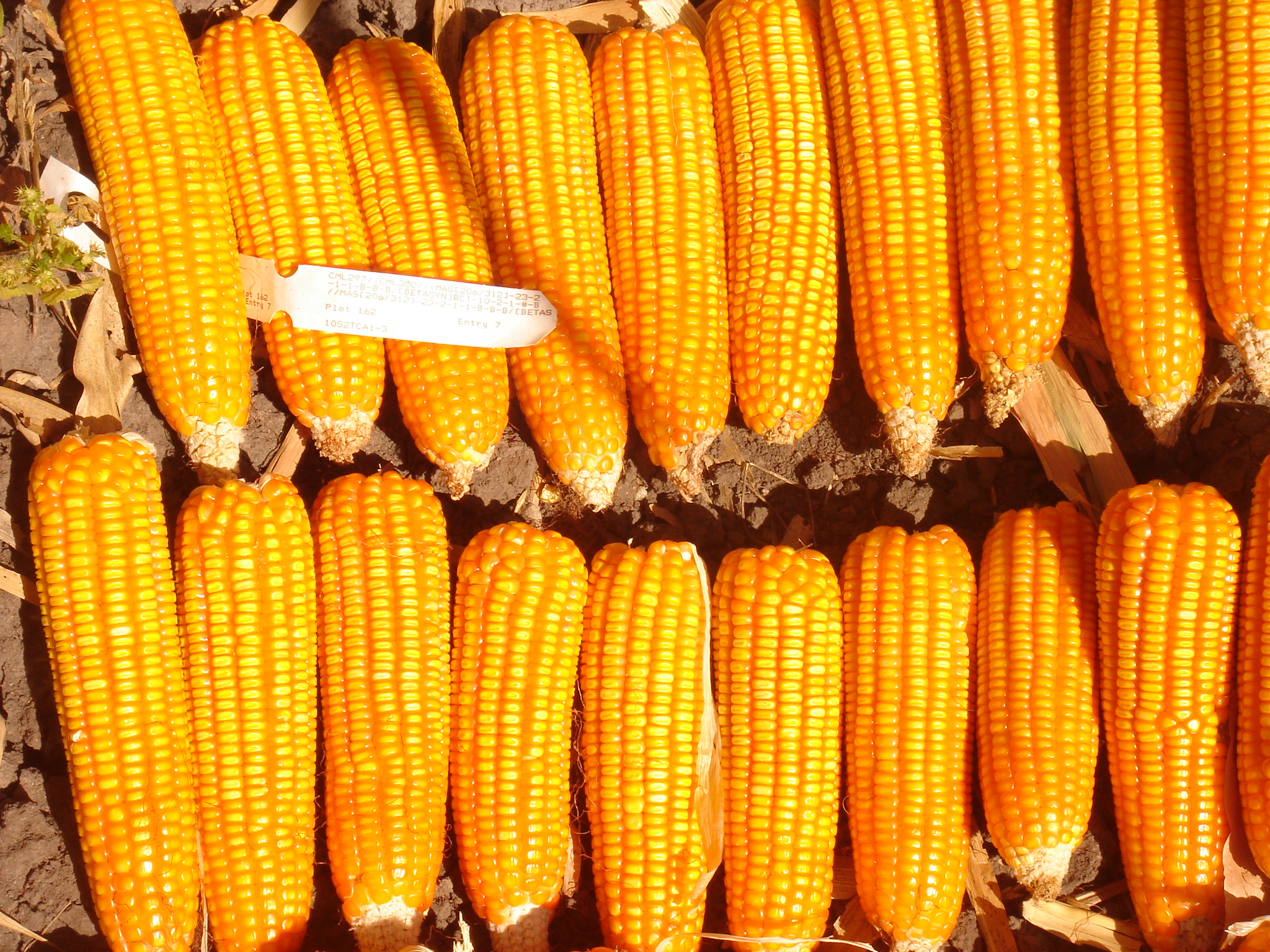
An experimental line of orange corn enriched with provitamin A, harvested in Zambia. Photo by CIMMYT
- Zambia may seem food-secure now, with recent adequate rains and bumper harvests, but experts say it could be short-lived as global geopolitical tensions drive up fertilizer and fuel costs.
- Experts say the urban populations are the most likely to bear the brunt of the Gulf tensions, as they heavily depend on imported foodstuffs such as wheat.
- There are calls for the country to build long-term resilience through investment in irrigation, climate-smart agriculture, locally produced fertilizer, and diversified food systems.
- Zambia and the rest of Southern Africa is staring at another round of El Niño, which might disrupt rainfall patterns and affect food production.
LUSAKA, Zambia — The escalating conflict involving the US, Israel and Iran, has prompted warnings that disruptions to the supply of fuel and fertilizer shipped through the Strait of Hormuz could cause food insecurity in some African countries. While experts say it will take time for the effects of the conflict to be felt in Zambia, they also point to vulnerabilities in the country’s food system and suggest greater resilience to possible stresses
Zambia’s food security is generally understood to rest on a single crop: maize. Zambia Statistics Agency reports that the price of a 25-kilogram bag of breakfast mealie meal declined slightly from April to May. In fact, the price of mealie meal is 15% lower than it was this time last year
The FAO’s April 2026 country briefing for Zambia said good rains since last October point to a second consecutive year of above-average harvests of maize. The rains are also expected to support a rebound of wheat harvest, as full reservoirs mean a steady supply of hydroelectric power that will allow the crop’s growers (primarily large-scale, industrial farmers) to irrigate their fields
The briefing reported that reference prices for maize were 25% lower year-on-year in March, thanks to plentiful domestic supply and a strengthening of the currency. Maize meal prices also declined by 15%, according to the Zambia Statistics Agency. Drawing on the IPC classification, the FAO said the number of Zambians facing “crisis” levels of acute food insecurity in the six months to March 2026 was 1.7 million, still a worryingly number, but a sharp decline from 5.6 million a year earlier
This is a welcome relief for Zambians after years of rising food costs. However, Barnabas Mwale, a trade and investment researcher at the Centre for Trade Policy and Development (CTPD), cautions that a lower maize price should not obscure deeper structural vulnerabilities
“The perception that Zambia is insulated from global food shocks because we produce maize is misleading,” he told Mongabay in a telephone interview
“Our food security depends on much more than maize. We import critical food products, fertilizer, fuel and agricultural inputs. That means international disruptions can quickly affect both production and consumer prices.”

Urban dependencies
Nearly 40% of Zambia’s population now lives in urban areas. In towns and cities, many households rely entirely on purchased food. Bread, rice, frozen chicken and packaged foods are the commonly available for many urban families
This side of the country’s food system is directly exposed to shifts in international markets. “Urban consumers are the most import-exposed segment of the population,” Mwale explains. “When international prices increase or supply chains are disrupted, those effects are transmitted directly into household food budgets.”
According to CTPD, in response to drought-affected shortfalls in domestic production, Zambia imported approximately $797 million worth of agricultural products in 2024, a startling 32% increase over the previous year. South Africa was the country’s most important
Recent history illustrates the vulnerability Mwale points at. In 2023 and 2024 Southern Africa was in the grip of a drought linked to El Niño. Poor rains reduced domestic maize production by more than half, leaving millions of rural households hungry and dependent on food aid. Lack of pasture meant rural households lost livestock. Some families sold off their livestock in order to buy maize and beans
Very little of the country’s farmland is irrigated; farmers are almost entirely dependent on rains. After nearly two years (2025-2026) of good rains and bumper harvests in Zambia and across the region, El Niño is forecast to appear again this year. As a result, hardship could soon replace bumper harvests, again threatening the fortunes of Zambia’s farmers
South Africa, aill also face El Niño-linked weather patterns. And while its farmers enjoy extensive irrigation systems, they are also hugely dependent on diesel and synthetic fertilizer, whose prices are spiking as a result of the tensions in the Gulf area. Growing imports of food from South Africa and beyond will almost certainly be more expensive
Anticipated increases in the cost of synthetic fertilizer are expected to further complicate the efforts of Zambia’s own farmers to grow food in the upcoming season. The Persian Gulf is a majormers apply in farms before planting; as well as urea, a nitrogen fertilizer used to top-dress standing crops
The fertilizer factor
Zambia’s agricultural output depends heavily on imported fertilizer, despite limited local manufacturing. Before Russia invaded Ukraine in 2022, Zambia imported more than $110 million worth of fertilizer annually from these two countries alone, according to a May 2026 report by the African Development Fund. Globally, urea prices went up after the invasion, but eased in 2023, though it still remained above the 2021 levels, according to the US Department of Agriculture. Reduced fertilizer use translated to lower yields, leaving many households short of food and driving up the price of maize and other food.
“Farmers have become increasingly aware that global events can affect local agriculture,” says Harald Lungu, acting executive director of Zambia National Farmers Union
He told Mongabay that investment in irrigation, local fertilizer production and climate-smart agriculture would be critical in reducing dependence on imported fertilizer and machinery powered by imported fossil fuels
“We cannot control global events, but we can reduce our vulnerability to them. The future lies in building a system that can withstand shocks,” he said
The country’s future resilience will depend not only on producing enough food but on building a system capable of withstanding climate extremes, global market volatility and the increasingly interconnected challenges of the modern world
As farmers across Zambia reap one of the country’s best maize harvests in years, attention is already turning to the next planting season
Planning for the future
Farmers begin planning for the next season even before they harvest. Decisions about choosing crops, preparing land, and purchasing fertilizer with the current prices can influence next year’s production
Ebony Lolozhi, the National Union for Small-scale Farmers in Zambia (NUSFAZ) Executive Director, says many smallholder farmers will react to high fuel and fertilizer prices by planting in smaller areas or skimping on fertilizer
“Because it’s rain-fed, farmers start planning in November/December and the harvest of crops like maize, soya beans, groundnuts and other crops is ready after three to four months,” Lolozhi said
Climate variability adds to the uncertainty. Although Zambia enjoyed favorable rainfall in recent seasons, Southern Africa remains vulnerable to recurring extreme weather events. Small-scale farmers that depend on rain-fed agriculture rather than irrigation face many risks
For now, Zambia’s granaries are fuller than they were a year ago, and food prices have eased. But Lungu says reducing vulnerability to changing climate shocks and disruptions to the supply of fertilizer and fuel requires long-term investment in resilience
He says expanding irrigation, improved storage, and increasing local production of fertilizer are key to safeguarding future food supplies
Banner image: An experimental line of orange corn enriched with provitamin A, harvested in Zambia. Photo by CIMMYT
Kee, J., Cardell, L., & Zereyesus, Y. A. (2023, September 18). Global fertilizer market challenged by Russia’s invasion of Ukraine. U.S. Department of Agriculture, Economic Research Service. https://www.ers.usda.gov/amber-waves/2023/september/global-fertilizer-market-challenged-by-russia-s-invasion-of-ukraine
Movement gives African rural women farmers a voice, but still battles landownership
Feedback: Use this form to send a message to the author of this post. If you want to post a public comment, you can do that at the bottom of the page

