

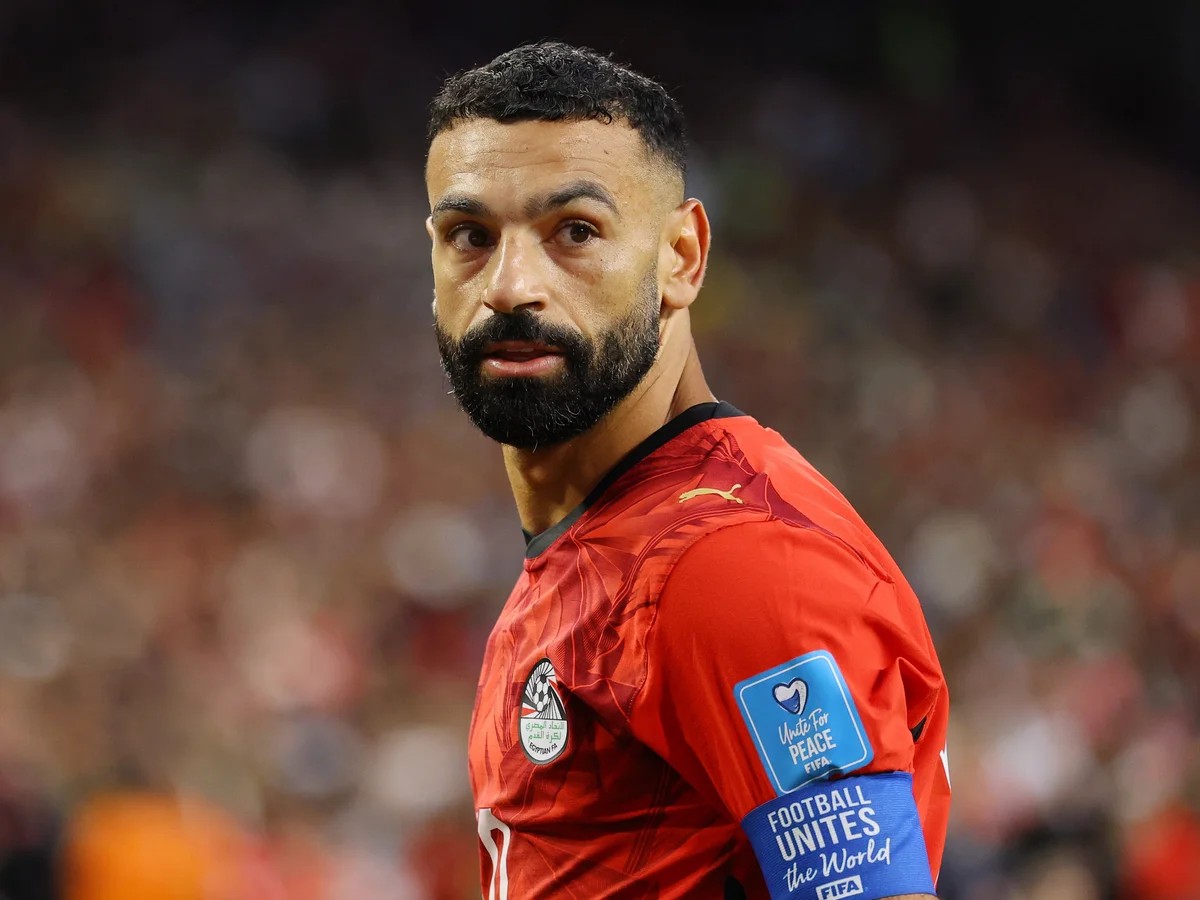
From historic first goals to unforgettable upsets, Arab footballers have produced plenty of compelling moments at the World Cup. Tunisia changed perceptions of African football in 1978, Algeria stunned one of the tournament favourites four years later, and Morocco carried the region deeper into the competition than any African or Arab nation had gone before.
The women’s game has also begun writing its own history. At the 2023 Women’s World Cup, Morocco reached the knockout stages on their debut, with players creating milestones that extended far beyond the results themselves.
These ten footballers represent different countries, generations and achievements. Some inspired famous victories, while others stood out in defeat or became the first to cross an important threshold. Together, their stories show the growing influence of Arab football on the world stage.
Ali Kaabi, Tunisia, 1978
Ali Kaabi’s name is inseparable from one of the most important breakthroughs in African World Cup history. Tunisia arrived at Argentina 1978 as the continent’s sole representative and fell behind to Mexico in their opening group match. Shortly after half-time, however, Kaabi scored the equaliser that changed the direction of the game.
Tunisia went on to win 3-1, with Nejib Ghommidh and Mokhtar Dhouib adding further goals. The result made Tunisia the first African nation to win a match at the men’s World Cup. Kaabi also became his country’s first goalscorer in the competition.
The achievement mattered far beyond one game. It provided evidence that an African side could compete successfully on football’s largest stage and gave Tunisia a permanent place in World Cup history. Kaabi may not possess the global profile of later stars, but his goal helped open a new chapter for both Arab and African football.
Ibtissam Jraidi, Morocco, 2023
Morocco’s opening match at the 2023 Women’s World Cup ended in a heavy defeat to Germany, leaving the debutants under immediate pressure. Ibtissam Jraidi helped provide the perfect response.
Facing South Korea in their second group match, Jraidi met Hanane Aït El Haj’s cross with a glancing header in the sixth minute. It was Morocco’s first goal at a Women’s World Cup and proved enough to secure a 1-0 victory.
The result was Morocco’s first victory at the tournament and kept alive a campaign that would eventually carry the Atlas Lionesses into the round of 16.
Jraidi’s goal was important for its timing as well as its historical significance. Morocco had arrived as the first Arab nation to compete at the Women’s World Cup. By scoring the team’s first goal and delivering its first victory, she ensured that their appearance became something more than a symbolic debut.
Rabah Madjer, Algeria, 1982
When Algeria made their World Cup debut in Spain in 1982, few expected them to trouble a West German side considered among the tournament favourites. Rabah Madjer helped overturn those expectations.
Madjer opened the scoring in the second half, becoming Algeria’s first World Cup goalscorer. West Germany responded through Karl-Heinz Rummenigge, but Lakhdar Belloumi restored Algeria’s lead almost immediately to complete a famous 2-1 victory.
It was not simply the result that captured attention. Algeria played with confidence, imagination and attacking ambition against one of international football’s established powers. Although the team did not progress from the group despite also defeating Chile, the victory became one of the defining upsets of the era.
Madjer would later add to his reputation with Porto, including his famous backheel in the 1987 European Cup final. For Algeria, however, his World Cup legacy begins with the goal that announced the country on the global stage.
Raïs M’Bolhi, Algeria, 2014
Goalkeepers are often remembered for trophies or penalty shootouts, but Raïs M’Bolhi earned his place through a magnificent performance in defeat.
Algeria reached the last 16 in 2014 for the first time in the country’s history, where they faced eventual champions Germany. M’Bolhi produced a series of saves as Algeria frustrated their opponents and created several threatening opportunities of their own. After 90 minutes, the match remained goalless.
Germany eventually broke through in extra time, winning 2-1 through goals from André Schürrle and Mesut Özil before Abdelmoumene Djabou replied for Algeria. Yet M’Bolhi’s performance ensured that Germany had to fight until the closing moments.
Algeria did not advance, but they pushed the future champions harder than many expected. M’Bolhi became the face of that resistance, combining sharp reactions with composure under sustained pressure. His display remains one of the outstanding goalkeeping performances delivered by an Arab player at a World Cup.
Mohamed Salah, Egypt, 2018 and 2026
Mohamed Salah’s first World Cup came in difficult circumstances. He entered the 2018 tournament recovering from the shoulder injury suffered in Liverpool’s UEFA Champions League final defeat and could not prevent Egypt from exiting at the group stage. He nevertheless scored against Russia and Saudi Arabia.
Eight years later, Salah returned to help produce Egypt’s most successful World Cup campaign. Salah scored in the 3-1 victory over New Zealand, becoming the first Egyptian player to find the net at two separate World Cups.
Egypt then advanced from the round of 32 on penalties before facing Argentina. With Salah central to their attacking play, Egypt moved 2-0 ahead and came agonisingly close to pulling off one of the greatest surprises in World Cup history. Argentina recovered to win 3-2, but Egypt had pushed the reigning champions to the limit.
For Salah, it was the run that finally gave his World Cup story a performance worthy of his wider career.
Salem Al-Dawsari, Saudi Arabia, 2022
Saudi Arabia entered their opening match at the 2022 World Cup facing an Argentina side unbeaten in 36 matches and widely regarded as one of the tournament favourites. Salem Al-Dawsari produced the decisive moment in an extraordinary 2-1 victory.
After Saleh Al-Shehri cancelled out Lionel Messi’s opener, Al-Dawsari controlled the ball inside the area, moved past the Argentine defence and curled a brilliant finish beyond goalkeeper Emiliano Martínez. His goal transformed a strong Saudi performance into one of the greatest shocks in World Cup history.
Argentina ultimately recovered from the defeat and won the tournament, making the scale of Saudi Arabia’s achievement even clearer. Although the Saudis did not advance from the group, their victory became one of Qatar 2022’s defining results.
Al-Dawsari had already scored against Egypt at the 2018 World Cup and later added another against Mexico in 2022. Yet it is his winner against Argentina that secured his place in Arab football history.
Mohammed Muntari, Qatar, 2022
Qatar’s first appearance at the World Cup did not unfold as the host nation had hoped. The team lost all three of its group matches and struggled against Ecuador, Senegal and the Netherlands. Mohammed Muntari nevertheless gave Qatar a historic moment of its own.
With Qatar trailing Senegal 2-0, Muntari entered as a substitute and met Ismaeel Mohammad’s cross with a powerful header in the 78th minute. The goal briefly raised hopes of an unlikely comeback before Senegal scored again to complete a 3-1 victory.
More importantly, Muntari became the first Qatari footballer to score at a World Cup. It remained the host nation’s only goal of the tournament.
His inclusion is not based on Qatar enjoying a successful campaign, but on the importance of the milestone. At a home World Cup filled with global attention and enormous expectations, Muntari provided the country with its clearest moment of sporting celebration and wrote himself into Qatar’s football record books.
Yassine Bounou, Morocco, 2022
Morocco’s historic journey to the 2022 semi-finals was built on organisation, resilience and some outstanding individual performances. Goalkeeper Yassine Bounou stood at the centre of it.
His defining moment came in the last 16 against Spain. After 120 goalless minutes, the match went to penalties. Bounou saved attempts from Carlos Soler and Sergio Busquets, while Pablo Sarabia struck the post. Spain failed to score a single penalty as Morocco advanced to the quarter-finals.
Bounou remained a reassuring presence as Morocco defeated Portugal and became the first African and Arab team to reach a World Cup semi-final. Across the tournament, his calmness helped a disciplined defence withstand pressure from several of the world’s strongest attacking sides.
Morocco’s run belonged to an entire squad, but Bounou became one of its most recognisable heroes. His smile after the shootout victory over Spain captured the mixture of confidence, disbelief and joy that accompanied one of the World Cup’s great underdog stories.
Youssef En-Nesyri, Morocco, 2022
Youssef En-Nesyri produced the goal that took Arab and African football into previously unexplored territory.
Morocco faced Portugal in the 2022 quarter-finals after already eliminating Spain. Shortly before half-time, Yahia Attiyat Allah sent a high cross towards the penalty area. En-Nesyri rose above goalkeeper Diogo Costa and defender Rúben Dias, meeting the ball with a commanding header and sending it into the empty net.
Morocco protected the 1-0 lead through the second half, becoming the first African and Arab nation to reach a men’s World Cup semi-final. En-Nesyri’s leap immediately became one of the tournament’s defining images.
The striker had already scored at the 2018 World Cup and earlier in the 2022 tournament against Canada, but his goal against Portugal carried a different weight. It was more than a match-winner. It marked a breakthrough for a country, a region and a continent, transforming decades of ambition into a tangible place among the final four.
Nouhaila Benzina, Morocco, 2023
Nouhaila Benzina made history before Morocco’s match against South Korea had even reached its conclusion. By taking the field in a hijab, the defender became the first player to wear one during a Women’s World Cup match.
The milestone was significant in terms of representation within the women’s game, but Benzina’s tournament should not be reduced to symbolism alone. She played the full 90 minutes as Morocco defeated South Korea 1-0 and kept the first clean sheet in Morocco’s Women’s World Cup history. She also featured as Morocco beat Colombia and secured an unexpected place in the knockout stages on their tournament debut.
Benzina’s presence offered a powerful image of participation and possibility. Her performance challenged narrow assumptions about who could compete at the highest level of women’s football while giving young Muslim girls a visible figure to identify with.
Morocco’s campaign ended against France in the round of 16, but Benzina had already helped the team create one of the tournament’s most important and widely recognised stories.
A World Cup Legacy Still Being Written
These performances span decades, from Tunisia’s breakthrough victory in 1978 to Egypt’s dramatic run in 2026. Some were part of deep tournament campaigns; others emerged during difficult competitions. What connects them is their ability to turn individual moments into something larger.
Kaabi and Madjer challenged perceptions of Arab and African football. M’Bolhi stood firm against future champions. Al-Dawsari changed the course of a match against Argentina, while Salah and Egypt came agonisingly close to producing another historic upset four years later, Muntari delivered Qatar’s first World Cup goal. Bounou and En-Nesyri helped Morocco reach an unprecedented semi-final, and Jraidi and Benzina became central to a new chapter in Arab women’s football.
The list will continue to grow. Yet these ten players have already demonstrated that Arab football’s World Cup history is not defined by participation, but by goals, saves, victories and moments remembered around the world.
For more stories of culture, visit our dedicated archives and follow us on Instagram.
