

Add to Google Preferred Sources
Despite Europe’s electric vehicle market reaching record scale in the first half of the year, Hyundai’s European registrations fell 8.7%, weighed down by an absent small EV lineup and aggressive low-cost competition from Chinese brands. In contrast, Kia successfully defended its market share with 6.9% sales growth, leveraging its mid-to-large EV portfolio and an aggressive incentive strategy. BYD posted explosive 145.5% growth, overtaking Tesla to emerge as a new powerhouse in the European EV market. The price competitiveness of Chinese automakers is expected to pose a structural threat to the profitability of both Hyundai and Kia moving forward.
Key Elements
In the first half of this year, battery electric vehicles became the top-selling powertrain in the European auto market for the first time ever, yet Hyundai’s sales actually went into reverse. Kia, meanwhile, managed to defend its market share with its lineup of mid-to-large EVs, while a significant portion of the surging European EV demand was absorbed by Chinese brands such as BYD, according to industry analysis.
Data compiled on the 28th from the European Automobile Manufacturers’ Association (ACEA) and Germany’s Federal Motor Transport Authority (KBA) showed that new car registrations across the European Union, the European Free Trade Association (EFTA), and the UK totaled 7,232,066 units in the first half, up 6.1% year-on-year. Among these, pure battery electric vehicle (BEV) registrations surged 35.1% to 1,608,200 units, driving overall market growth. In Germany specifically, BEV registrations skyrocketed 78.2% in June to 84,057 units, capturing a 28.4% market share and narrowly edging out conventional hybrids (83,315 units) to become the best-selling powertrain on a monthly basis for the first time.
However, Hyundai failed to capitalize on this explosive growth in the European EV market. The company’s European registrations for the first half totaled 243,828 units, down 8.7% year-on-year, with its market share slipping from 3.9% to 3.4%. Looking solely at the German market, Hyundai’s June registrations fell 5.2% to 8,520 units, bucking the double-digit growth trend of the broader market. Hyundai’s electrification mix in Germany also retreated significantly, with cumulative figures for January through May standing at 50.8%, down from 59.3% a year earlier.
Hyundai Vice President and Head of Finance & Accounting Division Lee Seung-jo explained during the second-quarter earnings conference call, “In Europe, our volume internal combustion engine models, the Kona and Tucson, have aged, leading to sales difficulties in the first half.” He added, “The offensive from Chinese EVs has been quite aggressive, and we lacked a B-segment (small) EV to counter it.” Indeed, Hyundai’s best-selling model in Europe, the Tucson (67,665 units in the first half), is only available with hybrid and internal combustion engine options, with no pure EV variant. Hyundai’s EV sales are concentrated on the Kona Electric (13,509 units) and the small SUV Inster (16,594 units)—a compact, entry-level segment that is precisely the main battleground for Chinese brands.
The push by Chinese EV makers into the European market is clearly reflected in the numbers. BYD sold 174,144 units in Europe in the first half, a 145.5% surge year-on-year, overtaking Tesla (170,351 units) for the first time. Chery Automobile posted 155,800 units, a 305.8% explosion, while Leapmotor recorded 56,005 units, up 558.3%. The rapid growth of these companies is rooted in price competitiveness. In the German market, BYD’s small SUV, the Atto 2, starts at 31,990 euros, approximately 11% cheaper than the rival Kia EV3 (35,990 euros). The starting price of the BYD Dolphin Surf is 22,990 euros, about 7% lower than the Hyundai Inster (24,650 euros).
Cho Sung-dae, head of the trade research division at the Korea International Trade Association, assessed, “In China’s EV and battery industry, price competition and strategic alliances are unfolding simultaneously.” He added, “Chinese companies are expanding collaborations with domestic and foreign firms, as well as across different industries, to fully secure technological and platform leadership in the future mobility industry.”
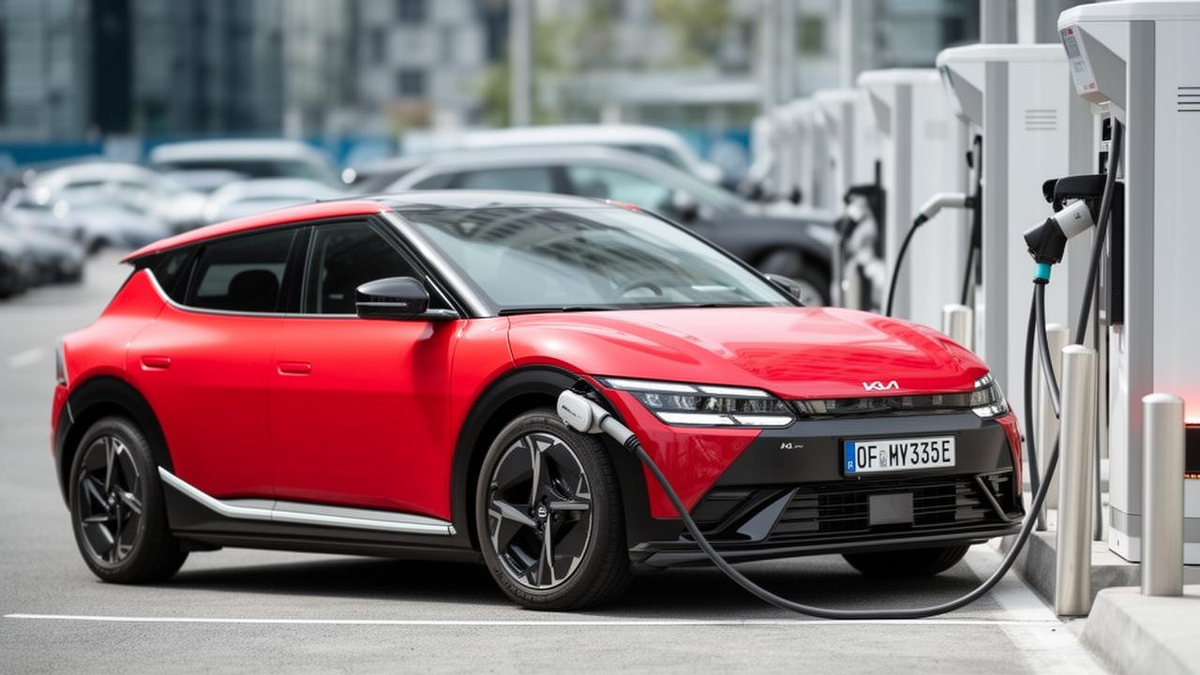
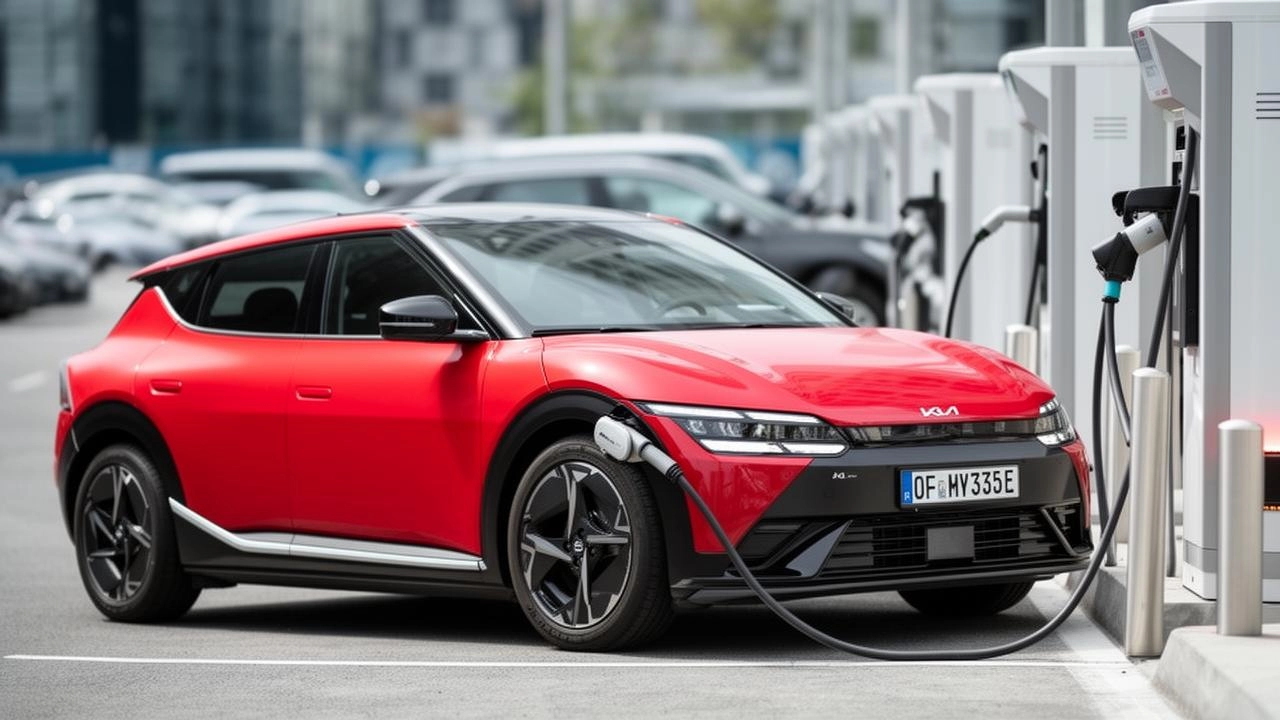
In contrast, Kia successfully defended its market share against the low-cost onslaught from China, thanks to having already secured a lineup of mid-to-large EVs. Kia’s European registrations in the first half rose 6.9% year-on-year to 290,697 units, maintaining a 4.0% market share. The company explained that its portfolio of mid-to-large EVs, spanning from the EV2 to the EV5, helped push its Western European EV market share to an all-time high in the second quarter. Kia Senior Managing Director and Head of Finance & Accounting Division Kim Seung-joon stated, “Last year, Europe was difficult due to a mismatch between the electrification trend and our lineup, but starting from the first quarter of this year, things are aligning with the trend.” He noted, “To respond to Chinese automakers, a strategy of increasing market share is necessary for the time being, even if it means conceding some EV profitability.”
Indeed, Kia jumped into a discount battle in the second quarter to narrow the price gap, increasing incentives per vehicle in Europe by more than 1,000 euros compared to the previous year. The combined European market share of Hyundai and Kia fell by just 0.5 percentage points, from 7.9% to 7.4%, which analysts attribute to this aggressive expansion of promotions.
However, if this discount war is prolonged, it is highly likely to lead to deteriorating profitability. Both Hyundai and Kia posted record-high revenues in the second quarter, but operating profit declined. While favorable exchange rates and sales of high-value-added vehicles such as hybrids and recreational vehicles drove top-line growth, tariffs, rising raw material costs, and expanded incentives dragged down profits. EVs also face the structural limitation of having to set aside higher warranty provisions than internal combustion engine vehicles due to the high unit cost of electrification components like batteries and motors.
Hyundai and Kia plan to mount a counteroffensive in the second half through new model launches and expanded local production. Hyundai will introduce the Ioniq 3, a small EV developed with price competitiveness as the top priority, into the European market, and push for a sales recovery with a crossover utility vehicle known under the project code BC4 and the new Tucson. Kia plans to reduce logistics and production costs through local European production of the EV2 and EV4, and to ramp up sales of the EV5 and PV5 in earnest. A Kia official said, “In a situation where the price gap is large, incentives and price adjustments are short-term countermeasures,” adding, “We are also pursuing product quality improvements and cost competitiveness, but it will take time for results to materialize.”
The prevailing industry outlook is that the low-cost offensive from China will act as a structural threat to the European EV market for the foreseeable future. This is because Chinese companies are continuously expanding local production and new model launches in Europe, while established automakers are also jumping into price competition to defend their market share. Kia expects incentives in the second half not to increase beyond second-quarter levels, but if competition persists, it will be difficult to predict when promotions can be scaled back.
Once added, BigGo Finance appears first in Google Search Top Stories, so you get the broadest, most up-to-the-minute, and most comprehensive global financial news first.

