

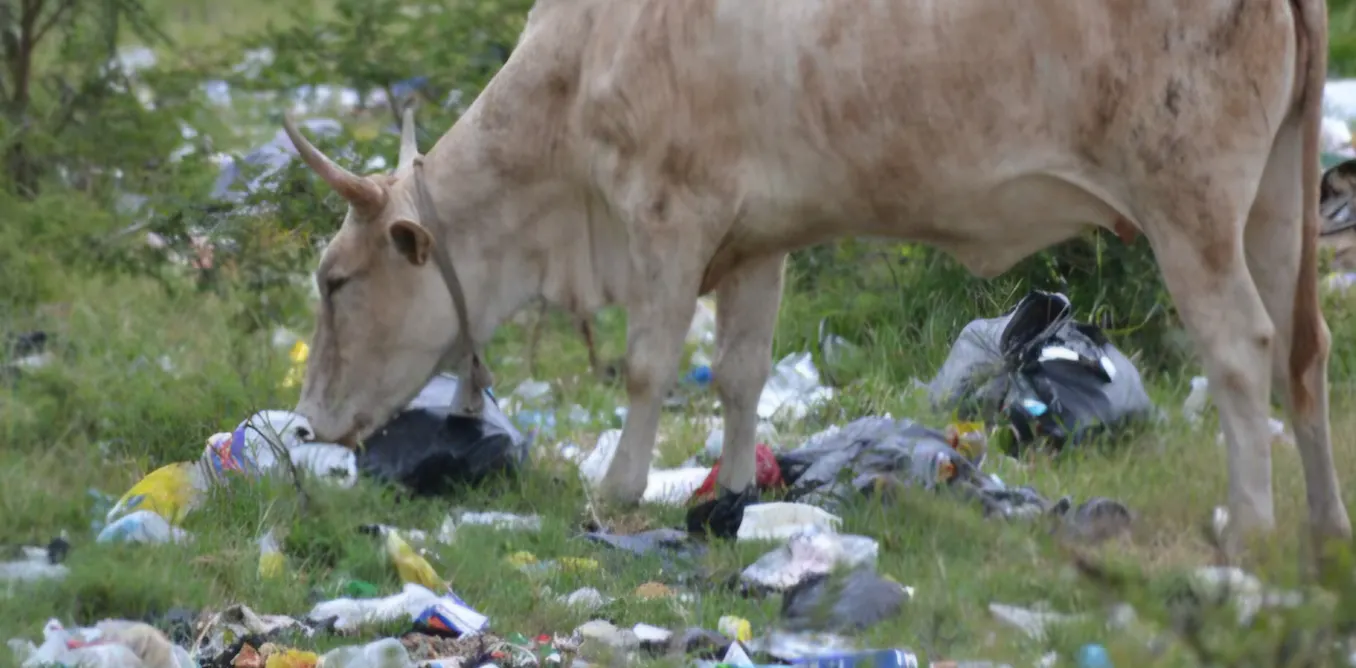
Agriculture is the main source of income for communities in rural Mpumalanga, in the north-east of South Africa. Goats and cattle graze freely across open, communal grasslands. But plastic bags, food wrappers, bottles and other plastic materials have become part of this environment. When the dry season arrives and fresh grass becomes scarce, hungry cattle and goats eat whatever they can find, including the plastic waste. Linton Munyai, Nomcebo Madonsela, Mwazvita Dalu and Tatenda Dalu studied how the environment responds to human disturbances. Their latest research sets out how smallholder farmers’ livestock is affected by plastic garbage and what can be done to solve the problem.
How is plastic waste affecting animals and farmers?
Our study investigated how plastic pollution was affecting livestock health, rural livelihoods and farming systems in Nkomazi, Mpumalanga, and how farmers coped with this. We interviewed 40 smallholder farmers who used communal land to allow their cattle, goats and chickens to forage. Most were cattle farmers.
Research has already shown that livestock can’t digest plastic. It blocks their stomach and intestines, preventing animals from eating and digesting food properly. Over time, this leads to weight loss, poor body condition, and animals performing below their potential because <a href="https://absafricatv.com/the-world-has-changed-african-countries-must-rethink-how-they-grow-their-economies/” title=”The world has changed. African countries must rethink how they grow their economies”>they grow and reproduce less. In severe cases, animals that have eaten plastic die. Previous veterinary studies have shown that plastic trapped in the stomach can cause rumen impaction (blockage), inflammation, digestive failure and eventually death.
In our research, many farmers reported these same symptoms in their livestock:
One of my cows ingested plastic, which blocked and tangled its digestive system. It couldn’t defecate properly and eventually died.
We lost seven cows this year from plastic ingestion. The plastic blocks their intestines.
Losing even one animal places strain on households already facing poverty, unemployment and recurring droughts. Livestock provide meat, milk and income, but also represent savings that families rely on during financial hardship. Cattle also play an important cultural role in South Africa, including in lobola negotiations (a marriage custom in which the groom’s family presents cattle to the bride’s family).
They’re important too in ceremonies to honour, remember, or communicate with deceased family members (ancestors), who in many African cultures are believed to continue watching over and guiding their descendants.
In addition, when livestock eat plastic, it is likely that their manure, widely used as organic fertiliser, could be filled with microplastics. This could affect soil quality, crop production and the long-term sustainability of rural farming systems.
Why is the problem so difficult to prevent?
Every farmer we interviewed recognised that plastic pollution was harming their livestock. But they could not solve the problem on their own.
The real problem is that plastic waste is everywhere because of poor waste collection, illegal dumping and shrinking grazing land. During droughts, livestock become hungry and eat whatever they can find.
Many of the villages we studied do not receive regular municipal waste collection or have inadequate waste disposal facilities. Even if one farmer keeps their own property clean, they cannot control waste dumped by others or plastic blown in by the wind.
People dump waste everywhere; there’s nothing we can do.
The municipality must come regularly to collect the waste dumped in the grazing areas.
Another problem is that houses have expanded into former grazing areas, while some communal land has been converted to crop farming. This leaves less land for livestock to graze on.
Although 95% of farmers were willing to reduce their own use of plastic, they said they did not have alternatives.
Traditional ways of managing waste, such as composting, burning garden waste or burying rubbish, don’t solve the problem of plastic because plastic doesn’t break down. Instead, it can remain in the environment for decades.
What are the farmers doing to cope?
One of the most encouraging findings from our study was the resilience of rural farmers. They have developed their own ways of protecting their livestock.
The most common approach is the use of home remedies. Many farmers cannot afford veterinary treatment or live too far from veterinary services.
We mix vinegar and Coke, give it to the livestock, and it helps them pass the plastic.
There is limited scientific evidence to confirm how effective these remedies are, however, in removing plastic or reversing internal damage.
Farmers also try to prevent exposure by keeping goats in fenced enclosures for longer, removing visible plastic and avoiding heavily polluted grazing areas where possible. They also work together to clean up grazing land:
We once went to clean a dam area with a lot of plastic.
However, these strategies have limits because livestock still depend on communal grazing lands, especially during the dry season. As one farmer said:
There’s nothing we can do, as we pay people to take the animals to feed. They let the livestock roam, even in polluted areas. We can’t lock the animals in because they’ll starve.
What practical steps are needed to help farmers?
The real solution is to stop plastic from reaching grazing lands in the first place. Everyone has a role to play, including municipalities, government departments, traditional leaders, farmers, researchers and local communities.
Better waste collection, more recycling and action against illegal dumping would make a big difference.
Farmers also need more support. During droughts, when there is little grass, livestock are more likely to eat plastic mixed with vegetation. Better access to animal feed, veterinary services and practical advice would help reduce this risk.
Traditional leaders and community groups can also organise clean-up campaigns, identify dumping hotspots and encourage people to dispose of waste responsibly. While farmers understand the dangers of plastic, everyone in the community needs to know how plastic pollution affects livestock, food security and rural livelihoods.

