

With cries of malfeasance and injustice over referee decisions, Fifa actions and even Argentina’s run, the tournament is a mirror of a theory-pilled society
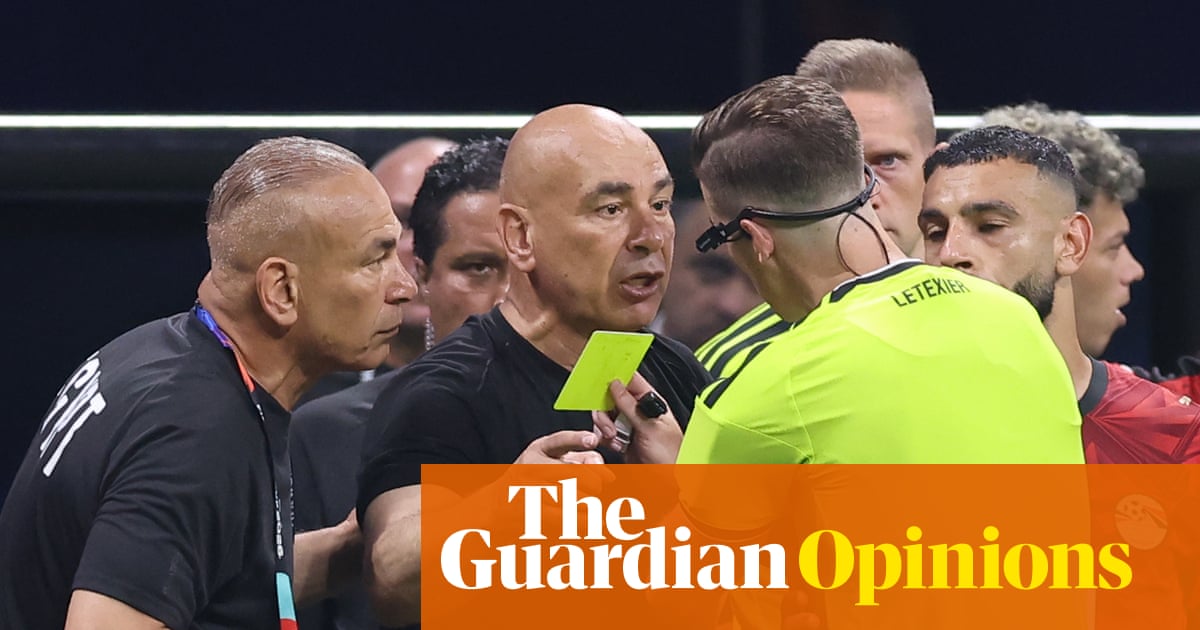
This was the first thing that Hossam Hassan, Egypt’s fiery coach, told the media after his country’s devastating 3-2 loss to Argentina in the last 16. The legendary striker turned manager had been minutes away from orchestrating one of the greatest upsets in World Cup history. The Pharaohs were up 2-0 against the defending world champions. Then, late in the second half, Argentina staged an extraordinary comeback, scoring three goals in 13 minutes, bringing Egypt’s storybook run to a sudden end.
For Egyptians, the match was an emotional rollercoaster, soaring with the promise of victory before plummeting into heartbreak and finally crashing into outrage over what many regarded as refereeing decisions that favored Argentina. During the match, Hassan raised his arms in a crossed ‘X’ gesture, Fifa’s official anti-discrimination symbol, and after the loss, accused the governing body of wanting Argentina to win. Hassan claimed his team was wrongly denied a second goal at 1-0, following a video assistant referee (VAR) check for a foul that had occurred more than 100 yards away, and that Egypt ought to have been awarded a penalty before Enzo Fernández scored Argentina’s third and final goal.
“Perhaps they wanted to keep the world champions in the competition?” Hassan told Qatari broadcaster beIN Sports after the game. “Perhaps they wanted Messi to stay in the running?”
Fueled by Hassan’s remarks, Egypt’s defeat sparked a firestorm of conspiracy theories and allegations of corruption. French referee François Letexier became the focus of intense global scrutiny. Restaurants and cafes posted about barring him because of his role in the match outcome. His Wikipedia page was vandalized to falsely identify him as Jewish, sparking outrage among fans who believed Egypt’s loss was part of a Zionist conspiracy tied to Hassan’s outspoken support for Palestine during the tournament.
As Argentina progressed, the conspiracy theories followed. There was the news that the Argentinian federation and its president were being investigated by the FBI for alleged money laundering. Then there was the controversial VAR decision that led to Switzerland’s top striker being sent off in the quarter-final. With each win, accusations of corruption and match-fixing continued to plague Argentina.
“The World Cup was promised to Messi 3000 years ago,” read the caption of anInstagram post that included a montage of Argentina’s star during visits to Israel with Barcelona and Paris Saint-Germain. The post was liked nearly 15,000 times. “It’s rigged for Messi,” readanother post with more than 275,000 likes. More than 12 million people havesigned a fan-led petition demanding that Fifa disqualify Argentina.
The World Cup of Calvinball: Fifa’s hasty changes turn refereeing into a free-for-all | Beau Dure
Read more
VAR technology has been at the centre of nearly every major controversy at this World Cup. Critics argue that VAR is applied inconsistently and is being used in cases outside its original intent. This has led to scenarios such as Egypt’s disallowed goal against Argentina and Croatia’s disallowed goal at the end of regulation time against Portugal, called offside because the sensor in the ball detected a touch that was absent to the human eye.
Perhaps the tournament’s most controversial episode came when United States striker Folarin Balogun received a red card after a VAR review for a foul the referee had missed in real time. The controversy deepened when Fifa overturned Balogun’s one-match suspension following an intervention from Donald Trump. The US president later boasted about his role in securing Balogun’s return. Given Fifa had previously stated that a red card suspension could not be appealed, the sudden change of heart shattered the illusion of integrity and fair play in its showpiece event.
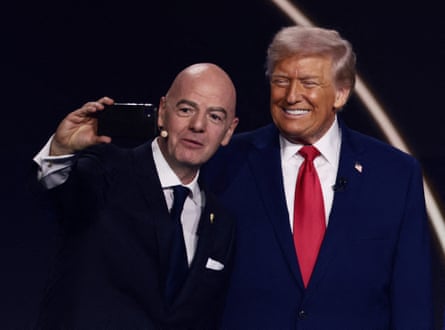
Fifa – a wildly corrupt organization – has seemingly been compromised by political pressure from the leader of one of the tournament’s host nations. Uefacalled the Balogun decision “unprecedented, incomprehensible and unjustifiable”, while the International Olympic Committee is beingasked to investigate whether Gianni Infantino – the Fifa president and a member of the IOC – breached the committee’s rules on political neutrality.
The Balogun affair is not without precedent. In November 2025, Fifa suspended part of Cristiano Ronaldo’s ban for a red card he received during Portugal’s World Cup qualifier against the Republic of Ireland, clearing him to play in their opening group-stage matches. This rare act of clemency underscored Fifa’s willingness to indulge one of the World Cup’s biggest attractions, especially one with a near-unrivalled ability to drive ticket demand. And given that Fifa introduced dynamic pricing schemes for this World Cup, effectively adjusting prices based on real-time demand, is it really a surprise that people are questioning the tournament’s integrity?
To make matters worse, there has been a deluge of AI-generated images and videosspreading across social media that have led to the spread of disinformation about the tournament. One manipulated image showed a man resembling Adolf Hitler holding a German flag and celebrating a goal against Curaçao; another showed outgoing British prime minister Keir Starmer wearing a Croatia jersey. There was also an image of an Iranian footballer holding up a pink backpack during a World Cup game, paying tribute to the 168 school girls killed by a US airstrike on Iran. Another manipulated videoshowed the Netherlands manager Ronald Koeman launching into a racist rant after Morocco knocked his team out on penalties.
These augmented images and videos prey on people’s emotions, blurring the line between reality and fiction while trapping viewers in a perpetual cycle of outrage through a deluge of racism, xenophobia and disinformation. In some cases, the fake posts may exploit genuine concerns by feeding into our politically polarized climate and the sense of injustice many people experience in their everyday lives.
Ahead of the World Cup, Infantino fawned over Trump despite the US president’s handling of the Iran war, strained geopolitical ties with fellow World Cup co-hosts and supercharged immigration crackdown. Infantino even invented his own peace prize to appease Trump after he was passed over for the Nobel peace prize. For Infantino, the US is the crown jewel of his new era of football, a market that can deliver unprecedented revenues and spectacle. The fact that he was ignoring Fifa’s own code of ethics did not matter.
Because of US visa restrictions, Iran’s team had to shuttle between their training base in Mexico and the US, where their World Cup matches were played. Players described their tournament experience as a “disaster”. So when Iran failed to reach the knockout stage at the same time one of the tournament’s host nations was bombing the country, many saw it as a profound injustice. These sentiments were further compounded by the Balogun fiasco. It is unsurprising that such a turn of events bred conspiracy theories.
Egypt’s World Cup adventure gave the country its first collective joy in 15 years | Karim Zidan
Read more
Take the Egypt-Argentina game: it is impossible to consider that match without considering the context of what Egypt stood for at the event. The national team became a source of collective joy, not just for Egyptians but for millions of others across the Arab world and the African continent. Hassan raised a Palestinian flag after their last-32 win and later said that anyone lacking empathy for the Palestinian people had lost their humanity. The Egyptian Committee for the Reconstruction of Gaza organized public watch parties for displaced Palestinian families to watch Egypt’s games. The committee’s director, Mohammed Fawaz al-Wahidi, was thenkilled in an Israeli strike hours before Egypt played Argentina.
For a few short weeks, Egypt’s run was about more than football – it carried the hopes and dreams of some of the world’s most oppressed people. So when Egypt squandered their lead against Argentina in a match marred by controversial decisions, the pain and anger many felt ran far deeper than the result itself. For those long accustomed to living with injustice, it felt like yet another reminder that even on football’s biggest stage, the rules were not the same for everyone.
After the match, the Egyptian Football Association released a statement that it “cannot remain silent” following a series of refereeing decisions that “left profound questions about the consistency and fairness of decisions that directly influenced the course of the game”. Meanwhile, the accusations of corruption reached a crescendo. The Argentinian federation was targeted by a cyber-attack that saw hackers send emails from official accounts admitting to “corrupt refereeing decisions”. Conspiracy theories spread across social media asserting that the fix was in. And Argentina emerged as a villain.
The World Cup does not exist in a vacuum. The truth is that football is a reflection of society, for better or worse. The conspiracy theories surrounding the World Cup are not unique to the tournament. They are symptoms of broader forces, including social media, economic insecurity and political division. Look no further than the QAnon movement, anti-vaccine conspiracies, and rising antisemitism and Islamophobia.
The World Cup amplifies these tensions, showcasing them on the world’s biggest stages. In doing so, football becomes a mirror of the world that watches it.
-
Karim Zidan writes a regular newsletter on the intersection of sports and politics.
Explore more on these topicsShare
Reuse this content
