

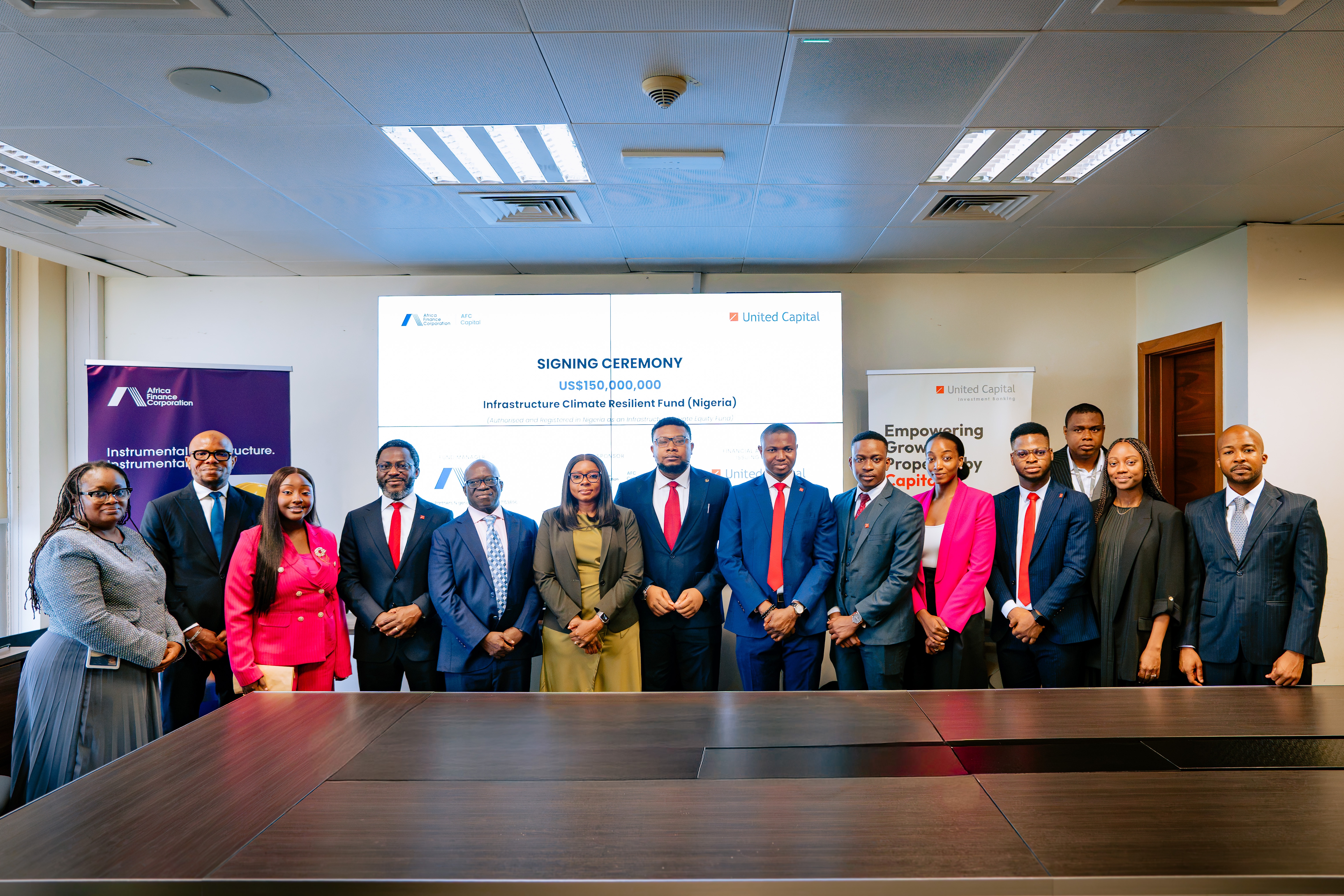
Lagos, 24 August 2026: AFC Capital Partners (ACP), the asset management subsidiary of Africa Finance Corporation (AFC), has launched the Infrastructure Climate-Resilient Fund Nigeria (ICRF Nigeria) as a dedicated platform to mobilise domestic institutional capital for investment in climate-resilient infrastructure projects across Nigeria and the wider African continent.
Registered with the Securities and Exchange Commission (SEC) as a closed-end fund, ICRF Nigeria is designed to channel capital from pension fund administrators (PFAs), insurers, asset managers and other Nigerian institutional investors towards a diversified portfolio of commercially
ICRF Nigeria forms part of ACP’s US$750 million Infrastructure Climate-Resilient Fund (ICRF), a pioneering vehicle designed to strengthen the resilience of Africa’s infrastructure by embedding climate considerations throughout the asset lifecycle—from planning and design to construction and operation. The Fund addresses a critical challenge for the continent: ensuring that the infrastructure underpinning Africa’s growth can withstand increasingly severe and unpredictable climate impacts.
ICRF has attracted participation from leading global and African institutional investors, including a US$253 million first-loss commitment from the Green Climate Fund (GCF)—its largest equity investment in Africa to date—alongside the European Investment Bank (EIB), Development Bank of Southern Africa (DBSA), Cassa Depositi e Prestiti (CDP), the Nigeria Sovereign Investment Authority (NSIA), and several African pension funds. ACP expects to mobilise up to US$3.7 billion in total financing through ICRF and build a diversified portfolio of 10 to 12 infrastructure projects across Africa.
Samaila Zubairu, AFC’s President and CEO, commented: “Africa is not short of capital. The continent holds more than US$4 trillion in domestic reons, insurance and sovereign wealth funds. Yet too much of this wealth remains invested in low-risk, short-term instruments rather than being channeled into productive sectors such as infrastructure, industry and innovation
“The opportunity before us is to create investment vehicles that connect Africa’s long-term savings with its long-term development needs. ICRF Nigeria is an important step in that direction, enabling Nigerian institutional capital to participate in the infrastructure that will drive more resilient and sustainable growth across Nigeria and the continent.”
Ayaan Adam, CEO of ACP, said: “ICRF Nigeria gives Nigerian institutional investors a dedicated route into high-quality, climate-resilient infrastructure investments across Nigeria and Africa. By combining institutional capital with AFC’s infrastructure expertise and the catalytic power of blended finance, we can address both the financing needs of critical infrastructure and the growing risks posed by climate change.
“Importantly, this creates an avenue for Nigeria’s long-term savings to contribute to infrastructure development while giving investors access to a diversified portfolio of opportunities across the continent.”
ICRF combines concessional and commercial capital to overcome barriers that have historically constrained investment in climate adaptation across Africa. Through blended finance and targeted de-risking mechanisms, the Fund integrates climate resilience into infrastructure from the outset, helping to unlock private capital for investment in projects that might otherwise be difficult to finance.
The Fund’s target sectors are critical to Africa’s economic transformation, including renewable energy, transport and logistics, digital infrastructure and industrial development. Its investment approach considers both physical and transition climate risks, including exposure to extreme weather, emissions pathways and climate governance. Each investment undergoes climate risk screening and assessment to embed resilience throughout the infrastructure lifecycle.
The Green Climate Fund plays a catalytic role through its provision of first-loss capital and technical assistance for climate risk assessment and monitoring, helping to de-risk investments and crowd in additional institutional capital.
AFC was established in 2007 to be the catalyst for pragmatic infrastructure and industrial investments across Africa. AFC’s approach combines specialist industry expertise with a focus on financial and technical advisory, project structuring, project development, and risk capital to address Africa’s infrastructure development needs and drive sustainable economic growth.
Nineteen years on, AFC has developed a track record as the partner of choice in Africa for investing and delivering on instrumental, high-quality infrastructure assets that provide essential services in the core infrastructure sectors of energy, natural res 48 member countries and has invested over US$20 billion in 36 African countries since its inception
AFC Capital Partners (ACP) is the wholly owned asset management subsidiary of Africa Finance Corporation (AFC), established to transform AFC’s institutional expertise, investment track record and Africa-wide platform into investable products for third-party capital. ACP manages investment vehicles that provide institutional investors with access to high-quality infrastructure opportunities across Africa, leveraging AFC’s deep sector expertise, origination capabilities and project development platform.
ACP is registered in Mauritius and Nigeria and is a Securities and Exchange Commission (SEC)-licensed fund manager in Nigeria. Through its fund management platform, ACP mobilises institutional capital and deploys it into investments that support Africa’s infrastructure development and long-term economic transformation.
Email: yewande.thorpe@africafc.org
Coming soon!

