

| Getting your Trinity Audio player ready… |
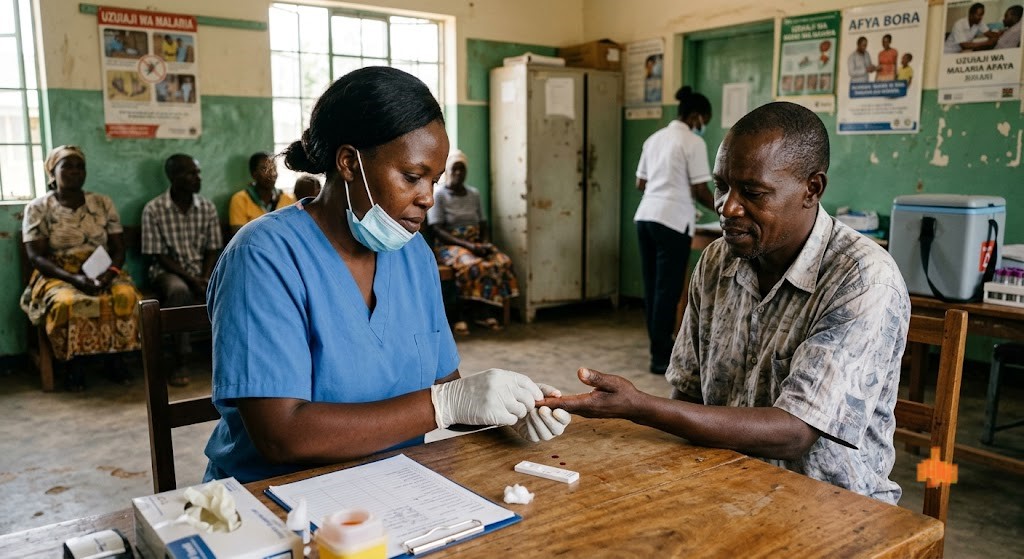
Accra, Ghana: In the majority of African primary healthcare facilities, a concerning deficit in laboratory infrastructure means that half of the approved diagnostic tools for six epidemic-prone diseases prioritized by the Africa Centres for Disease Control and Prevention (Africa CDC) cannot be utilized.
This critical vulnerability was revealed in a groundbreaking report launched today by global health nonprofits PATH and Impact Global Health. TitledThe Diagnostics Deficit: Funding, Access, and Preparedness Gaps in African Health Systems, the report comes at a crucial political moment, dropping just ahead of the African Union Extraordinary Health Summit in Accra, Ghana, where continental heads of government are gathering to tackle preventable deaths.
The findings paint a sobering picture of Africa’s health security, exposing a dangerous mismatch between the high-tech diagnostic tools being developed and the reality of the continent’s frontline clinics.
The Deadly Cost of Diagnostic Delays
The six diseases evaluated in the report, namely mpox, dengue, cholera, bacterial meningitis, malaria, and Ebola, were selected based on their outbreak potential and Africa CDC priority status.
However, the report highlights that the infrastructure gap is profoundly stark for specific killers like Ebola, where an overwhelming 88% of approved diagnostics require advanced laboratory settings unavailable to rural and vulnerable populations.

Africa CDC data shows that while the continent carries a quarter of the global disease burden, it commands less than 3% of global health research output. Over 90% of all medicines and medical diagnostics utilized in Africa are imported, leaving local health systems vulnerable to global supply chain shocks.
“African patients wait far too long for diagnostic tests,” Dr. Esther Anyango, an Advocacy and Public Policy Officer at PATH, said. The situation is further compounded by multiple sectoral regulations which are a major roadblock to timely medical interventions whenever these diseases pose a widespread threat.
Sadly, the real-world consequences of this deficit are already proving fatal. When the Bundibugyo ebolavirus outbreak emerged in May 2026, initial patient samples tested negative because the diagnostic kits available on the ground were designed exclusively to detect a different strain of the virus. Due to a severe lack of Bundibugyo-specific diagnostics, it took responders 10 agonizing days just to confirm the pathogen they were fighting, severely hamstringing the early containment response.
Uneven Innovation and Precautionary Gaps
While the continent boasts 577 approved diagnostics across these six diseases, with another 59 currently in the pipeline, the report reveals that research and development (R&D) innovation is dangerously lopsided.
A massive 84% of the entire product landscape is heavily concentrated on just two diseases: dengue and mpox. On the other hand, cholera and bacterial meningitis, which have both been flagged by the Africa CDC as severe outbreak threats and drivers of antimicrobial resistance, have been left in the dark, with a paltry seven products or candidates available for each.
The Panic-and-Neglect Funding Cycle
Experts argue that this diagnostic gridlock is fuelled by unsustainable, reactionary financing that leaves the continent perpetually vulnerable.

“Our G-FINDER data reveals a system under strain,” warned Dr. Sabastine Wakdok, Director of Research at Impact Global Health. “Diagnostic R&D investment for six Africa CDC priority diseases has fallen by nearly US$4 million annually since 2015. More troubling, this decline persists despite rising disease incidence and outbreak risk.”
Dr. Wakdok, a physician, scientist and researcher holding an MBA from the University of Oxford and a PhD in Global Health Policy fromThe University of Edinburgh, criticized the current funding architecture. He pointed out that Africa remains trapped in a cycle of vulnerability where outbreak-driven spikes in funding are routinely followed by a collapse in attention and support.
Adding to this, Bernard Aryeetey, Senior Director of the Center for Advocacy and Policy at PATH, emphasized that developing tools is only half the battle.
“It is not solely whether the diagnostics exist, but also whether they can reach the clinics and surveillance systems when they are most needed, especially during outbreaks,” Aryeetey stated.
The message from civil society is clear: if the challenges of access, affordability, deployment, and localized manufacturing readiness are not solved, preventable deaths will continue to climb, even in an era of unprecedented scientific innovation.
Call for Action and Structural Change
Experts are recommending that continental and global leaders urgently shift away from erratic crisis-driven response and move toward building long-term structural equity in African health security.
To bridge this critical diagnostic gap, global health donors must prioritize sustained, proactive financing coupled with significantly stronger domestic budget allocations. This approach ensures frontline facilities are equipped with essential tools long before the next outbreak occurs.
Furthermore, the report calls for the Africa CDC to formally integrate diagnostics as a non-negotiable, foundational pillar of its strategic health security and pandemic preparedness plans.
Alongside this policy shift, research institutions and industry partners must intentionally pivot toward developing and manufacturing decentralized diagnostic tools specifically engineered for primary healthcare settings, rather than continuing to rely heavily on products that depend on complex laboratory infrastructure.
Finally, experts emphasize that regulatory barriers must be dismantled by the African Medicines Agency through the harmonization of diagnostic approval pathways across the continent.
